2026. August 18. Tuesday
Ferenczy Museum Center - Ferenczy Museum - Szentendre
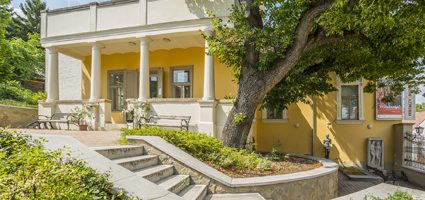 |
Address: 2000, Szentendre Kossuth Lajos utca 5.
Phone number: (20) 779-6657
E-mail: info@muzeumicentrum.hu
Opening hours: Thu-Sun 10-18
|
The exhibition has closed for visitors.
2007.09.27. - 2007.11.11.
Share it, if you like it:


Museum tickets, service costs:
|
Individual ticket for adults
|
1400 HUF
|
/ capita
|
|
Group ticket for adults
(max. 25 people)
|
17000 HUF
|
/ group
|
|
Group ticket for adults
(all exhibitions of Ferenczy Museum Center, max. 25 people)
|
23000 HUF
|
/ group
|
|
Individual ticket for students
|
700 HUF
|
/ capita
|
|
Group ticket for students
(all exhibitions of Ferenczy Museum Center)
|
10000 HUF
|
/ group
|
|
Individual ticket for pensioners
|
700 HUF
|
/ capita
|
|
Group ticket for pensioners
(all exhibitions of Ferenczy Museum Center)
|
10000 HUF
|
/ group
|
|
Ticket for families
(2 adults + 4 children)
|
1700 HUF
|
/ family
|
|
Individual combined ticket for adults
(all exhibitions of Ferenczy Museum Center)
|
1700 HUF
|
/ capita
|
|
Individual combined ticket for students
(all exhibitions of Ferenczy Museum Center)
|
850 HUF
|
/ capita
|
|
Individual combined ticket for pensioners
(all exhibitions of Ferenczy Museum Center)
|
850 HUF
|
/ capita
|
|
Combined ticket for families
(all exhibitions of Ferenczy Museum Center, 2 adults + 4 children)
|
2100 HUF
|
/ family
|
|
Guide
|
12000 HUF
|
|
|
Guide
|
20000 HUF
|
Today, this tiny village is within half an hour's drive from Paris, but it did not take much longer to get there a century ago, either. Although they started to move to the village bordering the Fontainebleau Forest as early as the 1830s, the Barbizon painters were constantly present with their works all over the capital's art galleries, exhibitions and art dealers' shops, almost as if they had never left Paris at all. Barbizon meant turning away from stale academism and trooping out of the studio; nevertheless, its almost cult-like status in art history is not due exclusively to the painters' fascination with the enchanting forest in the nearby. By revealing a connection between landscape and the artist's personality, the French painters living in Barbizon at the time approached painting from a completely new angle.
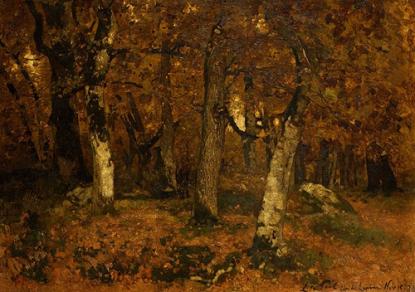
In the academic art characteristic of the pre-Barbizon period, in the eighteenth and early nineteenth century, landscape painting was treated as a secondary genre. Up to that point, the scenery depicted on the canvas had only been a tool, a background or an ideal image of the divine power of creation. It was the Barbizon artists' concept of plein-air painting that made landscape the absolute centre. Disposed in this new way towards nature, these artists attempted to paint the union of natural and emotional landscapes. The theme of the paysage intime was in fact a particular mood that had been evoked by delicate and nuanced instruments of the painter's artistry. This mood then formed into a picture on the canvas in which the scenery and the frame of mind it induced blended into a single, inseparable whole.
Barbizon became a proof of the possibility of collective creation, a new form of artistic activity, as well as a paragon for the succeeding generations. The painters who came to Barbizon had not been attracted there only by the spirit of the place, but also by a familiarity with their Barbizon-based predecessors' and contemporaries' works. They longed to see this well-known scenery with their own eyes and paint it for themselves. Added to the long-established nexus of patrons supporting artistic creativity (guilds, royal courts, academies, private individuals and members of the church), the nineteenth century, being a prominent period in European art history, witnessed the appearance of a new type of creative grouping. This was the artists' colony. The group of painters gathered in Barbizon served as a model for all later such colonies in Europe.
Even though the aptness of the term 'Barbizon school', coined by later generations, may be a bit doubtful, it still expresses the enormous influence the Barbizon painters exerted on European art. Attracted by Barbizon and the spirit of French art, some of the Paris-based Hungarian artists visited the colony for shorter or longer periods to paint, or were introduced to French painting in Parisian galleries. They did not forget about Barbizon and their experiences in Paris even after their return to Hungary.
The close ties between Barbizon and Hungarian painting originated in the 1870s with Mihály Munkácsy and László Paál, and were maintained by Munkácsy's disciples, such as Lajos Deák-Ébner and Gyula Aggházy, for instance. These ties were also in evidence in 1896, when the Nagybánya artists' colony was established. After that, members of the new generation, the later founders of the Szentendre artists' colony - Ernő Jeges, Jenő Paizs Goebel, Gyula Czimra and Béla Onódi - each made his own respective pilgrimage to the Fontainebleau Forest in the mid-1920s, to paint 'László Paál's trees'. This is how Barbizon took root in Szentendre. As Jeges put it, 'In Szentendre, we have discovered the Hungarian Barbizon.'
Our exhibition presents the forerunners of the nineteenth-century French landscape painting known as 'the Barbizon school', some of its characteristic works, as well as its relevance to Hungarian art of the time. The organizers would like to thank the French and Hungarian museums and private collectors who have lent paintings for the exhibition.
In the academic art characteristic of the pre-Barbizon period, in the eighteenth and early nineteenth century, landscape painting was treated as a secondary genre. Up to that point, the scenery depicted on the canvas had only been a tool, a background or an ideal image of the divine power of creation. It was the Barbizon artists' concept of plein-air painting that made landscape the absolute centre. Disposed in this new way towards nature, these artists attempted to paint the union of natural and emotional landscapes. The theme of the paysage intime was in fact a particular mood that had been evoked by delicate and nuanced instruments of the painter's artistry. This mood then formed into a picture on the canvas in which the scenery and the frame of mind it induced blended into a single, inseparable whole.
Barbizon became a proof of the possibility of collective creation, a new form of artistic activity, as well as a paragon for the succeeding generations. The painters who came to Barbizon had not been attracted there only by the spirit of the place, but also by a familiarity with their Barbizon-based predecessors' and contemporaries' works. They longed to see this well-known scenery with their own eyes and paint it for themselves. Added to the long-established nexus of patrons supporting artistic creativity (guilds, royal courts, academies, private individuals and members of the church), the nineteenth century, being a prominent period in European art history, witnessed the appearance of a new type of creative grouping. This was the artists' colony. The group of painters gathered in Barbizon served as a model for all later such colonies in Europe.
Even though the aptness of the term 'Barbizon school', coined by later generations, may be a bit doubtful, it still expresses the enormous influence the Barbizon painters exerted on European art. Attracted by Barbizon and the spirit of French art, some of the Paris-based Hungarian artists visited the colony for shorter or longer periods to paint, or were introduced to French painting in Parisian galleries. They did not forget about Barbizon and their experiences in Paris even after their return to Hungary.
The close ties between Barbizon and Hungarian painting originated in the 1870s with Mihály Munkácsy and László Paál, and were maintained by Munkácsy's disciples, such as Lajos Deák-Ébner and Gyula Aggházy, for instance. These ties were also in evidence in 1896, when the Nagybánya artists' colony was established. After that, members of the new generation, the later founders of the Szentendre artists' colony - Ernő Jeges, Jenő Paizs Goebel, Gyula Czimra and Béla Onódi - each made his own respective pilgrimage to the Fontainebleau Forest in the mid-1920s, to paint 'László Paál's trees'. This is how Barbizon took root in Szentendre. As Jeges put it, 'In Szentendre, we have discovered the Hungarian Barbizon.'
Our exhibition presents the forerunners of the nineteenth-century French landscape painting known as 'the Barbizon school', some of its characteristic works, as well as its relevance to Hungarian art of the time. The organizers would like to thank the French and Hungarian museums and private collectors who have lent paintings for the exhibition.
|
|