2026. September 17. Thursday
Ludwig Museum - Museum of Contemporary Art - Budapest
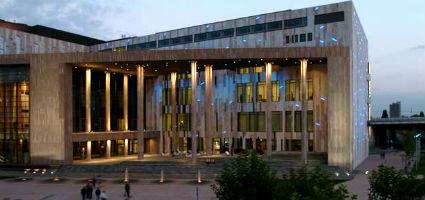 |
Address: 1095, Budapest Művészetek Palotája, Komor Marcell u. 1.
Phone number: (1) 555-3444, (1) 555-3457
E-mail: info@ludwigmuseum.hu
Opening hours: Permanent exhibition: Tue-Sun 10-18
Temporary exhibition: Tue-Sun 10-20 |
2026.04.24. - 2026.09.20.
Share it, if you like it:


Museum tickets, service costs:
|
Group ticket
(over 20 people 20% discount)
|
1000 HUF
|
|
|
Ticket for adults
(valid for the temporal exhibitions)
|
1200 HUF
|
|
|
Ticket for students
(valid for the temporal exhibitions)
|
600 HUF
|
|
|
Ticket for pensioners
(valid for the temporal exhibitions)
|
600 HUF
|
|
|
Ticket for families
(1 parent + max. 4 children)
|
1600 HUF
|
/ family
|
|
Ticket for families
(2 parents + max. 4 children)
|
2400 HUF
|
/ family
|
|
Ticket for adults
|
960 HUF
|
|
|
Ticket for students
|
480 HUF
|
|
|
Program ticket
|
600 HUF
|
|
|
Guide
|
4000 HUF
|
|
|
Guide
|
5000 HUF
|
The exhibition presents the collection of the Art Fond in Bratislava, in which the neo-avant-garde strategies of late modernism are still decisive today. The neo-avant-garde is not presented here as a closed historical phenomenon, but as a form of persistent resistance, critical thinking and civic responsibility that is constantly reviving in contemporary art practice.
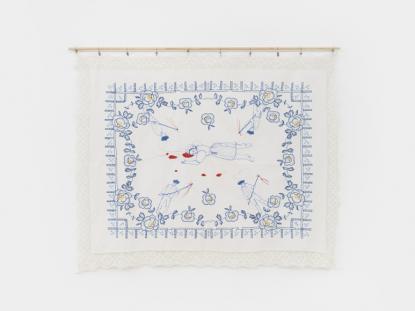
The title of the exhibition, borrowed by the curators from a work by Kristián Németh, is a political and ethical statement. It claims that art based on freedom, critical awareness and the courage to question power structures cannot end. In a time of renewed ideological pressure, cultural censorship and the erosion of institutional autonomy, the idea of “no end” becomes a statement against closure, silencing and historical amnesia. In several works in the collection, the motifs of recurring boundlessness, continuity and cyclical return form a subtle counterpoint.
The curatorial concept is based on dialogue and interaction between generations. The works of artists of different ages are displayed in pairs or triplets, not to illustrate mutual influence or stylistic continuity, but to allow the viewer to better perceive the dialogue, tension and solidarity between the works. Apparent formal or ideological oppositions often reveal common concerns. The focus of these anxieties is the body as a site of political inscription, the trace as evidence of life experience and transcendence as a strategy of inner freedom in an external situation of constraint, memory as a form of resistance.
Rejecting linear chronology and fixed stylistic categories, the exhibition adopts a topological approach. It interprets art as a relational field whose fundamental values – freedom of expression, ethical stance and critical imagination – persist despite distortion, displacement or repression. The neo-avant-garde is thus presented not as a historical style but as a way of thinking that continues to influence conceptual, intermedia, feminist, ecological and activist positions in contemporary art.
In the End There Will Be No End / In the End There Will Be No End demonstrates the capacity of art to serve as a space for freedom, critique and ethical imagination. In a contemporary climate of polarization, cultural uncertainty and the misuse of history, the exhibition emphasizes that art with a clear stance does not disappear. It adapts, it survives and it continues to speak. It will not end, because the demand for artistic freedom never ends.
About the Art Fond Collection
The Art Fond Collection is a non-profit private collection of contemporary fine art, which was established as a collecting and cultural project more than ten years ago. Its main goal is to collect, preserve and present the most important trends in Slovak and, more broadly, East-Central European art from 1960 to the present day. The private collection preserves artworks that were often created outside of official structures and continues to support artistic practices that question dominant narratives and normative frameworks.
ART FOND COLLECTION has developed over the years into an independent platform through continuous curatorial practice, collaboration and commitment to artists and the art scene.
Curators: Katarína Bajcurová and Lucia Gregorová Stach
The exhibition is organized by the Ludwig Museum – Museum of Contemporary Art and the Art Fond Collection in Bratislava, in cooperation with the Art Research Center of the Slovak Academy of Sciences.
Exhibiting artists:
Milan Adamčiak, Peter Bartoš, Juraj Bartusz, Maria Bartuszová, Milan Dobeš, Andrej Dúbravský, Svetlana Fialová, Stano Filko, Daniel Fischer, Martin Gerboc, Milan Grygar, Vladimír Havrilla, Jozef Jankovič, Magdalena Jetelová, Peter Kalmus, Igor Kalný, Kryštof Kintera, Michal Kern, Július Koller, Milan Knížák, Matej Krén, Jaroslav Kyša, Otis Laubert, Denisa Lehocká, Karel Malich, Juraj Meliš, Alex Mlynárčik, Ilona Németh, Kristián Németh, Roman Ondak, Štefan Papčo, Emília Rigová/Bari Raklori, Peter Roller, Rudolf Sikora, Ivana Šáteková, Erik Šille, Lucia Tallová, Dezider Tóth/Monogramista T.D, Jana Želibská
The title of the exhibition, borrowed by the curators from a work by Kristián Németh, is a political and ethical statement. It claims that art based on freedom, critical awareness and the courage to question power structures cannot end. In a time of renewed ideological pressure, cultural censorship and the erosion of institutional autonomy, the idea of “no end” becomes a statement against closure, silencing and historical amnesia. In several works in the collection, the motifs of recurring boundlessness, continuity and cyclical return form a subtle counterpoint.
The curatorial concept is based on dialogue and interaction between generations. The works of artists of different ages are displayed in pairs or triplets, not to illustrate mutual influence or stylistic continuity, but to allow the viewer to better perceive the dialogue, tension and solidarity between the works. Apparent formal or ideological oppositions often reveal common concerns. The focus of these anxieties is the body as a site of political inscription, the trace as evidence of life experience and transcendence as a strategy of inner freedom in an external situation of constraint, memory as a form of resistance.
Rejecting linear chronology and fixed stylistic categories, the exhibition adopts a topological approach. It interprets art as a relational field whose fundamental values – freedom of expression, ethical stance and critical imagination – persist despite distortion, displacement or repression. The neo-avant-garde is thus presented not as a historical style but as a way of thinking that continues to influence conceptual, intermedia, feminist, ecological and activist positions in contemporary art.
In the End There Will Be No End / In the End There Will Be No End demonstrates the capacity of art to serve as a space for freedom, critique and ethical imagination. In a contemporary climate of polarization, cultural uncertainty and the misuse of history, the exhibition emphasizes that art with a clear stance does not disappear. It adapts, it survives and it continues to speak. It will not end, because the demand for artistic freedom never ends.
About the Art Fond Collection
The Art Fond Collection is a non-profit private collection of contemporary fine art, which was established as a collecting and cultural project more than ten years ago. Its main goal is to collect, preserve and present the most important trends in Slovak and, more broadly, East-Central European art from 1960 to the present day. The private collection preserves artworks that were often created outside of official structures and continues to support artistic practices that question dominant narratives and normative frameworks.
ART FOND COLLECTION has developed over the years into an independent platform through continuous curatorial practice, collaboration and commitment to artists and the art scene.
Curators: Katarína Bajcurová and Lucia Gregorová Stach
The exhibition is organized by the Ludwig Museum – Museum of Contemporary Art and the Art Fond Collection in Bratislava, in cooperation with the Art Research Center of the Slovak Academy of Sciences.
Exhibiting artists:
Milan Adamčiak, Peter Bartoš, Juraj Bartusz, Maria Bartuszová, Milan Dobeš, Andrej Dúbravský, Svetlana Fialová, Stano Filko, Daniel Fischer, Martin Gerboc, Milan Grygar, Vladimír Havrilla, Jozef Jankovič, Magdalena Jetelová, Peter Kalmus, Igor Kalný, Kryštof Kintera, Michal Kern, Július Koller, Milan Knížák, Matej Krén, Jaroslav Kyša, Otis Laubert, Denisa Lehocká, Karel Malich, Juraj Meliš, Alex Mlynárčik, Ilona Németh, Kristián Németh, Roman Ondak, Štefan Papčo, Emília Rigová/Bari Raklori, Peter Roller, Rudolf Sikora, Ivana Šáteková, Erik Šille, Lucia Tallová, Dezider Tóth/Monogramista T.D, Jana Želibská
|
|