2026. August 3. Monday
Town Museum of Gödöllő - Gödöllő
|
|
Address: 2100, Gödöllő Szabadság tér 5.
Phone number: (28) 422-002, (28) 422-003
E-mail: info@godolloimuzeum.hu
Opening hours: Wed-Sun 10-16
|
The exhibition has closed for visitors.
2005.10.01. - 2006.02.19.
Share it, if you like it:


Museum tickets, service costs:
|
Ticket for adults
(26-62 years of age)
|
600 HUF
|
|
|
Group ticket for adults
(over 15 people)
|
450 HUF
|
/ capita
|
|
Ticket for students
|
300 HUF
|
|
|
Group ticket for students
(over 15 people)
|
250 HUF
|
/ capita
|
|
Ticket for pensioners
|
300 HUF
|
|
|
Group ticket for pensioners
(over 15 people)
|
250 HUF
|
/ capita
|
|
Ticket for families
(2 adults + 2 children)
|
1000 HUF
|
/ family
|
|
Photography
|
250 HUF
|
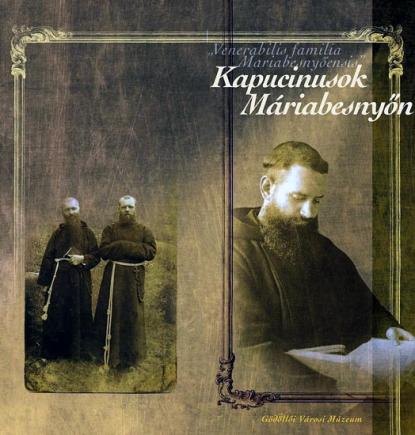
The Capucine Order (O.F.M. Cap.) originating in the Franciscan Order was the result of the reform in the 16th century. It became independent in 1619 when it was officially declared an order. The members of the order who wear beards and hoods believed to be the children of Francesco of Assisi from the very beginnings.
The members lived their evangelic lives in the spirit of the founder of the Regulations and Will of the Saint Founder of the Order. They lived without personal possession, in purity and poverty. Withdrawn silent prayer was the most important part of their lives, but tending the ill of epidemics, the wounded on the battlefields was just as important. At the time of the Counter Reformation, the members of the Capucine Order and those of the Jesuits gave their lives in the biggest number.
The order arrived to Hungary in 1674. First, the members tended the souls of the people and held mass missions. Their aim was to gain the poor for the Gospel. They settled in Máriabesnyő in 1763 invited by the Count Grassalkovich Antal who entrusted them with tending the Mára Shrine being built at that time. That the shrine later flourished was due to the fathers of the order. The village became the most important place of pilgrimage due to the statues Maria and Loretto. Since the Count Grassalkovich Antal did not give leave to the fathers to beg in Máriabesnyő, they focused on teaching and tending the sick. From 1763, they taught the kids in the village free, but it was them who first opened a pharmacy in the village.
In 1950 when the religious orders were disintegrated, the Capucines had to leave Máriabesnyő. The monastery functioned as a parish from than on. The buildings were returned to the order in 1989. It is sad that the members had to leave the building in Máriabesnyő and there is only three Capucine buildings functioning now in Hungary.
The exhibition presents rarely shown important objects, as well as documents that present the life of the members of the Capucine Order in Máriabesnyő.
The members lived their evangelic lives in the spirit of the founder of the Regulations and Will of the Saint Founder of the Order. They lived without personal possession, in purity and poverty. Withdrawn silent prayer was the most important part of their lives, but tending the ill of epidemics, the wounded on the battlefields was just as important. At the time of the Counter Reformation, the members of the Capucine Order and those of the Jesuits gave their lives in the biggest number.
The order arrived to Hungary in 1674. First, the members tended the souls of the people and held mass missions. Their aim was to gain the poor for the Gospel. They settled in Máriabesnyő in 1763 invited by the Count Grassalkovich Antal who entrusted them with tending the Mára Shrine being built at that time. That the shrine later flourished was due to the fathers of the order. The village became the most important place of pilgrimage due to the statues Maria and Loretto. Since the Count Grassalkovich Antal did not give leave to the fathers to beg in Máriabesnyő, they focused on teaching and tending the sick. From 1763, they taught the kids in the village free, but it was them who first opened a pharmacy in the village.
In 1950 when the religious orders were disintegrated, the Capucines had to leave Máriabesnyő. The monastery functioned as a parish from than on. The buildings were returned to the order in 1989. It is sad that the members had to leave the building in Máriabesnyő and there is only three Capucine buildings functioning now in Hungary.
The exhibition presents rarely shown important objects, as well as documents that present the life of the members of the Capucine Order in Máriabesnyő.
|
|