2026. May 20. Wednesday
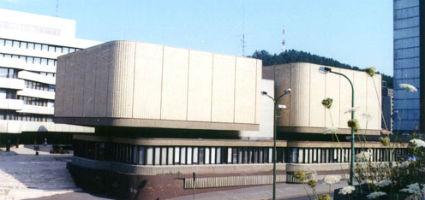
Bela Dornyay Museum - Salgótarján
 |
Address: 3100, Salgótarján Múzeum tér 2.
Phone number: (32) 520-700
E-mail: titkarsag@dornyaymuzeum.hu
Opening hours: Tue-Sun 9-16
|
The exhibition has closed for visitors.
2014.04.23. - 2014.05.15.
Share it, if you like it:


Museum tickets, service costs:
|
Ticket for adults
|
630 HUF
|
/ capita
|
|
Ticket for students
|
315 HUF
|
/ capita
|
|
Ticket for students
(valid for the chamber exhibition)
|
100 HUF
|
/ capita
|
|
Ticket for pensioners
|
315 HUF
|
/ capita
|
|
Ticket for pensioners
(valid for the chamber exhibition)
|
100 HUF
|
/ capita
|
|
Ticket for families
|
1500 HUF
|
|
|
Combined ticket for adults
(valid for the Nógrád Historical Museum + the Mining Exhibition)
|
1050 HUF
|
/ capita
|
|
Combined ticket for students
(valid for the Nógrád Historical Museum + the Mining Exhibition)
|
525 HUF
|
/ capita
|
|
Combined ticket for pensioners
(valid for the Nógrád Historical Museum + the Mining Exhibition)
|
525 HUF
|
/ capita
|
|
Sponsors' ticket
(minimal cost )
|
100 HUF
|
/ capita
|
|
Professional guide
|
3150 HUF
|
|
|
Photography
|
300 HUF
|
|
|
Video
|
500 HUF
|
He was born on 25 August, 1933 in Salgótarján. He spent his childhood in Pásztó. The region great impact on his work throughout his life, he called Pásztó Magic Valley. He graduated from The Theatre, Film and Television College as a director in 1958. His headteacher was Márton Keleti. Subsequently he attended Rome's Film School (Centro Sperimentale di Cinematografia). Then, until 1961, he worked at the collage as a professor. He was a founding member of the Béla Balázs Studio. His creative career continued at the successor of the Budapest Film Studio, the IV Studios, managed by Stephen Nemeskürty. His career began as a documentary film maker. The moving picture 'Track Workers' (college final exam work) made physical work visual and audible impact element and also rhythm forming factor. He worked as a cameraman with the movie 'Gypsies' directed by Sándor Sárqa The film was a diagnosis of Hungarian reality of the times. Tisza's film studies led to his first feature film, 'Sodrásban' (Drifting) which yielded international success immediately. The movie High School was based on the novel by Miklós Mészöly, which was followed by his lyrical statements about dying Hungarian villages, 'Deqad County'. Béla Bartók and music in general influenced him from the beginning. Orpheus and Eurydice with the visual display of music by Gluck was a philosophical reflection on the meaning of human life.
Further memorable works were 'The Green Price', 'Baptism', 'Peer Gynt', 'Our Heritage', 'Customs Border', 'Chronicle', 'Two Trains Daily', 'Legato', 1Death Dance' 'Pottery', 'Roman Sonata', 'God's Creatures' 'The Night, 'Roots' ( Bartók series) ,'Non-traditional Parisian Inventory' and 'Kerala Mosaics'.
He gave master classes in India (1985, 1994, 1995, 1996), and also juried in Cannes among others. In 1990 he presented his still photography exhibition at the Art Gallery. He prove4d his talent as a poet in the poem Portuguese Galleon ( Physalia).
His work was recognized by many honours: In 1963 he won the Karlovy Vary Film Festival's grand prize, in 1965 the Film Critics' Award, in 1969 he was honoured with the Béla Balazs Prize, in 1970 he was awarded the Special Prize at the Cannes Festival for his movie 'High School'. In 1981 he became a Meritorious Artist, in 1991 and was awarded wit the Kossuth Prize, in 1999 he received the Hungarian Film Festival Lifetime Achievement Award. In 2005 he was awarded with the title of Master of Hungarian Motion Picture. István Gaál was among the candidates for the 2007 Prima Primissima Award for Hungarian Theatre and Cinema. He passed away on 25 September, 2007. The Hungarian Film Artists Association and the Motion Picture Public Foundation considered István Gaál their own family. On the 75th Anniversary of his birth, on 25 August 2008 in memoriam of his passing , on Museum Square in Pásztó, the István Gaál memorial room was with his furniture, personal belongings, furnished in accordance with his apartment in Budapest.
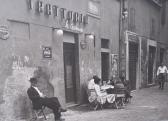
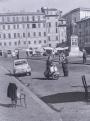
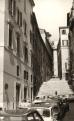
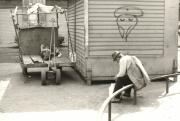
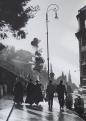
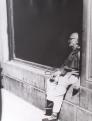
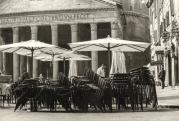
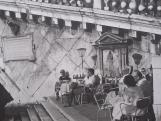
We selected our material for the photo display 'Versions for Rome and Italy' from the Fine Arts collection of the Dornyay Béla Museum in Salgótarján selects which consists of István Gaál's beautiful photos from 1959 and 1960. He shows Rome, his favourite city, not only from historical perspective, early Christian and Renaissance buildings, elegant steps through, but also by showing people wandering in the narrow alleys, drying clothes, vendors that shows this protean city closer to reality. These images could almost be events of a single-day.
|
|