2026. October 17. Saturday
Collection of Local History of Ferencváros - Budapest
|
|
Address: 1092, Budapest Ráday u. 18. (bejárat az Erkel u. 15. felől)
Phone number: (1) 218-7420
E-mail: ferencvarosigyujtemeny@gmail.com
Opening hours: Tue-Fri 12-18, Sat 10-14
|
The exhibition has closed for visitors.
2012.12.14. - 2013.02.23.
Share it, if you like it:


It was 220 years ago that some citizens living in the suburbs before the Gate to Kecskemét turned Monarch Franz I. and asked him to give his name to the district. Since there had already been districts named after Terese, Joseph and Lipot, the citizens thought of naming their district after a fames person. Their wish soon came true, when on 4 December 1791 they were informed by the Royal Council that their application was accepted. The story began with this letter. The story of Ferencváros began with this story.
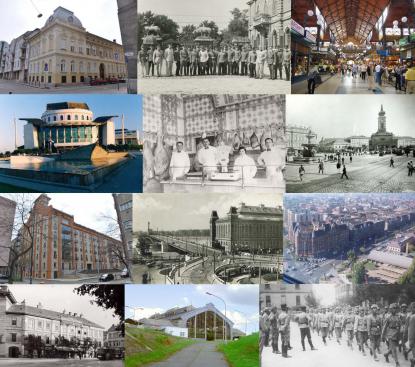
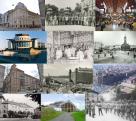
Our exhibition deals with the history of the 220-year-old Ferencváros through 220 photos. During the past centuries, a number of important events took place in Ferencváros. Our exhibition endeavours to show some of them that are considered very important. On the other hand, it is not only those events that affected the district significantly, we also want to show what life has looked like in Ferencváros. We selected the both time and place in mind.
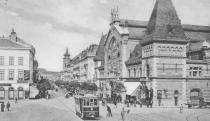
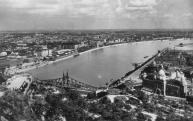
We divided the photos into five categories. The first is about the period 1890-1914, when the district was in a state of development, with national buildings, e.g. the Museum of Applied Arts. By the first half of the 1900, Ferencváros became the centre of food industry for Budapest, with Közvágóhíd, Sertésvágóhíd, Concordia Mill and the Zwack Factory.
The second unit is about the period between WWI and WWII. There are less elegant photos in this unit, but life of people can be reviewed. The main issues of the era were shortage in housing, with emergency lodgings and illegal slums in the suburbs. The third unit is about the siege of Budapest, with a few typical photos, fights in the streets and the rebuilding of the town.
The morose '50s were not that morose which is proven by some happy photos. We end this unit with photos of the Revolution of 1956. The forth unit is about the Socialist era, with the most considerable achievement of the era, the József Attila housing estate that was under construction for 25 years. These photos are, however, about something else, too. Namely, that the suburbs of the district were not so in favour of life and the task of the professionals who were hired to reconstruct the area had a serious task ahead of them. We highlighted two typical features of the era: queuing in front of shops and a set up photo in a factory).
The fifth unit is about the past 22 years, after the change of social system in Hungary. Improvement of Ráday Street, the rehabilitation of the Central Ferencváros Block, the new town centre in Soroksári Street is in focus. The National Theatre, the Hall of Art, the Holocaust Memorial Centre, the Music House in Páva Street. New squares and housing estates are the future of the district.
Our exhibition deals with the history of the 220-year-old Ferencváros through 220 photos. During the past centuries, a number of important events took place in Ferencváros. Our exhibition endeavours to show some of them that are considered very important. On the other hand, it is not only those events that affected the district significantly, we also want to show what life has looked like in Ferencváros. We selected the both time and place in mind.
We divided the photos into five categories. The first is about the period 1890-1914, when the district was in a state of development, with national buildings, e.g. the Museum of Applied Arts. By the first half of the 1900, Ferencváros became the centre of food industry for Budapest, with Közvágóhíd, Sertésvágóhíd, Concordia Mill and the Zwack Factory.
The second unit is about the period between WWI and WWII. There are less elegant photos in this unit, but life of people can be reviewed. The main issues of the era were shortage in housing, with emergency lodgings and illegal slums in the suburbs. The third unit is about the siege of Budapest, with a few typical photos, fights in the streets and the rebuilding of the town.
The morose '50s were not that morose which is proven by some happy photos. We end this unit with photos of the Revolution of 1956. The forth unit is about the Socialist era, with the most considerable achievement of the era, the József Attila housing estate that was under construction for 25 years. These photos are, however, about something else, too. Namely, that the suburbs of the district were not so in favour of life and the task of the professionals who were hired to reconstruct the area had a serious task ahead of them. We highlighted two typical features of the era: queuing in front of shops and a set up photo in a factory).
The fifth unit is about the past 22 years, after the change of social system in Hungary. Improvement of Ráday Street, the rehabilitation of the Central Ferencváros Block, the new town centre in Soroksári Street is in focus. The National Theatre, the Hall of Art, the Holocaust Memorial Centre, the Music House in Páva Street. New squares and housing estates are the future of the district.
|
|