2026. June 1. Monday
Pál Kiss Museum - Tiszafüred
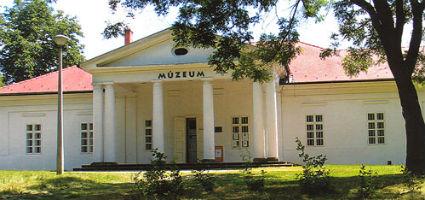 |
Address: 5350, Tiszafüred Tariczky sétány 6.
Phone number: (59) 352-106
E-mail: kisspalmuz@gmail.com
Opening hours: Tue-Sat 9-12, 13-17
|
The exhibition has closed for visitors.
2011.04.15. - 2011.06.18.
Share it, if you like it:


Museum tickets, service costs:
|
Ticket for adults
|
500 HUF
|
/ capita
|
|
Group ticket for adults
(min. 10 people)
|
150 HUF
|
/ capita
|
|
Ticket for students
|
250 HUF
|
/ capita
|
|
Ticket for pensioners
|
250 HUF
|
/ capita
|
|
Ticket for families
(2 adults + max. 3 children)
|
750 HUF
|
/ family
|
|
Program ticket
|
300 HUF
|
/ capita
|
|
Season ticket
|
1000 HUF
|
|
|
Group guide
(max. 40 people)
|
2000 HUF
|
/ group
|
|
Photography
|
1000 HUF
|
|
|
Video
|
1000 HUF
|
This exhibition is dedicated to the memory of Körmendi Lajos (1946-2005), the poet, the novelist, and the journalist of Nagykunság. The title of Körmendi's first volume of poems was Barbaricum and it was published in 1981, during the communist times.
The original meaning of the term 'Barbaricum' is the world beyond the Roman Imperial frontiers. But in Körmendi's reading the Barbaricum got a wider sense: the peripheral areas of a centre, the oposition of a certain centre. It refers for those times when a clear distinction was made between the 'Centre' and peripheral areas and history was seen from the centre. Although the peripheral areas also had their own unique culture. Körmendi's mission was to find and to show this unique culture of his birthplace, in the Nagykunság and Kocsis Csaba goes forward on this way and follows his 'former master', who was one of his real friends.
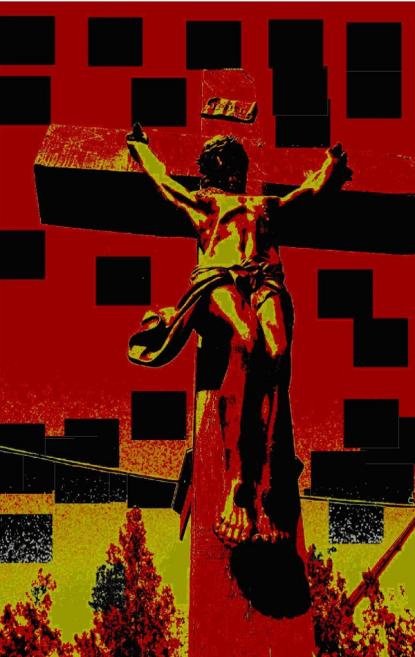
The motivation of Kocsis Csaba's activity is the revelation of an individual: our efforts for getting acquainted with our birthplace is a never-ending, longlasted activity. Kocsis Csaba places his objects into a set-off (contrast) position. In his pictures he puts his objects into unnatural aspect and exposition. This is the way of his provoking or drawing attention of the themes or problems concerned.
These pictures, photos were taken in different parts of the so-called 'Trans Tisza' Region of Hungary. This is the east part of Hungary with special characteristic features especially in ethnographic, in historical and in economic aspects.
The photos of skulls of rams mean something religious symbolism or ritual involvment and reffer to ancient Near East or Inner Asia. His other snapshots of Corpus Christi also show his commitment of Christian (Catolic) religious themes and traditions. The amazing colours of his portrait-photos and his extraordinary buildings also reflect special interests and deep involvment.
The original meaning of the term 'Barbaricum' is the world beyond the Roman Imperial frontiers. But in Körmendi's reading the Barbaricum got a wider sense: the peripheral areas of a centre, the oposition of a certain centre. It refers for those times when a clear distinction was made between the 'Centre' and peripheral areas and history was seen from the centre. Although the peripheral areas also had their own unique culture. Körmendi's mission was to find and to show this unique culture of his birthplace, in the Nagykunság and Kocsis Csaba goes forward on this way and follows his 'former master', who was one of his real friends.
The motivation of Kocsis Csaba's activity is the revelation of an individual: our efforts for getting acquainted with our birthplace is a never-ending, longlasted activity. Kocsis Csaba places his objects into a set-off (contrast) position. In his pictures he puts his objects into unnatural aspect and exposition. This is the way of his provoking or drawing attention of the themes or problems concerned.
These pictures, photos were taken in different parts of the so-called 'Trans Tisza' Region of Hungary. This is the east part of Hungary with special characteristic features especially in ethnographic, in historical and in economic aspects.
The photos of skulls of rams mean something religious symbolism or ritual involvment and reffer to ancient Near East or Inner Asia. His other snapshots of Corpus Christi also show his commitment of Christian (Catolic) religious themes and traditions. The amazing colours of his portrait-photos and his extraordinary buildings also reflect special interests and deep involvment.
|
|