Event calendar
2026. January
29
30
31
1
2
3
4
5
6
7
8
9
10
11
12
13
14
15
16
17
18
19
20
21
22
23
24
25
26
27
28
29
30
31
1
2025.05.28. - 2025.09.28.
Budapest
2025.04.17. - 2025.05.17.
Budapest
2025.04.10. - 2025.05.11.
Szombathely
2025.04.07. - 2025.04.11.
Budapest
2025.03.28. - 2025.05.11.
Budapest
M80
2025.03.05. - 2025.09.15.
Budapest
2025.02.06. - 2025.05.11.
Budapest
2024.12.13. - 2025.06.30.
Budapest
2024.12.12. - 2025.06.01.
Budapest
2024.10.15. - 2025.08.31.
Budapest
2012.03.01. - 2012.03.31.
Vác
2012.02.01. - 2012.02.29.
Miskolc
2012.01.22. - 1970.01.01.
Budapest
2011.10.04. - 1970.01.01.
Nagykáta
2011.10.01. - 1970.01.01.
Nagykáta
2011.10.01. - 1970.01.01.
Nagykáta
2011.09.30. - 1970.01.01.
Nagykáta
2011.09.30. - 1970.01.01.
Nagykáta
2011.07.04. - 2011.07.08.
Budapest
Bereg Museum - Vásárosnamény
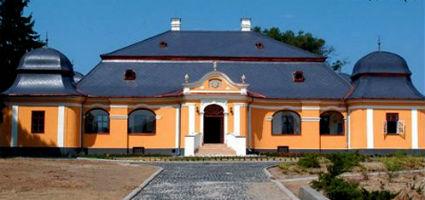
The musuem building
Address: 4800, Vásárosnamény Szabadság tér 26.
Phone number: (45) 470-638, (45) 570-146
Opening hours: 01.04-31.10.: Tue-Fri 8.30-16.30, Sat-Sun 8-16
01.11-31.03.: Tue-Fri 8-16
Csiszár Árpád founded the Beregi Museum of Vásárosnamény in 1963. The collection is hosted by one of the nicest building of the town, the Máthé mansion in 13, Rákóczi Street from 1970. Our collection is listed nationally and internationally due to its vernacular material of a few thousand pieces. continue
Permanent exhibitions
The determining role of the Tomcsányi and Lónyai family, as well as the role of the castle in the history of Eastern-Hungary is demonstrated in a separate room The family tree of the academic Pál Tomcsányi and his wife, Sarolta Szemere, an outstanding embroidery artist, is also displayed in this room. continue
Patrons in villages in Bereg used to be of noble families. They helped communities in their region, helped them to survive and also patronised talented young men. continue
A taste of the exhibition
The last ward with around fifty cast iron stoves made in the Bereg region looks at the park behind the building. The ward is also apt to hold workshops and programs of the Museum Friends Association. continue
A taste of the exhibition
In our region, life was built around fibre works traditionally. The most determining moments of the life of the people who lived in the Bereg Tiszahát were related to textile made with weaving and then ornamented with embroidery. continue