2026. May 10. Sunday
Ferenc Hopp Museum of Asian Arts - Budapest
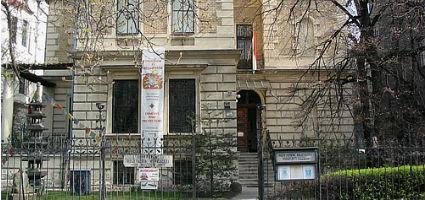 |
Address: 1062, Budapest Andrássy út 103.
Phone number: (1) 322-8476
E-mail: hoppmuseum@hoppmuseum.hu
Opening hours: Mon-Sun 10-18
|
The exhibition has closed for visitors.
2002.10.30. - 2004.09.30.
Share it, if you like it:


Museum tickets, service costs:
|
Ticket for adults
|
1000 HUF
|
|
|
Ticket for students
|
500 HUF
|
|
|
Ticket for pensioners
|
550 HUF
|
We generally think that the Tibetian and Mongolian religion is mostly determined by Buddhism, one of the fundamental characteristics is sincretism. The key thought of the exhibition is the mixture and practice of religious systems and traditions.
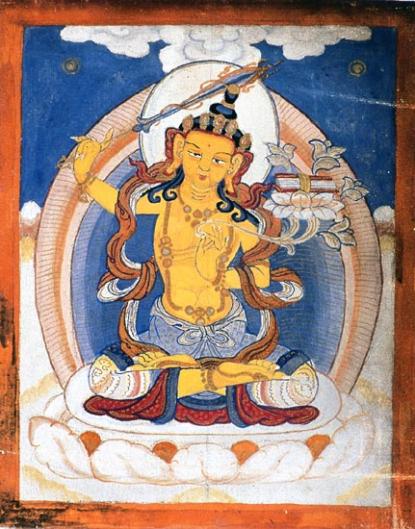
The ancient Tibetian religion devides the world (according to the general samanistic idea) into three different parts: heaven, earth and hell. In these sectors we can find various kinds of beings: high gods, middle spirits and underground (snake) spirits.
The exhibition begins with the buddhist lifewheel, which represents the 6 different kinds of existance in the samsara. In the upper hemisphere there are the haughty gods, the semi gods and human beings. In the lawer hemi-sphere we can see the animals, the hunger spirits and the hell-dwellers. According to this the first room demonstrates the world of human beings and the cult of good furtune, prayer flags and astrology, whereas the second room represents the different protecting gods and amuletts.
In the third room we can see the doctrine protector gods (the dharmapalas), and such gods and demons that mostly appear on small pictures. The fourth room represents the world of hells, and also gives a taste of the world of the manilamas who were teaching moral lessons through a representation in the form of pictures.
Our new exhibition undertakes to show visitors the objects and cults of the popular religion in a harmonious visual environment.
The exhibition represents materials that belong to the Hopp Museum but so far have not been published. Besides these, a significant collection of private materials and of the Etnographical Museum are also exhibited.
The ancient Tibetian religion devides the world (according to the general samanistic idea) into three different parts: heaven, earth and hell. In these sectors we can find various kinds of beings: high gods, middle spirits and underground (snake) spirits.
The exhibition begins with the buddhist lifewheel, which represents the 6 different kinds of existance in the samsara. In the upper hemisphere there are the haughty gods, the semi gods and human beings. In the lawer hemi-sphere we can see the animals, the hunger spirits and the hell-dwellers. According to this the first room demonstrates the world of human beings and the cult of good furtune, prayer flags and astrology, whereas the second room represents the different protecting gods and amuletts.
In the third room we can see the doctrine protector gods (the dharmapalas), and such gods and demons that mostly appear on small pictures. The fourth room represents the world of hells, and also gives a taste of the world of the manilamas who were teaching moral lessons through a representation in the form of pictures.
Our new exhibition undertakes to show visitors the objects and cults of the popular religion in a harmonious visual environment.
The exhibition represents materials that belong to the Hopp Museum but so far have not been published. Besides these, a significant collection of private materials and of the Etnographical Museum are also exhibited.
|
|