2026. May 21. Thursday
Palóc Museum - Balassagyarmat
|
|
Address: 2660, Balassagyarmat Palóc liget 1.
Phone number: (35) 300-168, (35) 500-133
E-mail: info@palocmuzeum.hu
Opening hours: Sat-Sun 9-16
|
The exhibition has closed for visitors.
2008.01.18. - 2008.03.15.
Share it, if you like it:


Museum tickets, service costs:
|
Ticket for adults
(26-61 years of age)
|
800 HUF
|
/ capita
|
|
Ticket for students
(6-26 years of age)
|
400 HUF
|
/ capita
|
|
Group ticket for students
|
4300 HUF
|
|
|
Group ticket for students
|
5600 HUF
|
|
|
Ticket for pensioners
(62-70 years of age)
|
400 HUF
|
/ capita
|
|
Ticket for families
(2 adults + 2 children)
|
1800 HUF
|
/ family
|
|
Combined ticket for families
|
2300 HUF
|
/ family
|
|
Program ticket
|
400 HUF
|
/ capita
|
|
Guide
|
3500 HUF
|
/ group
|
|
Guide
|
4700 HUF
|
/ group
|
|
Photography
|
1200 HUF
|
|
|
Photography
|
1800 HUF
|
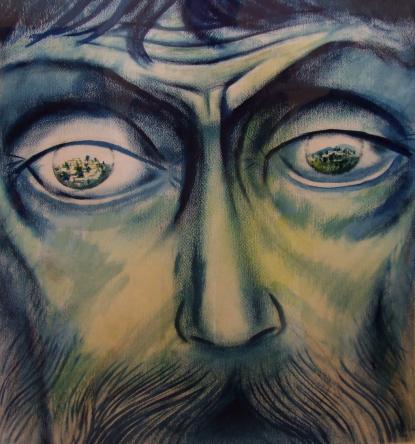
Zoltán Réti (1923-) was born in Nógrád where he has lived and worked all his life. Even though he has never been an internationally acclaimed artist, he never wanted to move anywhere else. He believes his main task is to record the land and people of Nógrád in his aquarelle paintings that perfectly fit the emotions relating to the topic. He has shown his artworks at a number of exhibitions both abroad and Hungary. Zoltán Réti’s art played a significant role in making the aquarelle gender popular again.
He has always been inspired by being involved in related art forms in the spirit of sisterhood of muses. He worked as a music teacher at the Márk Rózsavölgy Music School in Balassagyarmat for decades. Later he was the manager of the school. He wrote two monographs of the man the school had been named for.
He has always been inspired by publishing writings of poets and writers from Nógrád. He does not simply illustrate these volumes but also recreates the literary works by his own artistic form. He is really involved in the literary works of Kálmán Mikszáth, Jenő Komjáthy Bálint Balassi and Madách Imre. Pages he id to illustrate the "Tragedy of Man" have been published in two volumes. The visions of Madách placed in Nógrád county inspired a number of literary historians.
He began to deal with the representation of Moses about twenty years ago. The first 16 pages of the series were first shown at the exhibition of the National Theatre when it celebrated the centenary of the premiere of the play. Ever since then, he has done ten new pages. Thus the whole series is made up of 28 pages. A new issue surfaced: Zoltán Réti has to portray biblical topics by aquarelle in terms of the Jewish-Hungarian common fate, the history of blood and fire.
The series by Zoltán Réti is the only ambitious reworking of drama and the topic.
Dr. Ferenc Kerényi, literary historian
He has always been inspired by being involved in related art forms in the spirit of sisterhood of muses. He worked as a music teacher at the Márk Rózsavölgy Music School in Balassagyarmat for decades. Later he was the manager of the school. He wrote two monographs of the man the school had been named for.
He has always been inspired by publishing writings of poets and writers from Nógrád. He does not simply illustrate these volumes but also recreates the literary works by his own artistic form. He is really involved in the literary works of Kálmán Mikszáth, Jenő Komjáthy Bálint Balassi and Madách Imre. Pages he id to illustrate the "Tragedy of Man" have been published in two volumes. The visions of Madách placed in Nógrád county inspired a number of literary historians.
He began to deal with the representation of Moses about twenty years ago. The first 16 pages of the series were first shown at the exhibition of the National Theatre when it celebrated the centenary of the premiere of the play. Ever since then, he has done ten new pages. Thus the whole series is made up of 28 pages. A new issue surfaced: Zoltán Réti has to portray biblical topics by aquarelle in terms of the Jewish-Hungarian common fate, the history of blood and fire.
The series by Zoltán Réti is the only ambitious reworking of drama and the topic.
Dr. Ferenc Kerényi, literary historian
|
|