2026. June 13. Saturday
Semmelweis Museum, Library and Archives of the History of Medicine - Budapest
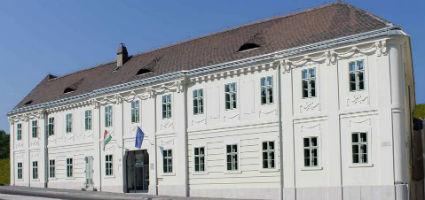 |
Address: 1013, Budapest Apród u.1-3.
Phone number: (1) 201-1577, (1) 375-3533
E-mail: semmelweis@museum.hu
Opening hours: Temporarily closed.
|
The exhibition has closed for visitors.
2007.10.30. - 2008.09.30.
Share it, if you like it:


Museum tickets, service costs:
|
Individual ticket for adults
|
700 HUF
|
/ capita
|
|
Individual ticket for students
|
350 HUF
|
/ capita
|
|
Individual ticket for pensioners
|
350 HUF
|
/ capita
|
|
Individual guide
(up to 10 people)
|
1000 HUF
|
/ group
|
|
Individual guide
(11-20 people)
|
2000 HUF
|
/ group
|
|
Photography
|
600 HUF
|
|
|
Video
|
1500 HUF
|
Pest that killed people for over 500 years had a deeper impact on humanity than any other infection. Its effect in economy, society and culture can be equally established. In 1347 the infection stooped on Europe in extreme waves. These changed the life and culture of Europe radically. Until the beginning of the 19th century, pest attacked all over again. The consequence of it was not only obvios in public health, medicine but also in religion, methods of burial, economy, society, as well as art and its methods. This present exhibition focuses on the battle of man and illness. This battle was way too long since the reason of the illness and the spreading of the disease was discovered only in 1894. Beside science, religious beliefs played important part in the battle during which the only way of protection was fleeing.
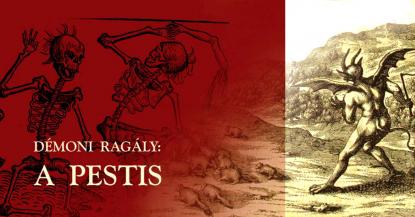
We invite our visitors to a walk in the past. They can enter into a town under quarantine, can learn about the characteristics of the disease, the symptoms, but also can see original medical book rarities with ‘scientific’ answers to the disease and the its research. After these, the visitors can learn about applied medicine and methods. A review informs on the fertile relation of the disease and art while the visitors can also picture who people tried to be saved by the help of varied amulets and Gods.
Our exhibition is not simply the history of healing, culture and mentality history, but it also provides information for secondary and collage students for their studies.
We invite our visitors to a walk in the past. They can enter into a town under quarantine, can learn about the characteristics of the disease, the symptoms, but also can see original medical book rarities with ‘scientific’ answers to the disease and the its research. After these, the visitors can learn about applied medicine and methods. A review informs on the fertile relation of the disease and art while the visitors can also picture who people tried to be saved by the help of varied amulets and Gods.
Our exhibition is not simply the history of healing, culture and mentality history, but it also provides information for secondary and collage students for their studies.
|
|
