2026. January 14. Wednesday
Town Museum of Gödöllő - Gödöllő
|
|
Address: 2100, Gödöllő Szabadság tér 5.
Phone number: (28) 422-002, (28) 422-003
E-mail: info@godolloimuzeum.hu
Opening hours: Wed-Sun 10-16
|
The exhibition has closed for visitors.
2006.09.29. - 2006.11.29.
Share it, if you like it:


Museum tickets, service costs:
|
Ticket for adults
(26-62 years of age)
|
600 HUF
|
|
|
Group ticket for adults
(over 15 people)
|
450 HUF
|
/ capita
|
|
Ticket for students
|
300 HUF
|
|
|
Group ticket for students
(over 15 people)
|
250 HUF
|
/ capita
|
|
Ticket for pensioners
|
300 HUF
|
|
|
Group ticket for pensioners
(over 15 people)
|
250 HUF
|
/ capita
|
|
Ticket for families
(2 adults + 2 children)
|
1000 HUF
|
/ family
|
|
Photography
|
250 HUF
|
The lover of nature, Ignácz Ferenc, who now lives in Australia, offered the material he had collected in the previous ten years to the town of his birth, Gödöllő, in 1988. The most valuable part of the collection of over ten thousand pieces is from Papua New Guinea. This region first met modern civilization in the 1950's. The changes documented in the works of Ignácz are the first example of this kind in the museums of Hungary.
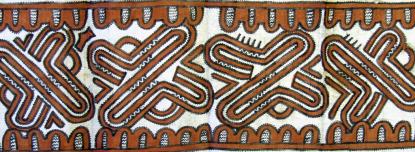
The so-called bark textile, in Polynesian 'Tapa', is a collection of objects with the same root in culture and technique. The objects originating in South-East Asia, Melanesia, Polynesia and Micronesia were made with almost the same technique and that the trees that serve as the raw material are almost the same is not by chance either.
There are over 100 objects in the collection of Ignácz Ferenc that was made of Tapa. Besides the ready made objects, the visitors may learn about the tapa textile and the process with which it is produced. The objects are accompanied with photos and drawings as well as tools used at the working with tapa.
This is the first work on the topic published in Hungarian. The literature published abroad does not pay considerable attention to the raw material even though it is very important from the point of view of the aboriginals who have always intended to use the treasures of nature to the most. Our exhibition and the catalogue strives to call attention to the harmony that the aboriginals formed with nature which could prove a good example for us.
The ethnographer Antoni Judit, the organizer of the exhibition
The so-called bark textile, in Polynesian 'Tapa', is a collection of objects with the same root in culture and technique. The objects originating in South-East Asia, Melanesia, Polynesia and Micronesia were made with almost the same technique and that the trees that serve as the raw material are almost the same is not by chance either.
There are over 100 objects in the collection of Ignácz Ferenc that was made of Tapa. Besides the ready made objects, the visitors may learn about the tapa textile and the process with which it is produced. The objects are accompanied with photos and drawings as well as tools used at the working with tapa.
This is the first work on the topic published in Hungarian. The literature published abroad does not pay considerable attention to the raw material even though it is very important from the point of view of the aboriginals who have always intended to use the treasures of nature to the most. Our exhibition and the catalogue strives to call attention to the harmony that the aboriginals formed with nature which could prove a good example for us.
The ethnographer Antoni Judit, the organizer of the exhibition
|
|