2026. March 13. Friday
Ferenc Hopp Museum of Asian Arts - Budapest
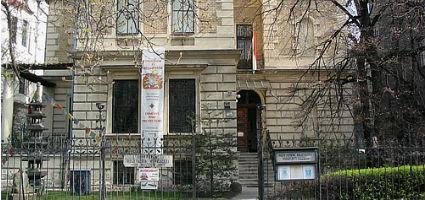 |
Address: 1062, Budapest Andrássy út 103.
Phone number: (1) 322-8476
E-mail: hoppmuseum@hoppmuseum.hu
Opening hours: Mon-Sun 10-18
|
The exhibition has closed for visitors.
2004.11.04. - 2005.05.01.
Share it, if you like it:


Museum tickets, service costs:
|
Ticket for adults
|
1000 HUF
|
|
|
Ticket for students
|
500 HUF
|
|
|
Ticket for pensioners
|
550 HUF
|
Our exhibition gives an insight into the grave paintings of the ancient Korea. The wall paintings are from the-Three State Period of Korea (57 BC-668 AD), from the most prospering and the northernmost kingdom at the region of Kogurja. Since there are very few memories from that period, the sources of researches are the archeological findings and the excavation of graves. The period of Three States is thus called the 'period of old graves'.
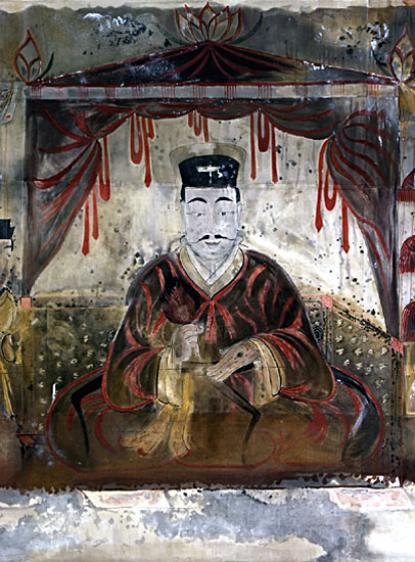
Besides painting and grave architecture, the clothing history, the culture of objects, and historic relationships with China and neighboring people in North Asia is enlightened by the grave painting of the Kogurja period. The graves and wall paintings were recently declared part of the world heritage.
The grave in the Hwanghe Territory in Anak District about 120kms from the Capitol, Phangja, was discovered in 1949. It is the biggest among the Kogurja graves with wall paintings and burial vaults. It was the burial place of the general Tongszu. Because of its structure and extent, the grave serves as a model. Its walls are built of stone panes. The walls have paintings all over them picturing the general and his wife, their household, their everyday activity, and the parade escorting the general.
We present the original size scale model of the grave and copies of the paintings. The visitors may receive information on the grave paintings and architecture of the ancient Korea. The life of the noble on the paintings is also interesting detail. The visitors may also take a peep into the darkened chambers and see workers with miner’s torches on their heads. In the other wards of the exhibition, we show the grave of the general Tongszu in the context of history and art history. We pay extra attention to the characteristics of the cult of the dead.
The history of how the wall paintings were moved to the museum is of a special interest. Chong Hyon-ung, painter from Korea made reproductions of the early wall paintings fulfilling the order of the Hungarian Embassy in Phjangjangi. The reproduction series of nine paintings was moved to the Korean Collection of the Ferenc Hopp East-Asian Art Museum in 1955. It was the present of the Institution of Cultural Relationships.
By presenting the burial vault and the copies of the paintings in their original environment, we wish to give an insight into a world so hard to approach.
Besides painting and grave architecture, the clothing history, the culture of objects, and historic relationships with China and neighboring people in North Asia is enlightened by the grave painting of the Kogurja period. The graves and wall paintings were recently declared part of the world heritage.
The grave in the Hwanghe Territory in Anak District about 120kms from the Capitol, Phangja, was discovered in 1949. It is the biggest among the Kogurja graves with wall paintings and burial vaults. It was the burial place of the general Tongszu. Because of its structure and extent, the grave serves as a model. Its walls are built of stone panes. The walls have paintings all over them picturing the general and his wife, their household, their everyday activity, and the parade escorting the general.
We present the original size scale model of the grave and copies of the paintings. The visitors may receive information on the grave paintings and architecture of the ancient Korea. The life of the noble on the paintings is also interesting detail. The visitors may also take a peep into the darkened chambers and see workers with miner’s torches on their heads. In the other wards of the exhibition, we show the grave of the general Tongszu in the context of history and art history. We pay extra attention to the characteristics of the cult of the dead.
The history of how the wall paintings were moved to the museum is of a special interest. Chong Hyon-ung, painter from Korea made reproductions of the early wall paintings fulfilling the order of the Hungarian Embassy in Phjangjangi. The reproduction series of nine paintings was moved to the Korean Collection of the Ferenc Hopp East-Asian Art Museum in 1955. It was the present of the Institution of Cultural Relationships.
By presenting the burial vault and the copies of the paintings in their original environment, we wish to give an insight into a world so hard to approach.
|
|