2026. June 7. Sunday
Kunsthalle - Budapest
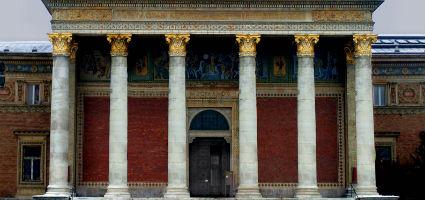 |
Address: 1146, Budapest Dózsa György út 37.
Phone number: (1) 460-7000, (1) 363-2671
E-mail: info@mucsarnok.hu
Opening hours: Tue-Wed 10-18, Thu 12-20, Fri-Sun 10-18
|
The exhibition has closed for visitors.
2003.12.18. - 2004.02.08.
Share it, if you like it:


Museum tickets, service costs:
|
Ticket for adults
|
1200 HUF
|
|
|
Ticket for adults
(valid for the Kunsthalle and the Ernst Museum)
|
1400 HUF
|
|
|
Group ticket for adults
(from over 10 people)
|
800 HUF
|
/ capita
|
|
Ticket for students
(EU citizens from the age of 6 to 26 )
|
600 HUF
|
|
|
Ticket for students
(valid for the Kunsthalle and the Ernst Museum, 6-26 years of age)
|
700 HUF
|
|
|
Group ticket for students
(from over 10 people)
|
400 HUF
|
/ capita
|
|
Ticket for pensioners
(valid for the Kunsthalle and the Ernst Museum, 62-70 years of age)
|
700 HUF
|
|
|
Ticket for pensioners
(EU citizens from the age of 62 to 70)
|
600 HUF
|
|
|
Ticket for families
(1 adults + 2 children)
|
1800 HUF
|
/ family
|
|
Ticket for families
(2 adults + 2 children)
|
2400 HUF
|
/ family
|
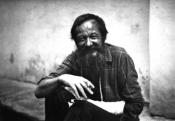
"Painter Sándor Altorjai is a lonely classic of modern Hungarian art. Just like Csontváry, he also worked as a chemist when he turned toward painting and he also drifted away from the official line of art of the 1960'ies and 1970'ies.
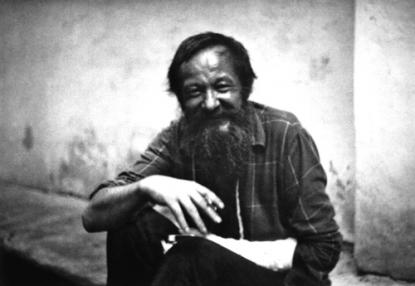
Szigligeti worked in solitude; only a few friends and artist mates (András Baranyay, Miklós Erdély, Ákos Szabó) followed what he was doing. His exhibitions belonged to the forbidden category. Even after his death he had forbidden works which were always picked up by the jury from the materials of the collective exhibitions (Meleg kép, Integető, Fedőnév). Conscious of his serious disease he realized how much work he had still to do, and that he had to revise his own works.
After his early pictures connecting to surnaturalism and figurative gesture painting, in his last months he began to restructure and repaint his pictures. Day and night he spent in the workshop, and it seems that he reached his goal: he closed off his lifework by monumental works using video and audio elements, various objects and photographs, too. The invitation designed by himself was meant both for a funeral and an exhibition. He had two major posthumous exhibitions: 1980 - Óbuda; 1990 -Székesfehérvár."
(quote from the writing of Gábor Andrási)
Szigligeti worked in solitude; only a few friends and artist mates (András Baranyay, Miklós Erdély, Ákos Szabó) followed what he was doing. His exhibitions belonged to the forbidden category. Even after his death he had forbidden works which were always picked up by the jury from the materials of the collective exhibitions (Meleg kép, Integető, Fedőnév). Conscious of his serious disease he realized how much work he had still to do, and that he had to revise his own works.
After his early pictures connecting to surnaturalism and figurative gesture painting, in his last months he began to restructure and repaint his pictures. Day and night he spent in the workshop, and it seems that he reached his goal: he closed off his lifework by monumental works using video and audio elements, various objects and photographs, too. The invitation designed by himself was meant both for a funeral and an exhibition. He had two major posthumous exhibitions: 1980 - Óbuda; 1990 -Székesfehérvár."
(quote from the writing of Gábor Andrási)
|
|