2026. June 6. Saturday
The exhibition has closed for visitors.
2015.10.29. - 2015.12.31.
Share it, if you like it:


The Kuny Domokos Museum is to commemorate János Vaszary in October 2015 The immortal master of Hungarian painting lived in Tata from 1909 to his death in 1939. He spent his time in his studio cottage from spring to autumn the garden of which inspired a number of his paintings. The exhibition presents paintings by Kuny he did in Tata.
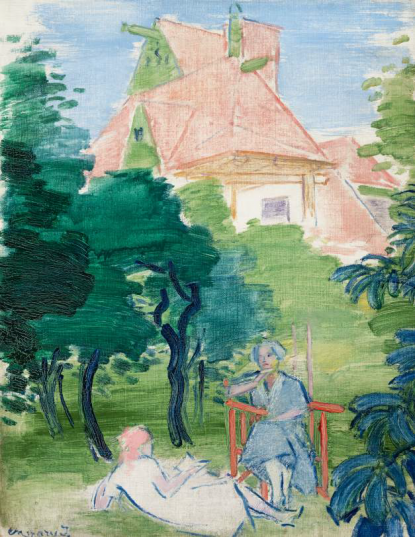
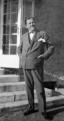
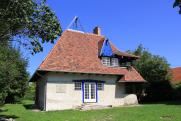
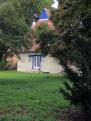
The mansion of the painter János Vaszary (1897-1939) was built in Tata-Tóváros, near Lake Cseke in 1912 . The special building deserves attention especially for its owner, who belongs to the greatest masters of Hungarian painting, and who arrived as a pilgrim far to the place where he found his home in this small town. What led and what kept Vaszary there? What was his house and garden like? What image did he paint of his home? These are the questions we are looking the answers for at the exhibition and its accompanying catalogue.
The key motif to the home of Vaszary in Tata is the garden. This was the attraction for the painter, and it was the most important feature of his tabernacle. Having fallen in love with the English garden Tata, its waters and green foliage, as soon as he had the opportunity, he purchased land, the closest possible to the English Garden. Where his land and house was, on the edge of Tóváros, at that time there were gardens, with fruit trees. Buildings were barely visible in the area - it also clearly shows in his contemporary paintings.
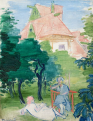
After the composition Horsemen in the Park (1919)the paintings from the 1920s, 30s show that Vaszary broke away from paiting the outer garden. The real beauty of landscape, the leaves, their strength, the intangible view of the English garden was transformed into an interior landscape. He did not paint the count's garden, but his own garden it was his motif. He began to paint his own garden, which became an idyllic world, a paradise, a shelter for him. The paintings Two Women in the Garden and the In the Park (1928) are well known from this era.
It is our town's heritage, as it is our history, history to nurture memory of János Vaszary, understanding of his oeuvre, to assess the significance of the oeuvre. Our goal is to aid the return of the immortal master to this lovely town, as he should be an integral part of the town's cultural history and art tradition.
The mansion of the painter János Vaszary (1897-1939) was built in Tata-Tóváros, near Lake Cseke in 1912 . The special building deserves attention especially for its owner, who belongs to the greatest masters of Hungarian painting, and who arrived as a pilgrim far to the place where he found his home in this small town. What led and what kept Vaszary there? What was his house and garden like? What image did he paint of his home? These are the questions we are looking the answers for at the exhibition and its accompanying catalogue.
The key motif to the home of Vaszary in Tata is the garden. This was the attraction for the painter, and it was the most important feature of his tabernacle. Having fallen in love with the English garden Tata, its waters and green foliage, as soon as he had the opportunity, he purchased land, the closest possible to the English Garden. Where his land and house was, on the edge of Tóváros, at that time there were gardens, with fruit trees. Buildings were barely visible in the area - it also clearly shows in his contemporary paintings.
After the composition Horsemen in the Park (1919)the paintings from the 1920s, 30s show that Vaszary broke away from paiting the outer garden. The real beauty of landscape, the leaves, their strength, the intangible view of the English garden was transformed into an interior landscape. He did not paint the count's garden, but his own garden it was his motif. He began to paint his own garden, which became an idyllic world, a paradise, a shelter for him. The paintings Two Women in the Garden and the In the Park (1928) are well known from this era.
It is our town's heritage, as it is our history, history to nurture memory of János Vaszary, understanding of his oeuvre, to assess the significance of the oeuvre. Our goal is to aid the return of the immortal master to this lovely town, as he should be an integral part of the town's cultural history and art tradition.
|
|