2026. May 7. Thursday
Pál Kiss Museum - Tiszafüred
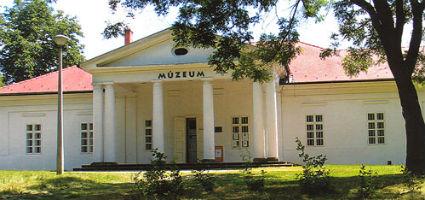 |
Address: 5350, Tiszafüred Tariczky sétány 6.
Phone number: (59) 352-106
E-mail: kisspalmuz@gmail.com
Opening hours: Tue-Sat 9-12, 13-17
|
The exhibition has closed for visitors.
2003.09.19. - 2003.10.12.
Share it, if you like it:


Museum tickets, service costs:
|
Ticket for adults
|
500 HUF
|
/ capita
|
|
Group ticket for adults
(min. 10 people)
|
150 HUF
|
/ capita
|
|
Ticket for students
|
250 HUF
|
/ capita
|
|
Ticket for pensioners
|
250 HUF
|
/ capita
|
|
Ticket for families
(2 adults + max. 3 children)
|
750 HUF
|
/ family
|
|
Program ticket
|
300 HUF
|
/ capita
|
|
Season ticket
|
1000 HUF
|
|
|
Group guide
(max. 40 people)
|
2000 HUF
|
/ group
|
|
Photography
|
1000 HUF
|
|
|
Video
|
1000 HUF
|
Out of the thousands of electrographic artists I only know about a dozen who approach the special character of this art as discoverers. The works created in this special field of art could not possibly be made in any other form of arts, for photocopiers and electronic technique have an inevitable part in the process.
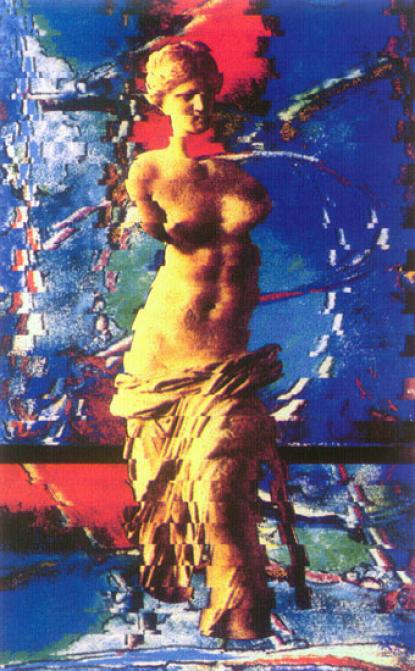
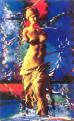
From the aspect of the electrographic art the significance of these works is that they help in drawing the borderline of the style, and at the same time serve as an evidence that the electrographic art is an independent art that cannot be mixed up with any other things, involving photography and graphics. Joseph Kadar belongs to the group of those artists that contributed much to electrographic art.
One of the characteristics of the electrographic art is that of aleatory. This randomization makes it possible for the artist and the machine to hold a dialogue. Thus the machine is not only a co-worker, but an idea-mate as well. The connection gives life to a hybrid being, which could even be a version of La Mettire's machine men. All the more, a number of electrographic artists even desire to work with an imperfect machine, for they think it is an inevitable part of the art work.
Kadar has a photocopier on which he can regularly create creases. Through this Kadar brought the third dimension into the unalienable characteristics of the electrographic art, and further extended the border of creativity this branch of art. Through bringing in the most modern technique he renews a an ancient Japanese tradition starting off from the method of Tsujigahana.
Chritian Rigal
From the aspect of the electrographic art the significance of these works is that they help in drawing the borderline of the style, and at the same time serve as an evidence that the electrographic art is an independent art that cannot be mixed up with any other things, involving photography and graphics. Joseph Kadar belongs to the group of those artists that contributed much to electrographic art.
One of the characteristics of the electrographic art is that of aleatory. This randomization makes it possible for the artist and the machine to hold a dialogue. Thus the machine is not only a co-worker, but an idea-mate as well. The connection gives life to a hybrid being, which could even be a version of La Mettire's machine men. All the more, a number of electrographic artists even desire to work with an imperfect machine, for they think it is an inevitable part of the art work.
Kadar has a photocopier on which he can regularly create creases. Through this Kadar brought the third dimension into the unalienable characteristics of the electrographic art, and further extended the border of creativity this branch of art. Through bringing in the most modern technique he renews a an ancient Japanese tradition starting off from the method of Tsujigahana.
Chritian Rigal
|
|