2026. March 12. Thursday
Ferenczy Museum Center - Szentendre Gallery - Szentendre
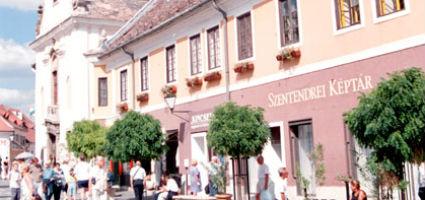 |
Address: 2000, Szentendre Fő tér 2-5.
Phone number: (20) 779-6657
E-mail: info@muzeumicentrum.hu
Opening hours: Thu-Sun 10-18
|
The exhibition has closed for visitors.
2012.09.05. - 2012.11.18.
Share it, if you like it:


Museum tickets, service costs:
|
Ticket for adults
|
3000 HUF
|
|
|
Group ticket for adults
(min. 10 people)
|
2200 HUF
|
/ capita
|
|
Individual ticket for students
|
1500 HUF
|
|
|
Group ticket for students
(min. 10 people)
|
800 HUF
|
/ capita
|
|
Individual ticket for pensioners
|
1500 HUF
|
|
|
Ticket for families
(2 adults + max. 3 children)
|
4000 HUF
|
/ family
|
|
Group guide
|
14000 HUF
|
/ group
|
|
Group guide
|
22000 HUF
|
/ group
|
Roman soldiers conquered present day Trans-Danubian region in the middle of the 1st century. They later called the province Pannonia. The region became part of a highly organized state, the Roman Empire. The economic system was soon set up after the arrival of the Romans in Pannonia. Cash flow was soon in effect, Latin became the official language, religions typical of the Mediterranean widely spread, towns were built of stone, military premises set up, bridges, roads and buildings were constructed, which made Pannonia present in the 'blood stream' of the empire.
People from Italy and other countries came to settle and work in town management, administration, religion. Soldiers received land after they were demobilized. Tradesmen and artisans came who brought goods from far away land with themselves. The latter, Celtic or people of Illyrian- Pannon origin fit in people of the empire without any significant affair.
The boundaries of the empire became the Danube (Danuvius). Defence of the boundaries were stressed issues in the empire. North of Pannonia, present day Slovakia populated by Kvads, east of Pannonia, present day Great Planes populated by Sarmata, were threatened by barbarian tribes. Along the river, chains of military camps and fortresses were set up to defend the ‘limes’ (border along the river).
The Danube Bend played especially important role. Over half a dozen camps, fortresses and watchtower dotted the line. Near the military buildings towns formed e.g. Szentendre, Esztergom that were populated by civilians and demobilized soldiers. The Province of Pannonia existed until mid 5th century when it broke under the attacks of barbarian people arriving from south. The Roman Empire had to hand Pannonia over to the Huns.
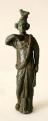
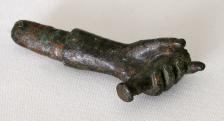
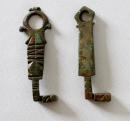
The exhibition invites the visitors to take a look inside the life of Pannonia during the 400 years of its existence, and also life by the Danube Bend. We shed light at the everyday life of people who populated the area, what they ate and drank, what hygiene they used, what agricultural means were available for them etc. We introduce noted excavation sites we walk by day after day, or one some of us lives in but in the past yielded wonderful finds.
Reconstructions, detailed descriptions, drawings and photos help the visitors to imagine what life looked like in Pannonia. The organizers hope that residents of the region will turn their interest in the region they live in.
|
|