2026. March 2. Monday
Ludwig Museum - Museum of Contemporary Art - Budapest
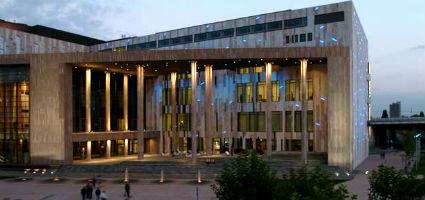 |
Address: 1095, Budapest Művészetek Palotája, Komor Marcell u. 1.
Phone number: (1) 555-3444, (1) 555-3457
E-mail: info@ludwigmuseum.hu
Opening hours: Permanent exhibition: Tue-Sun 10-18
Temporary exhibition: Tue-Sun 10-20 |
The exhibition has closed for visitors.
Share it, if you like it:


Museum tickets, service costs:
|
Group ticket
(over 20 people 20% discount)
|
1000 HUF
|
|
|
Ticket for adults
(valid for the temporal exhibitions)
|
1200 HUF
|
|
|
Ticket for students
(valid for the temporal exhibitions)
|
600 HUF
|
|
|
Ticket for pensioners
(valid for the temporal exhibitions)
|
600 HUF
|
|
|
Ticket for families
(1 parent + max. 4 children)
|
1600 HUF
|
/ family
|
|
Ticket for families
(2 parents + max. 4 children)
|
2400 HUF
|
/ family
|
|
Ticket for adults
|
960 HUF
|
|
|
Ticket for students
|
480 HUF
|
|
|
Program ticket
|
600 HUF
|
|
|
Guide
|
4000 HUF
|
|
|
Guide
|
5000 HUF
|
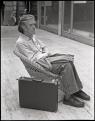
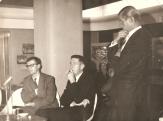
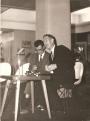
John Cage (1912-1992) was one of the major figures of avant-garde music, a versatile artist who was also a performer, lecturer, author, and visual artist. Throughout his career, Cage performed and lectured all over the world. With his visits to the countries that once were behind the so-called Iron Curtain, and with his live performances (for instance at the Zagreb Music Biennial in 1963, or the Warsaw Autumn Festival in 1964) he had a huge impact not only on composers but also on many young artists in Central and Eastern Europe. Besides concerts and performances and presenting his visual artworks and scores, the exhibition explores John Cage’s Eastern European travels and connections with the local art scenes, and, through the works of contemporary artists from Central and Eastern Europe, his still existing influence on this region.
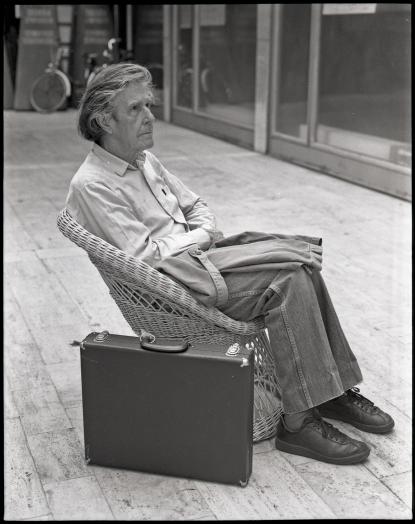
By introducing Chance and Indeterminacy into artistic practice - ideas that in the ideologically-politically determined Eastern-European mentality equalled freedom not only in artistic terms-, Cage has always been an important reference point for artists who challenge the traditional notion of authorship, who question the old concepts of the artwork and who refuse to renounce their artistic freedom because of official politics. Thus, the sound-installation Writing through the Essay, 'On the Duty of Civil Disobedience' (1985/91) is the centre of the exhibition. The randomized sentences cited from Henry David Thoreau's essay of 1849 point out that it is the duty of every person to refuse to cooperate and to tolerate the ensuing penalty if the government pursues a policy of injustice.
To quote Thoreau again, "All sound is nearly akin to Silence; it is a bubble on her surface which straightway bursts, an emblem of the strength and prolificness of the undercurrent" - an idea that was also crucial for John Cage who deliberated sound from any musical constraints, and this freedom of the sound that the music of John Cage represented still echoes in numerous works of contemporary artists.
By introducing Chance and Indeterminacy into artistic practice - ideas that in the ideologically-politically determined Eastern-European mentality equalled freedom not only in artistic terms-, Cage has always been an important reference point for artists who challenge the traditional notion of authorship, who question the old concepts of the artwork and who refuse to renounce their artistic freedom because of official politics. Thus, the sound-installation Writing through the Essay, 'On the Duty of Civil Disobedience' (1985/91) is the centre of the exhibition. The randomized sentences cited from Henry David Thoreau's essay of 1849 point out that it is the duty of every person to refuse to cooperate and to tolerate the ensuing penalty if the government pursues a policy of injustice.
To quote Thoreau again, "All sound is nearly akin to Silence; it is a bubble on her surface which straightway bursts, an emblem of the strength and prolificness of the undercurrent" - an idea that was also crucial for John Cage who deliberated sound from any musical constraints, and this freedom of the sound that the music of John Cage represented still echoes in numerous works of contemporary artists.
|
|