2026. September 19. Saturday
Share it, if you like it:


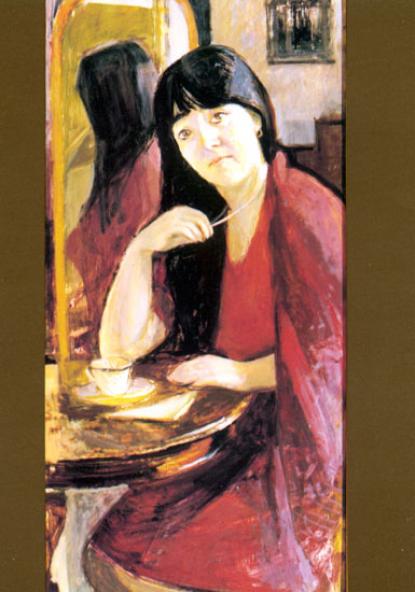
The art of János Nagy (1922-) keeps the classical conventionalities of the 20th century Hungarian painting. His roots are nourished from the mentality of Nagybánya. His style was influenced by the colours of István Szőnyi and those of Jenő Barcsay.
His works can be divided into several, well separating divisions, expressing his artistic periods.
Most of János Nagy's works result from his impressionistic vision. The fading moment, the opposition or harmonious charm of light and dark and the experience of painting in plein-air inspired the artist.
In his cubist pictures he was led by a search for logic and order. When the landscape is emphasized in the scene, then order is created in the steucture of the painting as well. This is mostly reflected in his quiet lifes.
The caligraphic pictures are characterized by plenty of lines. Seeing from afar off, the contours of various figures can be seen. The main characteristic of these works is improvisation.
He used the constructive method mostly on wall and public square works. The full-bodied, three dimension figures are constrained to contours and two dimensions. Meanwhile he uses other materials (for instance wood and aluminium) in his works, too.
These methods put together make up a harmonious life work, for all of these styles hide and reflect the sensitive and humane endevours of the master.
His works can be divided into several, well separating divisions, expressing his artistic periods.
Most of János Nagy's works result from his impressionistic vision. The fading moment, the opposition or harmonious charm of light and dark and the experience of painting in plein-air inspired the artist.
In his cubist pictures he was led by a search for logic and order. When the landscape is emphasized in the scene, then order is created in the steucture of the painting as well. This is mostly reflected in his quiet lifes.
The caligraphic pictures are characterized by plenty of lines. Seeing from afar off, the contours of various figures can be seen. The main characteristic of these works is improvisation.
He used the constructive method mostly on wall and public square works. The full-bodied, three dimension figures are constrained to contours and two dimensions. Meanwhile he uses other materials (for instance wood and aluminium) in his works, too.
These methods put together make up a harmonious life work, for all of these styles hide and reflect the sensitive and humane endevours of the master.
|
|