2026. October 13. Tuesday
Fullstop Half a century at Vásárhely Human Educational Centre - Hódmezővásárhely
 |
Address: 6800, Hódmezővásárhely Andrássy út 34.
Phone number: (62) 530-940
E-mail: emlekpont@emlekpont.hu
Opening hours: Tue-Sun 10-17
|
The exhibition has closed for visitors.
2011.12.10. - 2012.02.19.
Share it, if you like it:


Museum tickets, service costs:
|
Ticket for adults
|
800 HUF
|
|
|
Group ticket for adults
(over 15 people)
|
600 HUF
|
|
|
Ticket for students
|
400 HUF
|
|
|
Group ticket for students
(over 15 people)
|
300 HUF
|
|
|
Ticket for pensioners
|
400 HUF
|
|
|
Group ticket for pensioners
(over 15 people)
|
300 HUF
|
|
|
Guide
|
3000 HUF
|
|
|
Guide
|
5000 HUF
|
The exemplary farmer, the ’apostle of Homok’, faithful member of the church, the donator, the founder of the Vásárhely-Kutas: just a few epithets for Máté Gregus, was born on 16 June 1861. A real self-made man from the Great Planes, who was born into poverty, and became one of the most esteemed member of the community in Hódmezővásárhely due to his persistence and intellect. He inherited poor quality 16 acres of land, with no house on it at all. he quintuplicated the amount of his land, built four farms, a mill, a distiller, educated himself and collected a library of about 5-600 volumes.
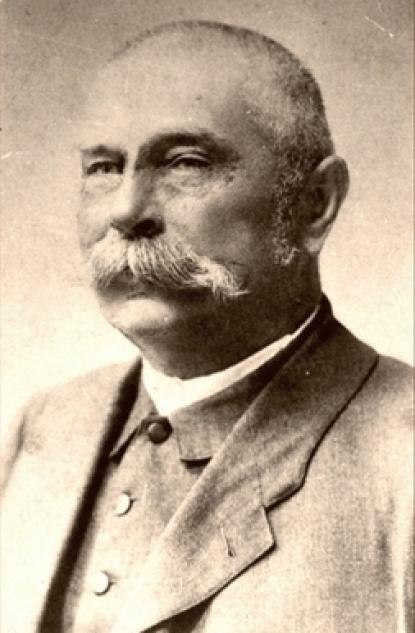
Many people did not understand why he needed the ‘desert’, the man he bought, but then he set up his farms, grew over 50 kinds of roses, he initiated the rear foil in the suburbs of Kutas. He was not a lonely man. Hundreds of people learned from him how to plant trees, rear poultry, grow vine, shortly, ran a professional farm.
He and Vásárhely-Kutas were one and the same. It is partly due to him that Kutas- puszta became a flourishing farm center. As member of the local authority in Hódmezővásárhely, he did a lot to have civil services offices in Kutas, a railway station, later on storehouses, a post office and a market, too. It was him, significantly financing it himself, too, who, who initiated street lighting in Vásárhely-Kutas. As a member of the Calvinist Church, it was partly his achievement that the Calvinist Church in Kutas was built in 1927.
When he died on 23 August 1938, he had already ordered that his son, Máté Gregus would take his business over. However, a decade later, the Rákosi dictatorship did not spare the Gregus family either. Many male members in the family were imprisoned. Máté Gregus jr. died in a prison hospital in Vác in 1951. The Gregus farms were taken over by the communists, neglected, documents of his life were annihilated, even his name was erased from collective memory, at least, as much as they could. Fortunately, they were not so successful…
Many people did not understand why he needed the ‘desert’, the man he bought, but then he set up his farms, grew over 50 kinds of roses, he initiated the rear foil in the suburbs of Kutas. He was not a lonely man. Hundreds of people learned from him how to plant trees, rear poultry, grow vine, shortly, ran a professional farm.
He and Vásárhely-Kutas were one and the same. It is partly due to him that Kutas- puszta became a flourishing farm center. As member of the local authority in Hódmezővásárhely, he did a lot to have civil services offices in Kutas, a railway station, later on storehouses, a post office and a market, too. It was him, significantly financing it himself, too, who, who initiated street lighting in Vásárhely-Kutas. As a member of the Calvinist Church, it was partly his achievement that the Calvinist Church in Kutas was built in 1927.
When he died on 23 August 1938, he had already ordered that his son, Máté Gregus would take his business over. However, a decade later, the Rákosi dictatorship did not spare the Gregus family either. Many male members in the family were imprisoned. Máté Gregus jr. died in a prison hospital in Vác in 1951. The Gregus farms were taken over by the communists, neglected, documents of his life were annihilated, even his name was erased from collective memory, at least, as much as they could. Fortunately, they were not so successful…
|
|