2026. June 17. Wednesday
Pál Kiss Museum - Tiszafüred
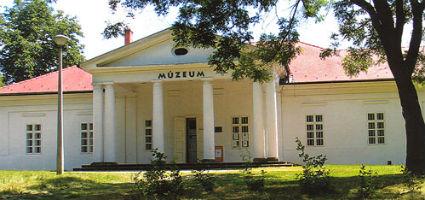 |
Address: 5350, Tiszafüred Tariczky sétány 6.
Phone number: (59) 352-106
E-mail: kisspalmuz@gmail.com
Opening hours: Tue-Sat 9-12, 13-17
|
The exhibition has closed for visitors.
2011.06.01. - 2011.06.30.
Share it, if you like it:


Museum tickets, service costs:
|
Ticket for adults
|
500 HUF
|
/ capita
|
|
Group ticket for adults
(min. 10 people)
|
150 HUF
|
/ capita
|
|
Ticket for students
|
250 HUF
|
/ capita
|
|
Ticket for pensioners
|
250 HUF
|
/ capita
|
|
Ticket for families
(2 adults + max. 3 children)
|
750 HUF
|
/ family
|
|
Program ticket
|
300 HUF
|
/ capita
|
|
Season ticket
|
1000 HUF
|
|
|
Group guide
(max. 40 people)
|
2000 HUF
|
/ group
|
|
Photography
|
1000 HUF
|
|
|
Video
|
1000 HUF
|
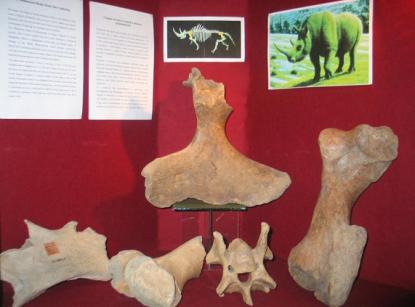
We dispay five bones of woolly rhinoceros from our old collection. These bones (2 pieces of humerus, and one piece of pelvis, scapula and vertebra thoracica) show the real size and form of these ancient mammals lived tens of thousands of years ago in Tiszafüred and its outskirts.
The Pleistocene fauna of rhinoceroses in Europe consisted of several species. One of these species was the woolly rhinoceros, Coelodonta antiquitatis, which is characteristic of the later cold climatic phase. It belongs to the family Rhinocerotids, which includes modern-day rhinos.The Coelodonta antiquitatis had a massive body and a thick, shaggy coat that protected it against the harsh climate of the tundra and steppe that bordered the great glaciers of the Northern Hemisphere.
This plant-eater was about 11 feet (3,5 m) long, 5,5 feet (1,7 m) tall at the shoulder and it weighed up to 1,2 US tons. It had two horns on its snout, the lower one larger than the one between its eyes (about 3 feet (1 m) long in the largest of males). A curious feature of the anterior horn of the woolly rhinoceros is that it was flattened from the side to side, rather than round like the horn of the modern rhinoceroses. This was probably because it functioned as a plow, allowing the animal to brush aside snow to get at underlying vegetation. It had long hair, small ears, short, thick legs, and a stocky body.
The Pleistocene fauna of rhinoceroses in Europe consisted of several species. One of these species was the woolly rhinoceros, Coelodonta antiquitatis, which is characteristic of the later cold climatic phase. It belongs to the family Rhinocerotids, which includes modern-day rhinos.The Coelodonta antiquitatis had a massive body and a thick, shaggy coat that protected it against the harsh climate of the tundra and steppe that bordered the great glaciers of the Northern Hemisphere.
This plant-eater was about 11 feet (3,5 m) long, 5,5 feet (1,7 m) tall at the shoulder and it weighed up to 1,2 US tons. It had two horns on its snout, the lower one larger than the one between its eyes (about 3 feet (1 m) long in the largest of males). A curious feature of the anterior horn of the woolly rhinoceros is that it was flattened from the side to side, rather than round like the horn of the modern rhinoceroses. This was probably because it functioned as a plow, allowing the animal to brush aside snow to get at underlying vegetation. It had long hair, small ears, short, thick legs, and a stocky body.
|
|