2026. May 28. Thursday
Hungarian Museum for Science, Technology and Transport - Budapest
|
|
Address: 1101, Budapest Kőbányai út 24-28.
Phone number: (1) 273-3840
E-mail: info@mmkm.hu
Opening hours: A múzeum egész évben zárva tart.
|
The exhibition has closed for visitors.
1970.01.01. - 2011.04.03.
Share it, if you like it:


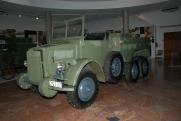
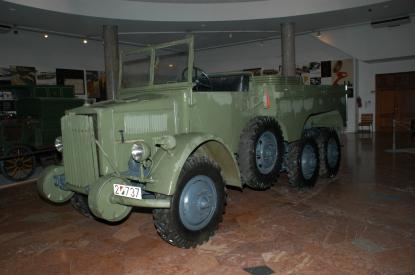
The only Rába Botond that we now have left, the most successful land rover from the period between WWI and WWII, is now on display at the Museum of Transportation until 3 April.
The Hungarian Wagon- and Machine Factory of Győr; the Rába began manufacturing van and bus frames after Krupp and Austro Fiat designs in 1929. Due to the success of former makes, the Ministry commissioned the Rába Factory to design and build a 1.5 metric ton land rover.
The work was coordinated by the head of the design department, Dezső Winkler. The Rába Botond was revealed in August 1938. The next month the Ministry of Defence began using the car. By the summer of 1940, 1400 was manufactured of the land rover with 14 seats. In 1943-44 further 1400 were manufactured of the Rába Botond.
After WWII, the new army did not make use of the land rover, even though it was considered the best troop transport car in Europe.
It was because Botond included a list of special solutions. The special suspension of the four rear wheel made the car drive extremely well in land.
The spare wheels that were placed on the sides of the car sometimes functioned as crouches while they were spinning. It meant that the car was never stuck in the hills. Two rollers on the front bumpers also aided the cars when they got to a smaller hill or a mould.
The one on display is the only one we have left of the legendary Rába Botond.
The Hungarian Wagon- and Machine Factory of Győr; the Rába began manufacturing van and bus frames after Krupp and Austro Fiat designs in 1929. Due to the success of former makes, the Ministry commissioned the Rába Factory to design and build a 1.5 metric ton land rover.
The work was coordinated by the head of the design department, Dezső Winkler. The Rába Botond was revealed in August 1938. The next month the Ministry of Defence began using the car. By the summer of 1940, 1400 was manufactured of the land rover with 14 seats. In 1943-44 further 1400 were manufactured of the Rába Botond.
After WWII, the new army did not make use of the land rover, even though it was considered the best troop transport car in Europe.
It was because Botond included a list of special solutions. The special suspension of the four rear wheel made the car drive extremely well in land.
The spare wheels that were placed on the sides of the car sometimes functioned as crouches while they were spinning. It meant that the car was never stuck in the hills. Two rollers on the front bumpers also aided the cars when they got to a smaller hill or a mould.
The one on display is the only one we have left of the legendary Rába Botond.
|
|