2026. June 10. Wednesday
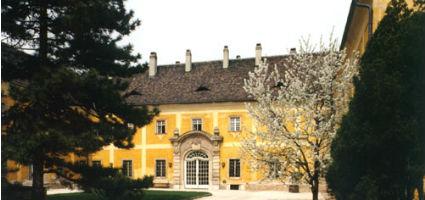
Museum Kiscell - Modern Urban History Collection - Budapest
 |
Address: 1037, Budapest Kiscelli utca 108.
Phone number: (1) 250-0304, (1) 250-0304
E-mail: kiscell@kiscellimuzeum.hu
Opening hours: 01.04-31.10.: Tue-Sun 10-18
01.11-31.03.: Tue-Sun 10-16 |
The exhibition has closed for visitors.
2010.01.21. - 2010.02.28.
Share it, if you like it:


Museum tickets, service costs:
|
Ticket for adults
|
900 HUF
|
|
|
Ticket for students
|
450 HUF
|
|
|
Group ticket for students
|
350 HUF
|
|
|
Ticket for pensioners
|
450 HUF
|
|
|
Ticket for families
|
1300 HUF
|
/ family
|
|
Photography
|
500 HUF
|
|
|
Video
|
1500 HUF
|
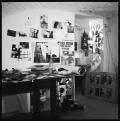
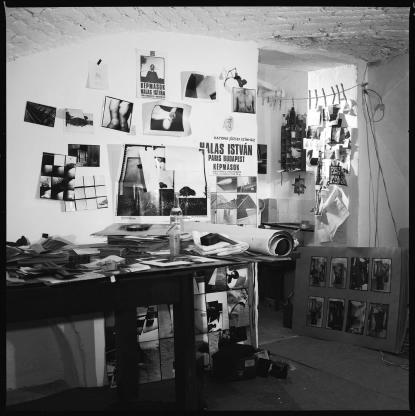
The installation created by young art students were inspired by a photography by István Halas entitled 'Hiding, Hidden Self-portrait' from 1987. The photo shows a studio in Szép Street in Halas with a pile of objects and traces of life, plus the self-portrait of the photographer in a tiny mirror.
The Horváth House on the corners of Szép Street and Kossuth Lajos Street is a well-known building, from the Pollack era. The Landerer Press and Heckenast Press once were both located in this building. Mihály Vörösmarty resided and dined in this building, too. Batthyányi set up the prime ministerial office and the National Council of War in April 1848 also there. István Halas had his studio over the arch gate in the building from 1970 to 1989.
Judging by the photos, it must have been a strange place, sometimes hit by sunlight, other times it felt like a gloomy basement. The studio turned into the meeting place of artists from the end of the 60s. The list of artists' names who visited the studio in the 70s and 80s that had become the focal point of alternative art by that time would probably include all the names a book written on the art of the era would mention. They were mostly the models for Halas' photography.
The take 'Hiding, Hidden Self-portrait' the studio interior is not simply the space of creation but a pile of answers to a given historic moment. The wrinkled intensity of surfaces and objects and the 33-year-old artist looking at us from the mirror are the portraits of sub-cultural milieu and the human being living inside it.
Looking for present-day associations in the attitude to life in the near past, we gave the task to artists at the beginning of their career. The installation created after integrating the image into elements and studying the result, tells the story of the above mentioned era through the eyes of these young artists. The representative space at the Kiscell Museum and the seemingly muddily arranged studio space are joined, sometimes by tied time zones. We interpret the alternative art scene before 1989 from a many times reflective point of view.
The exhibition presents works of art by Halas he made in the 1970s and 80s embedded into new nexuses whereas new works are shown in relation to the 002D place.
The Horváth House on the corners of Szép Street and Kossuth Lajos Street is a well-known building, from the Pollack era. The Landerer Press and Heckenast Press once were both located in this building. Mihály Vörösmarty resided and dined in this building, too. Batthyányi set up the prime ministerial office and the National Council of War in April 1848 also there. István Halas had his studio over the arch gate in the building from 1970 to 1989.
Judging by the photos, it must have been a strange place, sometimes hit by sunlight, other times it felt like a gloomy basement. The studio turned into the meeting place of artists from the end of the 60s. The list of artists' names who visited the studio in the 70s and 80s that had become the focal point of alternative art by that time would probably include all the names a book written on the art of the era would mention. They were mostly the models for Halas' photography.
The take 'Hiding, Hidden Self-portrait' the studio interior is not simply the space of creation but a pile of answers to a given historic moment. The wrinkled intensity of surfaces and objects and the 33-year-old artist looking at us from the mirror are the portraits of sub-cultural milieu and the human being living inside it.
Looking for present-day associations in the attitude to life in the near past, we gave the task to artists at the beginning of their career. The installation created after integrating the image into elements and studying the result, tells the story of the above mentioned era through the eyes of these young artists. The representative space at the Kiscell Museum and the seemingly muddily arranged studio space are joined, sometimes by tied time zones. We interpret the alternative art scene before 1989 from a many times reflective point of view.
The exhibition presents works of art by Halas he made in the 1970s and 80s embedded into new nexuses whereas new works are shown in relation to the 002D place.
|
|