2026. April 3. Friday
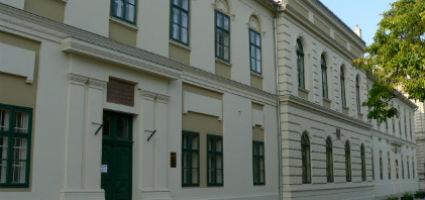
Alföld Gallery - Hódmezővásárhely
 |
Address: 6800, Hódmezővásárhely Kossuth tér 8.
Phone number: (62) 245-499
E-mail: tjm@tjm.hu
Opening hours: Tue-Sun 10-17
|
The exhibition has closed for visitors.
2009.05.30. - 2009.07.12.
Share it, if you like it:


Museum tickets, service costs:
|
Ticket for adults
|
400 HUF
|
|
|
Ticket for students
|
200 HUF
|
|
|
Ticket for pensioners
|
200 HUF
|
The establishment of the Artist Colony in Nagybánya in 1896 is considered the beginning of painting art in Hungary. 'This also punctually designates the beginning of an era' said Károly Tóth, the art historian born in Hódmezővásárhely coordinating the preparation works for the showing.
In the summer of 1896, several dozen young people, students from the Simon Hollósy Private Art School of Munich visited the mining town at the bottom of the Kereszthegy and Gutin.
Hollósy was followed by István Réti, János Thorma, Károly Ferenczy, Oszkár Glatz, Béla Iványi-Grünwald who became determining artists before WII. A number of painters visited the colony both from Hungary and abroad, among them the Hollósy student Gyula Rudnay.
Beginning with 1906, painter trainees from Paris began visiting the colony in Nagybánya bringing along the most important innovations of French avant-garde. Béla Czóbel, Tibor Boromisza, Géza Bormenisza, Vilmos Perlrott Csaba, Ziffer Sándor made up this group now are distinguished as "Neos" by art historians.
The second peak reached the artist colony between WWI and WWII, in the twenties when the town was full of life again. Vilmos Aba-Novák, János Kmetty, Károly Kiss, Károly Patkó worked in town during that period. However, many of the artists of the first generation remained in town.
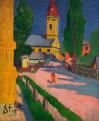
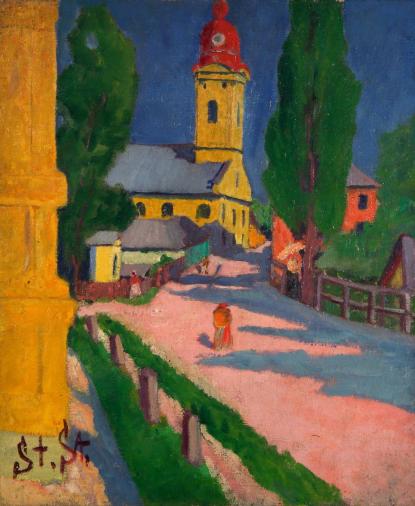
The exhibition material was selected from the collection of the MissionArt Gallery compiled in the last two decades. Over ninety works of art are there to be seen. Typical pleinair pictures of the Nagybánya artists, landscapes, townscapes, but also cusiosities like the Warsaw born artist Stanislas Stückgold's picture of the streets of Nagybánya painted with wide colours or the cubo-expressionist gypsy model of Gizella Dömötör are on display. The copper engraving reworked with graphite by Vilmos Aba-Novák is a curiosity to see.
In the summer of 1896, several dozen young people, students from the Simon Hollósy Private Art School of Munich visited the mining town at the bottom of the Kereszthegy and Gutin.
Hollósy was followed by István Réti, János Thorma, Károly Ferenczy, Oszkár Glatz, Béla Iványi-Grünwald who became determining artists before WII. A number of painters visited the colony both from Hungary and abroad, among them the Hollósy student Gyula Rudnay.
Beginning with 1906, painter trainees from Paris began visiting the colony in Nagybánya bringing along the most important innovations of French avant-garde. Béla Czóbel, Tibor Boromisza, Géza Bormenisza, Vilmos Perlrott Csaba, Ziffer Sándor made up this group now are distinguished as "Neos" by art historians.
The second peak reached the artist colony between WWI and WWII, in the twenties when the town was full of life again. Vilmos Aba-Novák, János Kmetty, Károly Kiss, Károly Patkó worked in town during that period. However, many of the artists of the first generation remained in town.
The exhibition material was selected from the collection of the MissionArt Gallery compiled in the last two decades. Over ninety works of art are there to be seen. Typical pleinair pictures of the Nagybánya artists, landscapes, townscapes, but also cusiosities like the Warsaw born artist Stanislas Stückgold's picture of the streets of Nagybánya painted with wide colours or the cubo-expressionist gypsy model of Gizella Dömötör are on display. The copper engraving reworked with graphite by Vilmos Aba-Novák is a curiosity to see.
|
|