2026. February 10. Tuesday
Jász-Nagykun-Szolnok County Museums Authority - János Damjanich Museum - Szolnok
 |
Address: 5000, Szolnok Kossuth tér 4.
Phone number: (56) 510-152
E-mail: titkarsag@djm.hu
Opening hours: 18.01-11.12.: Tue-Sun 9-17
|
The exhibition has closed for visitors.
2007.11.15. - 2007.11.25.
Share it, if you like it:


Museum tickets, service costs:
|
Ticket for adults
(valid for the temporal exhibition)
|
260 HUF
|
|
|
Group ticket for adults
(valid for the temporal exhibition, over 10 people)
|
130 HUF
|
|
|
Guide
(valid for the temporal exhibition)
|
2000 HUF
|
Once upon a furnace in Derbrecen what was gathered around years ago, in 1999. The first exhibition of the Debrecen Enamel Symposium was the occasion which provided the possibility for the appointment of colleagues, goldsmiths and enamel artists. Valéria Bessenyei, Péter Császár, Karolina Kőszegi, Borbála Őri, Anna Rudó and Zita Vincze have already showed their works in the annual exhibitions.
More than hundred pictures, jewels, vessels and objects of daily use or artworks can be seen on the walls or in the show-cases. They represent several styles and all the modes of making can be traced on them: from the enamel through the translucent pinking to the painted, etched sgrafitto. Beside the individually composed modern pieces the national composure and the heritage of tradition also can be recognized.
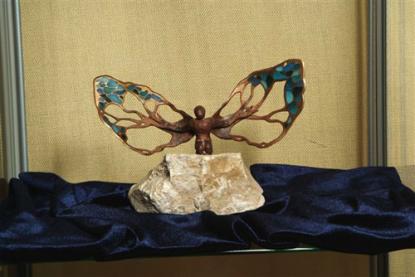
Valéria Bessenyei exposed her big iron plate objects painted with air-spray and etched. The theme of János Háry imitates toy theatre and puppets is interesting and inventive. One of the outstanding pieces in the exhibition is the cast-bronze figure with pinking wings entitled (Metamorphosis.)
Péter Császár willingly use the remains of the period of the great migrations beside the motifs of folk art. Beside the cloisonné enamel pieces counted as Hungarian heritage we can see objects with inserted technique which use the contrast of the colours of wood and iron. Karolina Kőszegi makes cloisonné enamels and painted images too. The object (Growth) uses and old Chinese technique, her (Home altar) calls forth the traditions of the Byzantine cloisonné enamels.
Borbála Őri took her cloisonné enamels and painted images but also some icones to this exhibition. On four painted plates the four elements appear, and in the show-cases fine armlets formed from twisty tendrils and earrings can be seen.
Anna Rudó makes us happy with her sacral objects, altar cross, chalice and Bibles with cloisonné enamel cover following the mediaeval traditions. Her finely shaped objects set an example that the engagement of a millennial rite and the same old art can be fresh even today.
Zita Vincze shows mainly her silver jewels made with precise handwork beside the objects known from folk art and re-phrased. Nowadays we gather mass-producted pieces instead of these jewels which are works of art. The charming results of that can be seen in the show-cases.
The exhibition can be visited until 25 November and surely provides a delightful experiences for who take in to see this small segment of the contemporary enamel art. We expect that this show finds its appreciative audience in other places too.
More than hundred pictures, jewels, vessels and objects of daily use or artworks can be seen on the walls or in the show-cases. They represent several styles and all the modes of making can be traced on them: from the enamel through the translucent pinking to the painted, etched sgrafitto. Beside the individually composed modern pieces the national composure and the heritage of tradition also can be recognized.
Valéria Bessenyei exposed her big iron plate objects painted with air-spray and etched. The theme of János Háry imitates toy theatre and puppets is interesting and inventive. One of the outstanding pieces in the exhibition is the cast-bronze figure with pinking wings entitled (Metamorphosis.)
Péter Császár willingly use the remains of the period of the great migrations beside the motifs of folk art. Beside the cloisonné enamel pieces counted as Hungarian heritage we can see objects with inserted technique which use the contrast of the colours of wood and iron. Karolina Kőszegi makes cloisonné enamels and painted images too. The object (Growth) uses and old Chinese technique, her (Home altar) calls forth the traditions of the Byzantine cloisonné enamels.
Borbála Őri took her cloisonné enamels and painted images but also some icones to this exhibition. On four painted plates the four elements appear, and in the show-cases fine armlets formed from twisty tendrils and earrings can be seen.
Anna Rudó makes us happy with her sacral objects, altar cross, chalice and Bibles with cloisonné enamel cover following the mediaeval traditions. Her finely shaped objects set an example that the engagement of a millennial rite and the same old art can be fresh even today.
Zita Vincze shows mainly her silver jewels made with precise handwork beside the objects known from folk art and re-phrased. Nowadays we gather mass-producted pieces instead of these jewels which are works of art. The charming results of that can be seen in the show-cases.
The exhibition can be visited until 25 November and surely provides a delightful experiences for who take in to see this small segment of the contemporary enamel art. We expect that this show finds its appreciative audience in other places too.
|
|