2026. February 18. Wednesday
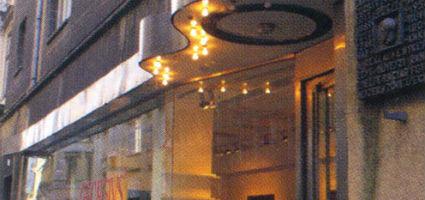
Dorottya Gallery - Budapest
 |
Address: 1051, Budapest Dorottya utca 8.
Phone number: (1) 460-7036
E-mail: jangel@mucsarnok.hu
Opening hours: Tue-Fri.: 11-19
|
The exhibition has closed for visitors.
2006.03.21. - 2006.04.22.
Share it, if you like it:


The Tuning programme envisions in essence a conceptual problem, the found picture and the possibility for its reinterpretation, and sets as its aim the search, analysis, examination and restoration of "artwork-subjects" that are professionally and aesthetically of weak quality, may be considered trivial or ruined, but are not completely indistinctive, then through their proposed possibilities discovered within, their recycling, their amelioration, their actualisation, resuscitation and formation as a sign.

The concept is not only unusual, but presumably also raises ethical questions: can an individual artwork be produced from an anonymous cultural deposit, and be granted a new title and a new author? From what position is the right malleable for the transformation of existing, unsigned, or even signed, pictures?
Perhaps from the position of the rear-guard.
It is also perceptible that object referred to as an artwork, composition, art piece or something, accumulated in such measures on our globe, and depreciating so tragically at a rapid tempo, that it puts into question the grounds for the existence of "production". Stanislaw Lem, in his Summa Technologiae, refers to the majority of artworks as "intellectual rubbish". In his estimation, the only thing that separates it from the waste-heaps is that we do not recycle, we do not incinerate, we do not destroy the works of art, but we rather shelve them in enormous storerooms and museums. At the same time, we legalise their value and judgment. It is merely through its mercantilism and general agreement that something is rendered accepted. We do not even react to the values existing in themselves, or to their opposition, but we rather endow them with "topical stigmas". These stigmas at present are Money and PR as externally manipulative tools, from which the humble activity resplendent with the signs of internal content evident in Tuning differs essentially.
The concept is not only unusual, but presumably also raises ethical questions: can an individual artwork be produced from an anonymous cultural deposit, and be granted a new title and a new author? From what position is the right malleable for the transformation of existing, unsigned, or even signed, pictures?
Perhaps from the position of the rear-guard.
It is also perceptible that object referred to as an artwork, composition, art piece or something, accumulated in such measures on our globe, and depreciating so tragically at a rapid tempo, that it puts into question the grounds for the existence of "production". Stanislaw Lem, in his Summa Technologiae, refers to the majority of artworks as "intellectual rubbish". In his estimation, the only thing that separates it from the waste-heaps is that we do not recycle, we do not incinerate, we do not destroy the works of art, but we rather shelve them in enormous storerooms and museums. At the same time, we legalise their value and judgment. It is merely through its mercantilism and general agreement that something is rendered accepted. We do not even react to the values existing in themselves, or to their opposition, but we rather endow them with "topical stigmas". These stigmas at present are Money and PR as externally manipulative tools, from which the humble activity resplendent with the signs of internal content evident in Tuning differs essentially.
|
|