2026. November 9. Monday
Bihar Museum - Berettyóújfalu
 |
Address: 4100, Berettyóújfalu Kálvin tér 1.
Phone number: (54) 402-390, (54) 500-340
E-mail: bihari.muzeum@gmail.com
Opening hours: Mon-Fri- 10-16
|
The exhibition has closed for visitors.
2006.07.25. - 2006.10.28.
Share it, if you like it:


Museum tickets, service costs:
|
Ticket for adults
|
500 HUF
|
|
|
Ticket for students
(6-26 years of age)
|
250 HUF
|
|
|
Ticket for pensioners
(62-70 years of age)
|
250 HUF
|
|
|
Group guide
(up to 25 people)
|
1000 HUF
|
/ group
|
|
Photography
|
500 HUF
|
|
|
Video
|
500 HUF
|
The temporary exhibition titled 'Scouts' opened on 25 July 2006. The occasion was the 85th anniversary of the foundation of the Scouts no. 164 in Berettyóújfalu in Csonka Bihar County.
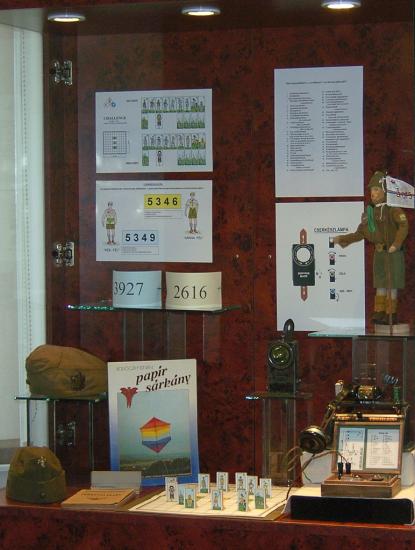
The Scouts is a voluntary, politics free movement based on religion. It began to operate in the 1910's in Hungary and lived its heydays in the 1920-30's. Its members undertake the right education with the right methods concerning their age. The object is to help children become responsible, thinking, educated citizens who are able to make decisions. The uniform represents unity and order. Its color is apt to play in nature and work.
The principle of the scouts is to fulfill duty. We have three obligations: God, or for some a higher ethical and spiritual power; country, and our obligation towards natural and built environment, fellow citizens, the people of the town we live in. The exhibition is based on these principals showing the history of the scouts in Hungary, as well as the leaders of Bihar.
We also show the lives of the scout living over the border of Hungary via photos and publications. The movement was ceased after WWII and began again in 1989. The visitor may peep inside the life of the groups today via DVDs, documents and cloths.
|
|