2026. November 29. Sunday
Municipal Museum of Art - Vasilescu Collection - Győr
 |
Address: 9025, Győr Kossuth Lajos utca 5.
Phone number: (20) 425-2660
E-mail: mehes.zsuzsa@artmuz.hu
Opening hours: Wed-Sun 10-18
|
The exhibition has closed for visitors.
2014.12.14. - 2015.02.28.
Share it, if you like it:


Museum tickets, service costs:
|
Individual ticket for adults
|
700 HUF
|
|
|
Individual ticket for students
|
350 HUF
|
|
|
Individual ticket for pensioners
|
350 HUF
|
|
|
Guide
|
3000 HUF
|
|
|
Guide
|
6000 HUF
|
One of the glories in the town of Kecskemét is the Cifrapalota that was built in 1902/3. This is where the Fine Arts Collection of the Katona József Museum is located, which is one of the largest and most important in its type in Hungary. .
The museum"s primary interest focuses on first half 20th century Hungarian art, having acquired outstanding private collections such as that of Marcell Nemes and Mrs. József Wolfner (István Farkas and Ferenc Glücks continued the work). The aforementioned collectors were of Jewish origin, so perhaps it is not so surprising that they purchased, or the result of a number of subsequent purchases was the acquisition of Hungarian Jewish painters and sculptors in the Kecskemét Museum.
"To clarify the meaning of Hungarian Jewish art, one must start from the age when the art of Jewish religion split from the secular painting art of Jewish artists. The art of Hungarian people of Jewish religion is just as much a part of Hungarian art history, as the art of Hungarian Catholic, Reformed, Lutheran, Unitarian, Serbian, Greek Orthodox or the Transylvanian Sabbatarians religious art. The "problem" starts with the spread of secular genres of art."
(Katalin S. Nagy )
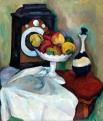
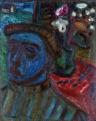
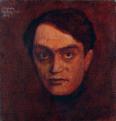
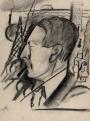
Although there is a lot discussion on about Hungarian Jews art, despite the lack of precise definitions e can list a number of artists(eg. Imre Ámos, Margit Anna, Rezső Bálint, Dezső Bokros Birmann, Dezső Czigány, Béla Czóbel, István Farkas, Adolf Fényes, Béla Iványi Grünwald, Vilmos Perlrott-Csaba , Bertalan Pór, István Zádor, Sándor Ziffer), whose works are in the collections held in Kecskemét and which we considered of a professional quality to show in the framework of Holocaust commemoration that puts considerable emphasis on cultural value.
A catalogue in two languages, English and Hungarian book accompany the exhibition, which includes color reproductions of all the works exhibited as well as a detailed study written by the art historian László Gyergyádesz describing the golden age of Hungarian Jewish painting, the Kecskemét Fine Arts Collection and the artists involved in it. In addition, the readers may gain insight into the past of the Kecskemét based Jewish community and learn about the former Synagogues. The catalogue highlights Hungarian Jewish architecture in Kecskemét with their Art Nouveau monuments, such as the Cifrapalota. The cataloge was published on occasion of the The Hungarian Holocaust Memorial Year with 104 pages, 67 colour reproduction, including archival photos..
|
|