2026. March 18. Wednesday
Szekler Museum of Ciuc - Miercurea Ciuc
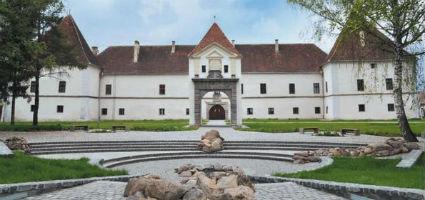 |
Address: 530132, Miercurea Ciuc p-ţa Cetăţii nr.2. / Vár tér 2.
Phone number: (266) 372-024, (266) 311-727
E-mail: info@csikimuzeum.ro
Opening hours: 15.03-15.11.: Tue-Sun 9-17
16.11-17.03.: Tue-Sun 9-16 |
The exhibition has closed for visitors.
2014.06.06. - 2014.10.31.
Share it, if you like it:


Museum tickets, service costs:
|
Ticket for adults
|
324 HUF
|
|
|
Ticket for students
|
162 HUF
|
|
|
Ticket for pensioners
|
162 HUF
|
|
|
Guide
|
10 HUF
|
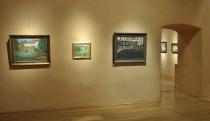
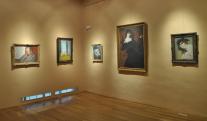
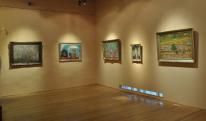
József Rippl-Rónai (1861−1927) was a creative artistic force in the style reforms occurring in European painting at the end of the 19th century and the beginning of the 20th century. He had an innovating role in the artistic programme of the Parisian Art Nouveau, the European Secession, which assured him an international acknowledgment. After returning from Paris, he modernised Hungarian painting. He linked Hungarian artistic culture with European styles.
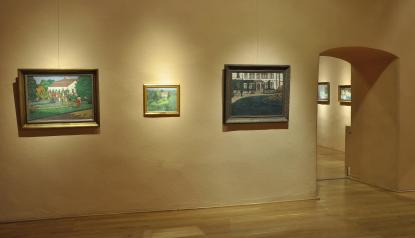
He introduced Impressionism, Art Nouveau, Post-Impressionism and his own particular Fauvism, the ”cornfield style”. He had to face many challenges during his lifetime, and as a result, he generated new styles over and over again. He managed his creative talent differently in Paris, Kaposvár and Budapest. The division of his four artistic periods serves as an orientation point in his immense and subtle oeuvre.
The black perio paintings made in Paris (1891−1900)
In these paintings, he created a new female ideal. Rippl-Rónai gave up the use of colour in order to direct attention on the suggestive power of the new style. He worked with enormous self-discipline, since he wished to express more essential content with ever simpler drawing and painting techniques. The aim of modern painting is to make pictorial detail seem pointless. Instead, it uses plain surfaces divided by contours. Rippl-Rónai was invited to become a member of the private group of Art Nouveau artists known as the Nabis, or the Prophets in 1894.
The interior paintings or the First Kaposvár Period (1902−1906)
Rippl-Rónais international reputation would have been greater if he had stayed in Paris. Instead, he chose the harder path of making his way in the Hungarian artistic world, although there were no encouraging signs. It meant a great intellectual challenge for Rippl-Rónai to undertake this reforming mission in his own country. He bought a small house at the end of the Main Street where he settled in with his French lover. It was in this house that the interior paintings depicting the intimate life of Kaposvár citizens were made.
Rippl-Rónai’s art is like a family photo album. One of his artistic innovations, among others, was that he did not paint issues of public interest, nor did he take on political portraits. He represented exclusively the world of private life and its characters.
The Rome Villa and the “cornfield style” (1908−1918)
The yellow, two-storey estate called Rome Villa on the Rome Hill in Kaposvár served as Rippl-Rónai’s home from 1908 until his death in 1927. The second Kaposvár period gave birth to a radically new, excitingly vivid style of painting. The motifs are framed by thick, brown contours. Rippl-Rónai used Gauguin’s style, the method of coloured planes, in a particular way. He used the one centimetre wide brush to create hectic dotted surfaces.
The ”Crayon Portrait” Period (1919−1927)
In the social circles of Budapest, Rippl-Rónai was already an acknowledged painter, by the time his new artistic period focused on portraits began. He used only crayon to portray the writers of West Journal (Nyugat).
He introduced Impressionism, Art Nouveau, Post-Impressionism and his own particular Fauvism, the ”cornfield style”. He had to face many challenges during his lifetime, and as a result, he generated new styles over and over again. He managed his creative talent differently in Paris, Kaposvár and Budapest. The division of his four artistic periods serves as an orientation point in his immense and subtle oeuvre.
The black perio paintings made in Paris (1891−1900)
In these paintings, he created a new female ideal. Rippl-Rónai gave up the use of colour in order to direct attention on the suggestive power of the new style. He worked with enormous self-discipline, since he wished to express more essential content with ever simpler drawing and painting techniques. The aim of modern painting is to make pictorial detail seem pointless. Instead, it uses plain surfaces divided by contours. Rippl-Rónai was invited to become a member of the private group of Art Nouveau artists known as the Nabis, or the Prophets in 1894.
The interior paintings or the First Kaposvár Period (1902−1906)
Rippl-Rónais international reputation would have been greater if he had stayed in Paris. Instead, he chose the harder path of making his way in the Hungarian artistic world, although there were no encouraging signs. It meant a great intellectual challenge for Rippl-Rónai to undertake this reforming mission in his own country. He bought a small house at the end of the Main Street where he settled in with his French lover. It was in this house that the interior paintings depicting the intimate life of Kaposvár citizens were made.
Rippl-Rónai’s art is like a family photo album. One of his artistic innovations, among others, was that he did not paint issues of public interest, nor did he take on political portraits. He represented exclusively the world of private life and its characters.
The Rome Villa and the “cornfield style” (1908−1918)
The yellow, two-storey estate called Rome Villa on the Rome Hill in Kaposvár served as Rippl-Rónai’s home from 1908 until his death in 1927. The second Kaposvár period gave birth to a radically new, excitingly vivid style of painting. The motifs are framed by thick, brown contours. Rippl-Rónai used Gauguin’s style, the method of coloured planes, in a particular way. He used the one centimetre wide brush to create hectic dotted surfaces.
The ”Crayon Portrait” Period (1919−1927)
In the social circles of Budapest, Rippl-Rónai was already an acknowledged painter, by the time his new artistic period focused on portraits began. He used only crayon to portray the writers of West Journal (Nyugat).
|
|