2026. July 16. Thursday
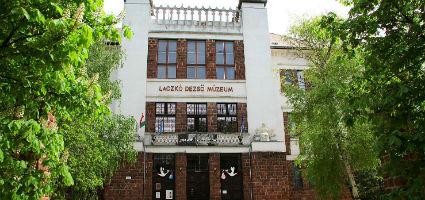
Dezső Laczkó Museum - Veszprém
 |
Address: 8200, Veszprém Török Ignác u. 7.
Phone number: (88) 789-791
E-mail: titkar@ldm.hu
Opening hours: Thu-Sat 10-18
|
The exhibition has closed for visitors.
2014.04.03. - 2014.06.01.
Share it, if you like it:


The exhibition presents characteristic regions of Transylvanian religious architecture via paintings, drawings, photographs and reproductions, while also dealing with characteristics geo-historical styles of Kalotaszeg, Szilágyság, Székely Land and Szász Land via representation of temple. The exhibition aims at providing a comprehensive overview of the types of sacred buildings in multi-religious and multi-ethnic Transylvania. To do this, floor plans, construction drawings and specifications, views and graphics depicting church interior as well as photographs serve to illustrate.
About 60 pieces of artworks selected from photos from the Museum of Ethnography from the period 1880 to1920. The selection of photos, on the other hand is to represent a rich cultural history in terms of documentation.
In the first section, wooden temples, drawings illustrating towers are presented, which commemorate the Kalotaszeg Mezőség and Szilágyság. These are the finest examples of how historical styles were not only applied by the most educated in the richest regions, but - if belatedly - the same styles were applied in poorer villages as well. The ethnographic researches recognized the earliest that wooden churches, towers are to be found in the largest number in the north-eastern part of Hungary and the eastern mountain region.
The next exhibition panel shows the Székely fortress churches via authentic architectural and ethnographic documentation. The usually Gothic churches - like the nearby Saxon edifices - were surrounded by walls that serve as shelter to the population.
The third exhibition unit deal with Saxon fortified churches. The exhibits related to wear and other items of those who found refuge in the fortress churches were mostly donated by private collectors. In addition, we also show the
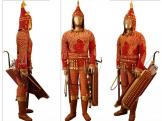
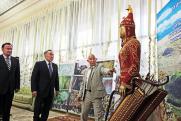
The exhibition part on old treasures from the Scythian empire from Kazakhstan introduces the visitors the common origins of Hungarian and Kazakh people, the steppe nomadic empire, which was the largest ancient military power and the cradle of innovation. The exhibit paints a color picture of the life of Scythian origin and Turkic peoples, their culture and richness.
The vast majority of objects are from the so-called "Issyk-kurgan" and horse burials finds from near Berel, - or reproduction of the items. The exhibition gives an insight into the entire Scythian culture, emblematic gold and silver ensemble come to live. Archaeological finds from Upper Balaton as well as description of ancient historians and contemporary peoples of the ancient Scythians provide a comprehensive picture of that ancient empire.
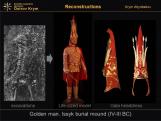
The authenticity of the reproductions is guaranteed by the private restorer institutions Altynbekov Krym, the "Ostrov Krym". The final reconstruction preservationof the "Golden Man", a site excavated near the village of Issyk in 1969 is associated to Krym Altynbekov, so is the conservation of the grave field near Berel. It was Krym Altynbekov who saved in 2012 Turkic royal mausoleum painted's terracotta army found in Mongolia as well, and it was also him who did the reconstruction of tje II Kurgan Scythian royal tomb of Arzheim originally discovred by H. Parzinger.
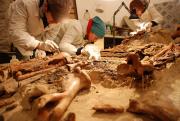
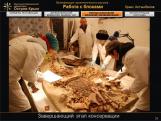
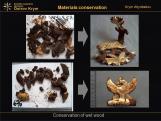
The exhibition is not only based on the the tangible results of the excavations, that is, based on the presentation of the objects, but presents the whole process of the exciting exploration works. We direct the visitors through the work phases, focusing on the work of Ostrov Krym, namely the identification of the artefacts, the preservation and reproduction. We educate the public about the superhuman work during which the three or four thousand years old organic artefacts, funerary items made of wood, leather and canvas come to life. We also show gold and silver sacrificial objects that complete the material and so the culture of the rulers of steppe their skills and wealth also come to life.
Csíksomlyó Village Fair that offered spiritual retreat and inspiration for the Szekelys and Moldova people.
On the upstairs floor of our exhibition we offer works of art repr4esenting contemporary fine arts Transylvania through works of artists who moved to Veszprém County.
|
|