2026. June 6. Saturday
Dráva Museum - Barcs
 |
Address: 7570, Barcs Széchenyi utca 22.
Phone number: (82) 463-207
E-mail: dkmkbarcs@gmail.com
Opening hours: Tue-Thu 10-12, 13-16, Fri 9-12, Sat 9-12, 13-16
Other times: by prior arrangement |
The exhibition has closed for visitors.
2003.06.21. - 2003.08.31.
Share it, if you like it:


Museum tickets, service costs:
|
Ticket for adults
|
1000 HUF
|
|
|
Ticket for students
|
500 HUF
|
|
|
Ticket for pensioners
|
500 HUF
|
|
|
Guide
|
1000 HUF
|
The Hungarian and Croatian citizens of Barcs had followed the Catholic religion since their settling there after the Turkish occupation. Most of the German settlers coming in the 1780'ies and 1790'ies were also Catholic. So most of the people of Barcs belonged to the Catholic denomination at all times.
The local congregation held their services in a small wooden church built around 1723. The thatched roofed chapel provided the meeting place for the believers for nearly 100 years.
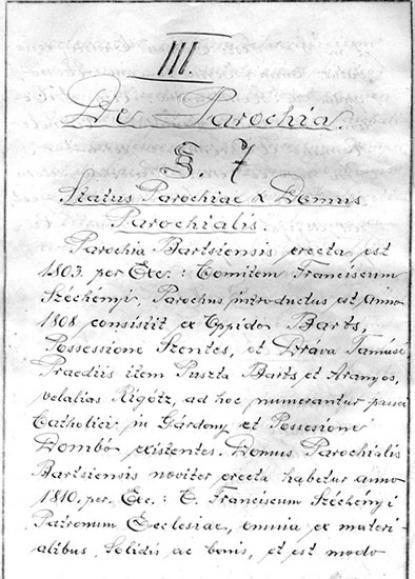
Masses in this time were conducted by the priest of Babócsa. When in 1797 it became a town and the number of inhabitants fast grew, earl Ferenc Széchényi decided to establish an independent parish church in the young town. He gifted a land to the town for building purposes. In 1803 Barcs was an independent parish.
Mr. Stánglits, the nominated priest, finally moved to Barcs in 1808.
The new stone church was built from 1814. Building works were still carried on when the old wooden chapel burnt down in 1816. So the new building had to be finished quickly. By 1819 it was almost finished, so people began to use it. The inscription on the front wall says the following in Latin language:
"AEDES, HAECCE, DEI, DIVO, EXTAT SACRA, IOANNI" (in English: "Lo, God's Holy Church stands all Erected to the Reverance of St. John"). The value of the bold letters in the text count up to 1819. However, the tower was built for another two years.
Today the building still keeps the original, classicist character, though renovation works were carried on it several times during the last two centuries. During the priesthood of Jenő Czövek (1943-1954) the chief altar was altogether rebuilt. An altar picture painted by Ignác Mauer was removed and a statue called King Jesus was placed there instead.
According to legends the two angel statues and the Peter and Paul statues are originally from the old church building. The baptismal basin made in 1815 is still used today.
The local congregation held their services in a small wooden church built around 1723. The thatched roofed chapel provided the meeting place for the believers for nearly 100 years.
Masses in this time were conducted by the priest of Babócsa. When in 1797 it became a town and the number of inhabitants fast grew, earl Ferenc Széchényi decided to establish an independent parish church in the young town. He gifted a land to the town for building purposes. In 1803 Barcs was an independent parish.
Mr. Stánglits, the nominated priest, finally moved to Barcs in 1808.
The new stone church was built from 1814. Building works were still carried on when the old wooden chapel burnt down in 1816. So the new building had to be finished quickly. By 1819 it was almost finished, so people began to use it. The inscription on the front wall says the following in Latin language:
"AEDES, HAECCE, DEI, DIVO, EXTAT SACRA, IOANNI" (in English: "Lo, God's Holy Church stands all Erected to the Reverance of St. John"). The value of the bold letters in the text count up to 1819. However, the tower was built for another two years.
Today the building still keeps the original, classicist character, though renovation works were carried on it several times during the last two centuries. During the priesthood of Jenő Czövek (1943-1954) the chief altar was altogether rebuilt. An altar picture painted by Ignác Mauer was removed and a statue called King Jesus was placed there instead.
According to legends the two angel statues and the Peter and Paul statues are originally from the old church building. The baptismal basin made in 1815 is still used today.
|
|