2026. June 30. Tuesday
Museum and Library of Hungarian Agriculture - Budapest
 |
Address: 1146, Budapest Városliget, Vajdahunyadvár
Phone number: (1) 363-1117
E-mail: info@mmgm.hu
Opening hours: 01.03-31.10.: Tue-Sun 10-17
01.11-28.02.: Tue-Fri 10-16, Sat-Sun 10-17 |
The exhibition has closed for visitors.
2012.09.15. - 2012.11.04.
Share it, if you like it:


Museum tickets, service costs:
|
Individual ticket
|
300 HUF
|
|
|
Individual ticket
|
600 HUF
|
|
|
Ticket for adults
|
1600 HUF
|
|
|
Group ticket for adults
|
500 HUF
|
|
|
Ticket for students
|
800 HUF
|
|
|
Ticket for pensioners
|
800 HUF
|
|
|
Individual combined ticket for adults
|
2100 HUF
|
|
|
Individual combined ticket for students
|
1300 HUF
|
|
|
Individual combined ticket for pensioners
|
1300 HUF
|
|
|
Guide for adults
|
5000 HUF
|
/ capita
|
|
Group guide for students
|
3000 HUF
|
|
|
Group guide
|
8000 HUF
|
What is hidden in the depths of the waters? This time we invite the visitors to take a trip with us to the mysterious world of oceans.
Two-third of the Earth is oceans. They designated the boundaries of human knowledge. They are still a great challenge for us and the adventurous people. The exhibition looks at the great secret, this sparkling mirror, the deepest depth from a very unusual angle. We take a look inside the history of Earth, from the beginning of oceans; we adventure out to the Solar System in search of water. Finally, we return to study the oceans on a human scale. So, come with us!
The material is displayed on 700 m2, with games and presents for the visitors. Entering, the visitors receive a paper with interesting quizzes.
The Beginnings
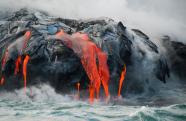
Earth is often called The Blue Planet, even though there are other planets in the Solar System with water on them. We try to find the beginning of life, wed know, life began in water on Earth.
Climate and Research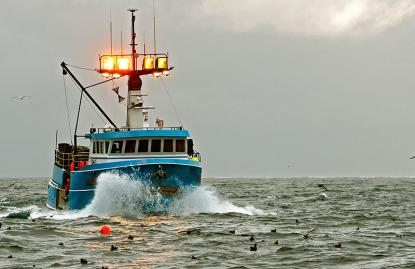 Sailors knew about sea streams right at the very beginning of navigation. However, exploration of the seas became popular with Captain Cousteau. Oceans have been studied by geologists, meteorologists, sea biologists and army engineers, though each from a different view.
Wildlife
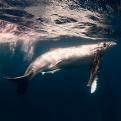
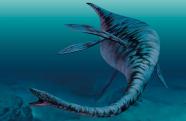
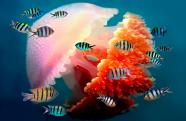
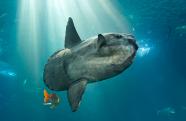
Millions of species have lived in the oceans, from unicellulars to the largest animals. Due to special circumstances, animals of the seas often have special sense organs.
Food and Energy
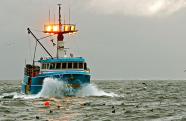
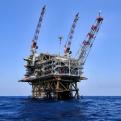
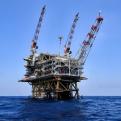
The oceans seemed like an inexhaustible source of food. However, due to industrialized fishing led to the distinction of many of the species. The oceans are important with view of energetics: the power of waves and tides are seized by power plants. There are often large oil regions under the oceans.
Humanity and Technology
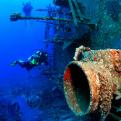
To move large quantity of goods between continents, to bridge straits by towns, to dive down deep in the oceans – with the development of technology, people took hold of the oceans.
Defence and Future
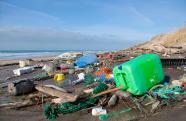
Will we be able to save the oceans? The global warming, environment pollution, extensive fishing, exntinction of large amount of species, acidification of waters all theaten the future of the oceans.
Ticket pricing: adult 1450 Ft, child (ages 3-14) 1250 Ft, groups (min. 10 of nursery school and school groups) 850 Ft, family 4950 Ft.
The tickets are valid for all permanent and temporary exhibitions int he museum.
|
|