2026. March 27. Friday
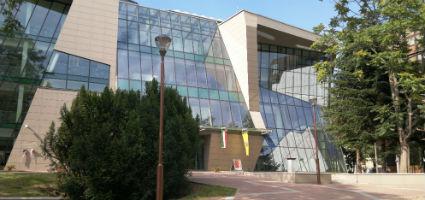
Agora - Együd Árpád Cultural Center - Kaposvár
 |
Address: 7400, Kaposvár Csokonai u. 1.
Phone number: (82) 314-915
E-mail: vaszary@dravanet.hu
Opening hours: Tue-Sat 10-18
|
The exhibition has closed for visitors.
2011.08.13. - 2011.12.31.
Share it, if you like it:


Museum tickets, service costs:
|
Ticket for adults
|
1000 HUF
|
|
|
Ticket for students
|
500 HUF
|
|
|
Ticket for pensioners
|
500 HUF
|
|
|
Ticket for families
(2 adults + 2 children)
|
2000 HUF
|
/ family
|
József Rippl-Rónai, the first modern master of Hungarian painting was born 150 years ago, on 23rd May 1861, in Kaposvár. His life and artistic career were quite fantastic, like a fairy-tale.
The hero of the story, just like Sinbad of the Persian tales, did not find tranquillity in the calm haven. Leaving the security of the land behind him he boarded a ship. Fate rewarded his strenuous adventures. He could not make use of his treasures at home. He had to pass a test. Paintings were pouring from his hands. His touch made everything better and more beautiful. When his work was acknowledged, he became the lord of a small castle, surrounded by a lustrous array of guests. When he boarded a ship again, he was hunting for the hearts of women. He chased away the approaching death with the help of love.
We just have to replace the elements of the fairy-tale by the real facts. The young pharmacist goes abroad to study arts. In Paris, he becomes an assistant of the world famous artist, Mihály Munkácsy. He realizes that copying the works of the Master is not the right path for him. With his new, innovative style, he becomes a member of the "Prophets" - a group of painters called Nabis. He becomes renowned in Paris, while he is not understood in Hungary. After returning to Kaposvár, he paints pictures that embed modern art in Hungarian life. This way he is understood in Hungary, and he is acknowledged both morally and financially. His victory can be regarded as a turning point in Hungarian painting. He purchases the Róma-villa and turns it into an artistic centre. After that, he enjoys success in Budapest as well.
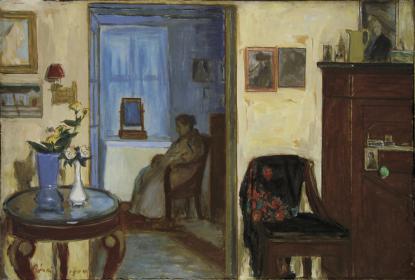
His hometown celebrates the 150th anniversary of his birth with an ambitious exhibition. The material of the exhibition comes from museums and private collections. The latter constitutes half of the exhibition. There are several pictures which are revealed to the public for the first time. The number of the pictures adds up to 120. A remarkable feature of the exhibition is its diversity. It is a unique phenomenon in Hungarian painting to have an artist with so many ways of looking at things, and all of them reflect a different world. The first period of his painting is the secessionist pictures from Paris. The second one encompasses the home paintings and enterieur pictures from Kaposvár. The third period is the mosaic style, called "cornfield" style by the artist, created in the Róma-villa. The fourth period is that of the crayon portraits of women.
The hero of the story, just like Sinbad of the Persian tales, did not find tranquillity in the calm haven. Leaving the security of the land behind him he boarded a ship. Fate rewarded his strenuous adventures. He could not make use of his treasures at home. He had to pass a test. Paintings were pouring from his hands. His touch made everything better and more beautiful. When his work was acknowledged, he became the lord of a small castle, surrounded by a lustrous array of guests. When he boarded a ship again, he was hunting for the hearts of women. He chased away the approaching death with the help of love.
We just have to replace the elements of the fairy-tale by the real facts. The young pharmacist goes abroad to study arts. In Paris, he becomes an assistant of the world famous artist, Mihály Munkácsy. He realizes that copying the works of the Master is not the right path for him. With his new, innovative style, he becomes a member of the "Prophets" - a group of painters called Nabis. He becomes renowned in Paris, while he is not understood in Hungary. After returning to Kaposvár, he paints pictures that embed modern art in Hungarian life. This way he is understood in Hungary, and he is acknowledged both morally and financially. His victory can be regarded as a turning point in Hungarian painting. He purchases the Róma-villa and turns it into an artistic centre. After that, he enjoys success in Budapest as well.
His hometown celebrates the 150th anniversary of his birth with an ambitious exhibition. The material of the exhibition comes from museums and private collections. The latter constitutes half of the exhibition. There are several pictures which are revealed to the public for the first time. The number of the pictures adds up to 120. A remarkable feature of the exhibition is its diversity. It is a unique phenomenon in Hungarian painting to have an artist with so many ways of looking at things, and all of them reflect a different world. The first period of his painting is the secessionist pictures from Paris. The second one encompasses the home paintings and enterieur pictures from Kaposvár. The third period is the mosaic style, called "cornfield" style by the artist, created in the Róma-villa. The fourth period is that of the crayon portraits of women.
|
|