2025. December 19. Friday
HM, Museum and Institution of Military History - Budapest
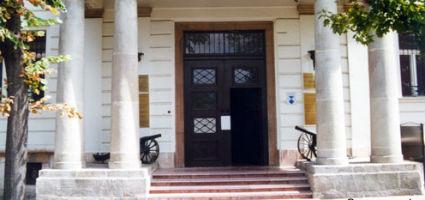 |
Address: 1014, Budapest Tóth Árpád sétány 40.
Phone number: (1) 325-1600, (1) 325-1601
E-mail: him@militaria.hu
Opening hours: 01.04-31.09.: Tue-Sun 10-18
01.10-31.03.: Tue-Sun 10-16 |
The exhibition has closed for visitors.
2011.03.08. - 2011.03.15.
Share it, if you like it:


Museum tickets, service costs:
|
Ticket for adults
|
1400 HUF
|
/ capita
|
|
Ticket for students
(6-26 years of age)
|
700 HUF
|
/ capita
|
|
Group ticket for students
|
300 HUF
|
|
|
Ticket for pensioners
(62-70 years of age)
|
700 HUF
|
/ capita
|
|
Ticket for families
(max. 2 adults + 4 children)
|
2500 HUF
|
/ family
|
|
Program ticket
|
700 HUF
|
|
|
Guide
|
700 HUF
|
|
|
Guide
|
8000 HUF
|
/ max. 20 capita
|
|
Guide
|
12000 HUF
|
/ min. 20 capita
|
In 1848 a revolutionary wave shook Europe. It all began with the Sicilian revolution of independence on 12 January, originating in movements against royal absolutism. However, the most influential of them was the revolution in Paris on 22-24 February. Following this, the wave shook countries running from the west towards the eastern countries in Europe, people setting up barricades and fighting in the streets. The waves reached several towns in the territory of the Habsburg Empire, Lombardi, and also Galicia.
The Hungarian Parliament had been in session since 1847 in Pozsony where Lajos Kossuth and Batthyányi proposed the complete constitutional reorganization of the empire. With news about the events in Paris, the pursuit of reform grew, and the revolutionary fever reached the town where the emperor resided on 13 March. This halted the parliamentary work for some time.
The revolution in Vienna and the fracture of the fights in Budapest on 15 March influenced the radicalization of the parliament in Pozsony, while the proposition on the new constitution excited the revolutionary atmosphere in Vienna and Budapest.
The Hungarian Parliament had been in session since 1847 in Pozsony where Lajos Kossuth and Batthyányi proposed the complete constitutional reorganization of the empire. With news about the events in Paris, the pursuit of reform grew, and the revolutionary fever reached the town where the emperor resided on 13 March. This halted the parliamentary work for some time.
The revolution in Vienna and the fracture of the fights in Budapest on 15 March influenced the radicalization of the parliament in Pozsony, while the proposition on the new constitution excited the revolutionary atmosphere in Vienna and Budapest.
|
|