2026. November 21. Saturday
Museum of Ethnography - Budapest
 |
Address: 1146, Budapest Dózsa György út - Ötvenhatosok tere
Phone number: (1) 473-2400
E-mail: info@neprajz.hu
Opening hours: Tue-Sun 10-18
|
The exhibition has closed for visitors.
2010.09.30. - 2011.02.20.
Share it, if you like it:


Museum tickets, service costs:
|
Individual ticket for adults
|
3000 HUF
|
|
|
Individual ticket for adults
(1 hour before closing)
|
1600 HUF
|
|
|
Group ticket for adults
(min. 10 people)
|
2600 HUF
|
/ capita
|
|
Individual ticket for students
|
1500 HUF
|
|
|
Individual ticket for students
(1 hour before closing)
|
800 HUF
|
|
|
Group ticket for students
(min. 10 people)
|
1300 HUF
|
/ capita
|
|
Individual ticket for pensioners
|
1500 HUF
|
|
|
Individual ticket for pensioners
(1 hour before closing)
|
800 HUF
|
|
|
Group ticket for pensioners
(min. 10 people)
|
1300 HUF
|
/ capita
|
|
Ticket for families
(2 adults + max. 3 children (up to 18 years old))
|
6300 HUF
|
/ family
|
|
Individual combined ticket for adults
(Zoom permanent exhibition + Ceramics Space + MÉTA)
|
1700 HUF
|
|
|
Individual combined ticket for adults
(We Have Arrived temporary exhibition + Ceramics Space + MÉTA)
|
2000 HUF
|
|
|
Individual combined ticket for students
(Zoom permanent exhibition + Ceramics Space + MÉTA)
|
850 HUF
|
|
|
Individual combined ticket for students
|
1000 HUF
|
|
|
Individual combined ticket for pensioners
(Zoom permanent exhibition + Ceramics Space + MÉTA)
|
850 HUF
|
|
|
Individual combined ticket for pensioners
(We Have Arrived temporary exhibition + Ceramics Space + MÉTA)
|
1000 HUF
|
|
|
Group walk ticket
(building walk, max. 15 people)
|
1500 HUF
|
/ capita
|
|
Group walk ticket for students
(Méta gallop, 10-20 people)
|
1200 HUF
|
/ capita
|
|
Group walk ticket
(building walk, in English, max. 15 people)
|
1800 HUF
|
/ capita
|
|
Group walk ticket for students
(Méta gallop, 10-20 people, in English)
|
1400 HUF
|
/ capita
|
|
Group guide
(10-20 people)
|
1000 HUF
|
/ capita
|
|
Group guide
(thematic, whit the curator of the exhibition, 5-20 people)
|
1300 HUF
|
/ capita
|
|
Group guide for students
(min. 10 people)
|
800 HUF
|
/ capita
|
|
Group guide
(10-20 people, in English)
|
1300 HUF
|
/ capita
|
|
Group guide
(thematic, whit the curator of the exhibition, in English, 5-20 people)
|
1690 HUF
|
/ capita
|
|
Group guide for students
(in English, 10-20 people)
|
1000 HUF
|
/ capita
|
|
Audio guide
|
1000 HUF
|
|
|
Photography
(for camera, camera-stand and telephoto lens)
|
700 HUF
|
The Ethnographic Museum began moving to the old Palace of Justice where the National Gallery had been located earlier in Kossuth Square 100 years after the establishment of the museum, in 1974. The reconstruction of the museum to function as a museum began with the complete rebuilding of the rooms, in the 1950s. The Ethnographic Museum considered preserving the architectural elements and most characteristic rooms to be the most important task during the reconstruction works. Even buildings that were built to fulfil museum purposes have to be rebuilt according to visitor-friendly and modern museum requirements.
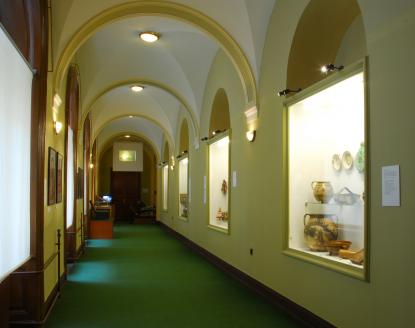
The Ethnographic Museum reconsidered the employment of the rooms and had them rebuilt in 2009-2010. During the reconstruction works, several of the rooms were rebuilt in their original state and according to their original function, whereas the constructors considered their most important task with the rebuilding of the hall to work according to modern requirements. In addition to all these, due to the complex reconstruction program, the museum function of the building due to modern technological means is a lot more emphasised in the central representative rooms.
During the reconstruction of the building, its history was highlighted. It seemed like an exciting task, because even though the history of the building was well documented, the exploitation of the rooms was hardly known.
The exhibition presents three important eras in the history of the building: when it functioned as a court, then as the National Gallery and last, but not the least, the Ethnographic Museum. The photos are on display in the room they are of, often from the same angle to demonstrate the 115-year history of the building.
|
|