2026. May 5. Tuesday
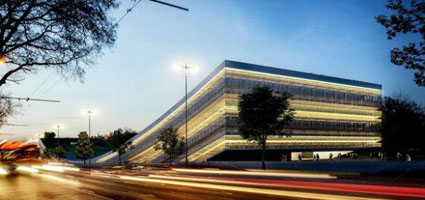
Museum of Ethnography - Budapest
 |
Address: 1146, Budapest Dózsa György út - Ötvenhatosok tere
Phone number: (1) 473-2400
E-mail: info@neprajz.hu
Opening hours: Tue-Sun 10-18
|
The exhibition has closed for visitors.
2010.08.10. - 2010.11.28.
Share it, if you like it:


Museum tickets, service costs:
|
Individual ticket for adults
|
3000 HUF
|
|
|
Individual ticket for adults
(1 hour before closing)
|
1600 HUF
|
|
|
Group ticket for adults
(min. 10 people)
|
2600 HUF
|
/ capita
|
|
Individual ticket for students
|
1500 HUF
|
|
|
Individual ticket for students
(1 hour before closing)
|
800 HUF
|
|
|
Group ticket for students
(min. 10 people)
|
1300 HUF
|
/ capita
|
|
Individual ticket for pensioners
|
1500 HUF
|
|
|
Individual ticket for pensioners
(1 hour before closing)
|
800 HUF
|
|
|
Group ticket for pensioners
(min. 10 people)
|
1300 HUF
|
/ capita
|
|
Ticket for families
(2 adults + max. 3 children (up to 18 years old))
|
6300 HUF
|
/ family
|
|
Individual combined ticket for adults
(Zoom permanent exhibition + Ceramics Space + MÉTA)
|
1700 HUF
|
|
|
Individual combined ticket for adults
(We Have Arrived temporary exhibition + Ceramics Space + MÉTA)
|
2000 HUF
|
|
|
Individual combined ticket for students
(Zoom permanent exhibition + Ceramics Space + MÉTA)
|
850 HUF
|
|
|
Individual combined ticket for students
|
1000 HUF
|
|
|
Individual combined ticket for pensioners
(Zoom permanent exhibition + Ceramics Space + MÉTA)
|
850 HUF
|
|
|
Individual combined ticket for pensioners
(We Have Arrived temporary exhibition + Ceramics Space + MÉTA)
|
1000 HUF
|
|
|
Group walk ticket
(building walk, max. 15 people)
|
1500 HUF
|
/ capita
|
|
Group walk ticket for students
(Méta gallop, 10-20 people)
|
1200 HUF
|
/ capita
|
|
Group walk ticket
(building walk, in English, max. 15 people)
|
1800 HUF
|
/ capita
|
|
Group walk ticket for students
(Méta gallop, 10-20 people, in English)
|
1400 HUF
|
/ capita
|
|
Group guide
(10-20 people)
|
1000 HUF
|
/ capita
|
|
Group guide
(thematic, whit the curator of the exhibition, 5-20 people)
|
1300 HUF
|
/ capita
|
|
Group guide for students
(min. 10 people)
|
800 HUF
|
/ capita
|
|
Group guide
(10-20 people, in English)
|
1300 HUF
|
/ capita
|
|
Group guide
(thematic, whit the curator of the exhibition, in English, 5-20 people)
|
1690 HUF
|
/ capita
|
|
Group guide for students
(in English, 10-20 people)
|
1000 HUF
|
/ capita
|
|
Audio guide
|
1000 HUF
|
|
|
Photography
(for camera, camera-stand and telephoto lens)
|
700 HUF
|
Ilmari Tapiola (b. 1955; Sámi name Gáva-Jon Ilmar) comes from a village of Kaava (Gávva) on the Teno River (Deatnu) in the municipality of Utsjoki. Tapiola is both a reindeer herder, an entrepreneur in the field of fishing tourism and a maker of handicraft.
When he was young, the prospects of Sámi handicraft were poor, especially as concerns the handicraft made by men. Industrial products had replaced the tools, dishes, containers and other objects in which things were kept that had been traditionally made at home, and there were only few masters of Sámi handicraft left.
Ilmari Tapiola learnt the basic skills of Sámi handicraft on the courses held at Christian Folk High School of Inari, where his teachers included Ilmari Laiti and Juhan Rist. In 1974, Tapiola left - with two other Sámi from Finland - for the Sámi High School of Jokkmokk, Sweden, to continue his training there for two years.
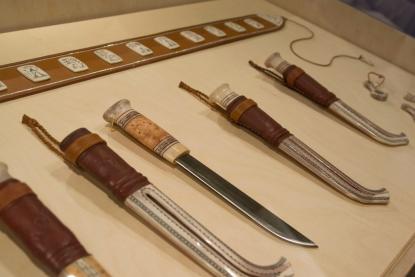
The handicraft exhibition of Ilmari Tapiola displays chests, dishes, bowls, boxes, knives, reeds, shuttles, horn spoons, belt buttons and hooks. Tapiola's handicraft is characterized by distinct designs and strongly dyed stylized ornamentation that has been carved on the pieces of handicraft.
His themes include braids, plaits, basket-work ornamentation, stars and suns, but sometimes he decorates, freehand, his work with natural motifs and figures from the Sámi drums. He makes his handicraft both for the use of his own family and for sale.
The handicrafts of the exhibition are made of "hard" materials, that is, from birch gnarls and the high quality antlers of a bull reindeer. The gnarl lids of chests and containers and the handles of gnarl cups have been decorated with antler inlays. Some knife sheaths, reeds and shuttles are made from only one material: horn.
The carvings on the horn are made visible with the help of a colour that has been ground from charcoal. Air compressor tools have made it easier to work the materials, but it is now more difficult to actually get a hold of the materials that one needs.
The exhibition was conducted with the help of Finnagora and the Museum of Ethnography
When he was young, the prospects of Sámi handicraft were poor, especially as concerns the handicraft made by men. Industrial products had replaced the tools, dishes, containers and other objects in which things were kept that had been traditionally made at home, and there were only few masters of Sámi handicraft left.
Ilmari Tapiola learnt the basic skills of Sámi handicraft on the courses held at Christian Folk High School of Inari, where his teachers included Ilmari Laiti and Juhan Rist. In 1974, Tapiola left - with two other Sámi from Finland - for the Sámi High School of Jokkmokk, Sweden, to continue his training there for two years.
The handicraft exhibition of Ilmari Tapiola displays chests, dishes, bowls, boxes, knives, reeds, shuttles, horn spoons, belt buttons and hooks. Tapiola's handicraft is characterized by distinct designs and strongly dyed stylized ornamentation that has been carved on the pieces of handicraft.
His themes include braids, plaits, basket-work ornamentation, stars and suns, but sometimes he decorates, freehand, his work with natural motifs and figures from the Sámi drums. He makes his handicraft both for the use of his own family and for sale.
The handicrafts of the exhibition are made of "hard" materials, that is, from birch gnarls and the high quality antlers of a bull reindeer. The gnarl lids of chests and containers and the handles of gnarl cups have been decorated with antler inlays. Some knife sheaths, reeds and shuttles are made from only one material: horn.
The carvings on the horn are made visible with the help of a colour that has been ground from charcoal. Air compressor tools have made it easier to work the materials, but it is now more difficult to actually get a hold of the materials that one needs.
The exhibition was conducted with the help of Finnagora and the Museum of Ethnography
|
|