2026. April 11. Saturday
- Budapest
|
|
Address: 1065, Budapest Nagymező utca 8.
|
The exhibition has closed for visitors.
2015.12.15. - 2016.01.25.
Share it, if you like it:


Museums require time, an open state of mind and tranquillity. From everyone. From visitors from as much as from researchers, journalists or photographer. Museum work interferes with the continuity of time: it stops the passage of time, ageing of objects, rewinds the frame of time, compresses time into exhibitions, zoom in on a single slice of time, makes stories timeless or makes certain topics timely. This was the approach in the articles and photos in all fifty issues of MúzeumCafé.
The classic typography does not only convey what's new in the museums through pages integrating into the world of contemporary design, but also follows changes in the archives, documenting or museology highlighting stories from the past that are almost forgotten. MúzeumCafé has been published ever since 2007. Work at that is similar to what is required at museums: contemplation, slow attention. As the still images like nature of exhibitions compose still-lifes, on the pages of the periodical, interiors are mildened into still-lifes around objects, places, creatures.
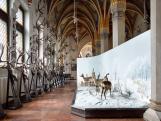
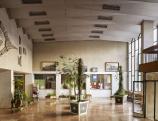
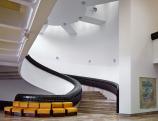
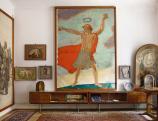
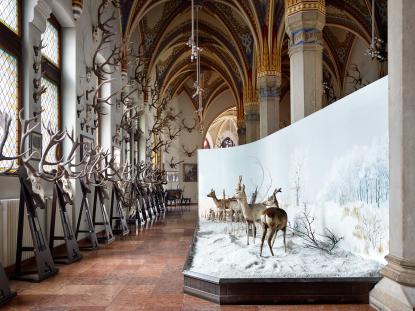
This type of composition is to get a new interpretation at the exhibition organized by the curator-ethnographer Zsófia Frazon.The selection unfolds multiple interpretations of photographs just as the palm trees at the Rozsnyó train station that bring together in a surprising fashion castle of Betlér in Slovakia with the Városliget in Budapest, where strategic issues of contemporary museum have just condensed. The stairs leading up to the Szombathely Gallery directs attention to on one hand the Kádár era's museum architecture on the other hand the importance of social consensus beyond the museum space: If an institution's mission can erode is thirty or forty years, then how can we think of the long term relationship of museum and time? The Éber Memorial House in Baja makes us feel timelessness through the civilian interior, timelessness, comfort. But what can you do when the surviving objects are not able to tell us about life or place? The trophies shown at the permanent exhibition of hunting located in the Hungarian Agricultural Museum's Gothic rooms reveal a lot of the collecting strategy behind the collection and compare other methodologies.
The exhibition presents fifty photos from thousand of photos so far issues in the MúzeumCafé
many of which have never been published before. The topics and scenes unfolding from, in addition to offering time, openness or slowdown to visitors, they will also lead us into a world not lacking time paradoxes through pages and the related institutions.
The classic typography does not only convey what's new in the museums through pages integrating into the world of contemporary design, but also follows changes in the archives, documenting or museology highlighting stories from the past that are almost forgotten. MúzeumCafé has been published ever since 2007. Work at that is similar to what is required at museums: contemplation, slow attention. As the still images like nature of exhibitions compose still-lifes, on the pages of the periodical, interiors are mildened into still-lifes around objects, places, creatures.
This type of composition is to get a new interpretation at the exhibition organized by the curator-ethnographer Zsófia Frazon.The selection unfolds multiple interpretations of photographs just as the palm trees at the Rozsnyó train station that bring together in a surprising fashion castle of Betlér in Slovakia with the Városliget in Budapest, where strategic issues of contemporary museum have just condensed. The stairs leading up to the Szombathely Gallery directs attention to on one hand the Kádár era's museum architecture on the other hand the importance of social consensus beyond the museum space: If an institution's mission can erode is thirty or forty years, then how can we think of the long term relationship of museum and time? The Éber Memorial House in Baja makes us feel timelessness through the civilian interior, timelessness, comfort. But what can you do when the surviving objects are not able to tell us about life or place? The trophies shown at the permanent exhibition of hunting located in the Hungarian Agricultural Museum's Gothic rooms reveal a lot of the collecting strategy behind the collection and compare other methodologies.
The exhibition presents fifty photos from thousand of photos so far issues in the MúzeumCafé
many of which have never been published before. The topics and scenes unfolding from, in addition to offering time, openness or slowdown to visitors, they will also lead us into a world not lacking time paradoxes through pages and the related institutions.
|
|