2025. December 13. Saturday
New Budapest Gallery - Budapest
|
|
Address: 1056, Budapest Bálna-Budapest, Fővám tér 11-12.
Phone number: (1) 426-4714
E-mail: info@budapestgaleria.hu
Opening hours: Tue-Sun 10-18
|
The exhibition has closed for visitors.
2012.12.06. - 2013.01.06.
Share it, if you like it:


Museum tickets, service costs:
|
Ticket for adults
|
1000 HUF
|
/ capita
|
|
Ticket for students
|
500 HUF
|
/ capita
|
|
Ticket for pensioners
|
500 HUF
|
/ capita
|
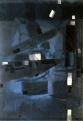
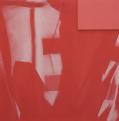
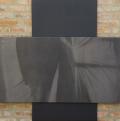
Csaba Polgar shows a special selection of his works in the Budapest Gallery: there can be seen together different kind of works from the end of 90s to 2012, light-prints, veils and paintings.
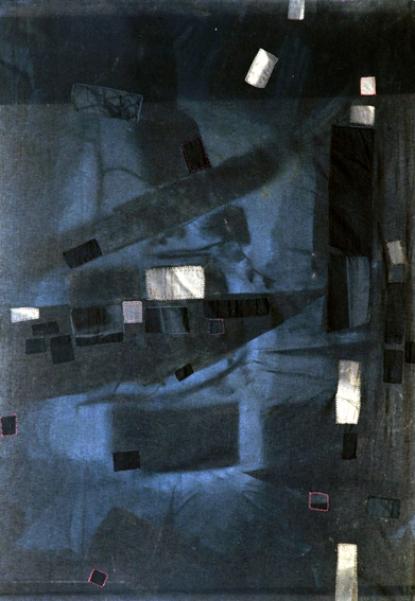
"When we first met light-print like phenomenon in our history, we don't know. /.../ We only suspect that maybe the prehistoric man saw it on his skin, the exposition of sun, the light spots under bracelets, amulets or animal skins on his body. The first photogenetic prints could have happened like this and could become the actuator of detection than the recognition. Much later we could recognize the reciprocal shape of exposition on the artificially painted materials: the fading. In connection with it we could widen our dictionary by the words photogenic drawing, photogram, light-print.
The earliest case in this row is from Henry Fox Talbot who created the first light-print about 150 years ago. He called it photogenic drawing. The ear of corn put on a piece of sensitized paper cause such illusion of our eyes that we see them as real. It was 1839.../ We can mention as typical about Csaba Polgár that he does not choose the sensitized photo emulsion as method, but a more direct material the satin canvas painted black. /.../ His light-prints unlike photogenic or photogram prints are always positive, visual formulas. Light does not burn does not blacken, but weakens, whitens. Where it is white there is the origin. Darkness always embodies the near one, the just one. /.../ He also likes another technique, the frottage. Most of them were created during Italian trips. Classical Latin texts, Roman types, steles, portraits, ornaments appear..."
(Attalai Gábor, Polgár Csaba fény-nyomatai és frottázsai, 1993)
"When we first met light-print like phenomenon in our history, we don't know. /.../ We only suspect that maybe the prehistoric man saw it on his skin, the exposition of sun, the light spots under bracelets, amulets or animal skins on his body. The first photogenetic prints could have happened like this and could become the actuator of detection than the recognition. Much later we could recognize the reciprocal shape of exposition on the artificially painted materials: the fading. In connection with it we could widen our dictionary by the words photogenic drawing, photogram, light-print.
The earliest case in this row is from Henry Fox Talbot who created the first light-print about 150 years ago. He called it photogenic drawing. The ear of corn put on a piece of sensitized paper cause such illusion of our eyes that we see them as real. It was 1839.../ We can mention as typical about Csaba Polgár that he does not choose the sensitized photo emulsion as method, but a more direct material the satin canvas painted black. /.../ His light-prints unlike photogenic or photogram prints are always positive, visual formulas. Light does not burn does not blacken, but weakens, whitens. Where it is white there is the origin. Darkness always embodies the near one, the just one. /.../ He also likes another technique, the frottage. Most of them were created during Italian trips. Classical Latin texts, Roman types, steles, portraits, ornaments appear..."
(Attalai Gábor, Polgár Csaba fény-nyomatai és frottázsai, 1993)
|
|