2026. January 25. Sunday
Budapest Museum of Fine Arts - Budapest
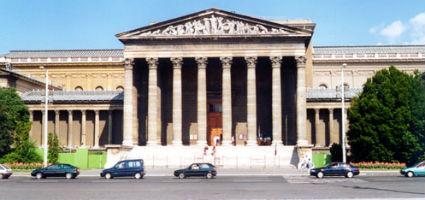 |
Address: 1146, Budapest Dózsa György út 41.
Phone number: (1) 469-7100
E-mail: info@szepmuveszeti.hu
Opening hours: Tue-Sun 10:00-18:00
|
The exhibition has closed for visitors.
2011.11.29. - 2012.01.29.
Share it, if you like it:


Museum tickets, service costs:
|
Ticket for adults
(valid for the permanent exhibitions)
|
2800 HUF
|
/ capita
|
|
Ticket for adults
|
3200 HUF
|
|
|
Group ticket for adults
|
2900 HUF
|
|
|
Ticket for students
(valid for the permanent exhibitions)
|
1400 HUF
|
/ capita
|
|
Ticket for students
|
1600 HUF
|
|
|
Group ticket for students
|
1400 HUF
|
|
|
Ticket for pensioners
(valid for the permanent exhibitions)
|
1400 HUF
|
/ capita
|
|
Audio guide
|
800 HUF
|
|
|
Video
|
1000 HUF
|
Sándor Hollán left Hungary in 1956. He has lived in Paris and during the summers in Langedoc ever since. During the winter months, he works on his large pictures in his studio in Paris. He paints still-lives, trees in colours leaning towards complete darkness. The pictures invite the viewers into a deep inner world. Parallel with the exhibition in Budapest, the Morandi Museum of Bologna presents some of these pictures at its exhibition.
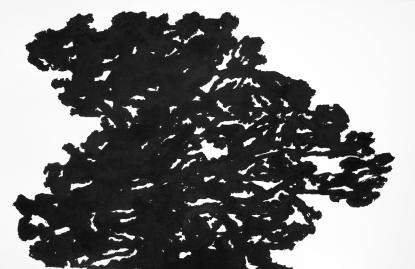
Sándor Hollán's art is based on the experience of seeing. The basic idea behind the works is that what we watch we cannot see, as we cannot really experience it. He studies the relationship between outer motif and the inner life through two main topics: trees and still-lives. He walks that demanding and individual path through which he can approach the visitors with a new spirit.
His relationship with trees, tree experience, thus, continuously result in his ever changing forms and pictures. The material unfolds in this manner in the rooms one after another. Space and motion. Powers, rhythms. Space and form. Colour and form. Being absorbed. Rebirth.
Through these elemental experiences of very simple, sometimes a few lines to the more complex compositions, Sándor Hollán's approach to trees unfolds. Sometimes really abstract serials of lines, 'tree-writings', at other times through throbbing nets of motions, forms termed with punctuality or even trees reduced to intense patches, the experience is just great, and greater.
Sándor Hollán's art, just like that of Cézanne in front of Mt. Saint-Victoire, pays attention to the discovery of the motif, concentrates of the core of it, the essence of it.
Michael Hilaire, head of the Montpellier Museum says the following about it: Over the form of the tree stump and the weigh of the foliage, what matters is only the relationship of the artist with the motif, making the tension and the balance of the form palpable. In some sense, the impenetrable structure of life that catches the glance of the artist. 'I am what I see' - says Hollán.
Sándor Hollán's art is based on the experience of seeing. The basic idea behind the works is that what we watch we cannot see, as we cannot really experience it. He studies the relationship between outer motif and the inner life through two main topics: trees and still-lives. He walks that demanding and individual path through which he can approach the visitors with a new spirit.
His relationship with trees, tree experience, thus, continuously result in his ever changing forms and pictures. The material unfolds in this manner in the rooms one after another. Space and motion. Powers, rhythms. Space and form. Colour and form. Being absorbed. Rebirth.
Through these elemental experiences of very simple, sometimes a few lines to the more complex compositions, Sándor Hollán's approach to trees unfolds. Sometimes really abstract serials of lines, 'tree-writings', at other times through throbbing nets of motions, forms termed with punctuality or even trees reduced to intense patches, the experience is just great, and greater.
Sándor Hollán's art, just like that of Cézanne in front of Mt. Saint-Victoire, pays attention to the discovery of the motif, concentrates of the core of it, the essence of it.
Michael Hilaire, head of the Montpellier Museum says the following about it: Over the form of the tree stump and the weigh of the foliage, what matters is only the relationship of the artist with the motif, making the tension and the balance of the form palpable. In some sense, the impenetrable structure of life that catches the glance of the artist. 'I am what I see' - says Hollán.
|
|