2026. June 10. Wednesday
Balaton Museum - Keszthely
|
|
Address: 8360, Keszthely Múzeum u. 2.
Phone number: (83) 312-351, (83) 511-335
E-mail: titkarsag@balatonimuzeum.hu
Opening hours: 01.09-31.10.: Tue-Sat 10-17, 01.11-30.: Tue-Sat 10-16
|
The exhibition has closed for visitors.
2011.06.24. - 2011.08.08.
Share it, if you like it:


Museum tickets, service costs:
|
Ticket for adults
|
800 HUF
|
/ capita
|
|
Group ticket for adults
(min. 8 people)
|
600 HUF
|
/ capita
|
|
Ticket for students
|
400 HUF
|
/ capita
|
|
Ticket for pensioners
|
400 HUF
|
/ capita
|
|
Ticket for families
(2 adults + min. 2 children)
|
400 HUF
|
/ capita
|
|
Combined ticket
(I PROGRAMME PACKAGE: ticket + guided tour at the permanent exhibition + museum pedagogy activity for student card holders over 10 people )
|
750 HUF
|
|
|
Combined ticket
(II PROGRAMME PACKAGE: ticket + guided tour at the permanent exhibition + museum pedagogy activity + arts and crafts activity over 10 people )
|
1450 HUF
|
|
|
Guide
(on prior notice)
|
4500 HUF
|
"Perhaps no one dislikes ice-cream who tasted it once. Most of us know and love it, however we all know too little about it, although it has been a veritable favorite among sweets since ancient times. Many famous people consumed ice-cream, even it was not exactly in the forms or flavours known today."
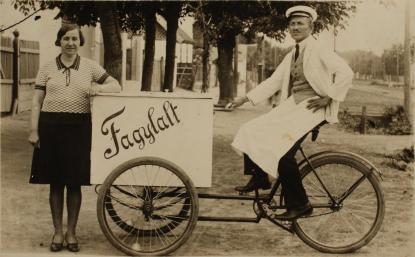
The wandering exhibition of Hungarian Museum of Trade and Tourism invites the visitors for a 5000-year-old travel through historical periods. We can get to know the ancestor of ice-cream and the first consumers. Travel begins in the ancient China. The cold sweet has got through to the Mediterranean region negotiated by Persian and Arabic peoples. The ancient Greeks consumed it as medicine after the recommendation of Hyppocrates. Alexander the Great offered it to his officers as a vitalizing mixture before battles. It was reckoned a popular delicacy both on the banquets of Roman emperors and in the courts of medieval princes.
We can follow the triumphal march of ice-cream in the modern times, taking a look at the development of making this delicacy. Heroic age of having an ice-cream in Hungary can be estimated to the early 19th century. We will be informed, how it has become a mass product and the part of our life until nowadays. We get a sample from the history of its close relatives, frozen custard and popsicles. The exhibition includes three installations: confectioner shop with all equipments from the late 19th century; sweet-shop in the mid-19th century and an ice-bar from the 1960-70s.
The wandering exhibition of Hungarian Museum of Trade and Tourism invites the visitors for a 5000-year-old travel through historical periods. We can get to know the ancestor of ice-cream and the first consumers. Travel begins in the ancient China. The cold sweet has got through to the Mediterranean region negotiated by Persian and Arabic peoples. The ancient Greeks consumed it as medicine after the recommendation of Hyppocrates. Alexander the Great offered it to his officers as a vitalizing mixture before battles. It was reckoned a popular delicacy both on the banquets of Roman emperors and in the courts of medieval princes.
We can follow the triumphal march of ice-cream in the modern times, taking a look at the development of making this delicacy. Heroic age of having an ice-cream in Hungary can be estimated to the early 19th century. We will be informed, how it has become a mass product and the part of our life until nowadays. We get a sample from the history of its close relatives, frozen custard and popsicles. The exhibition includes three installations: confectioner shop with all equipments from the late 19th century; sweet-shop in the mid-19th century and an ice-bar from the 1960-70s.
|
|