2026. April 4. Saturday
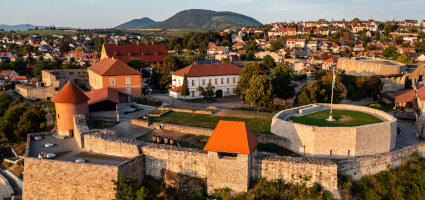
István Dobó Museum - Eger
 |
Address: 3300, Eger Vár 1.
Phone number: (36) 312-744
E-mail: varmuzeum@egrivar.hu
Opening hours: Castle: Mon-Sun 9-19
Exhibitions: Mon-Sun 10-16 Panopticon: Mon-Sun 10-16 |
The exhibition has closed for visitors.
2011.03.10. - 2011.08.28.
Share it, if you like it:


Museum tickets, service costs:
|
Individual combined ticket for adults
(István Dobó Museum + Géza Gárdonyi Memorial Museum + Sándor Ziffer Gallery + Lenkey House)
|
4800 HUF
|
|
|
Individual combined ticket for students
(István Dobó Museum + Géza Gárdonyi Memorial Museum + Sándor Ziffer Gallery + Lenkey House)
|
2800 HUF
|
|
|
Individual combined ticket for pensioners
(István Dobó Museum + Géza Gárdonyi Memorial Museum + Sándor Ziffer Gallery + Lenkey House)
|
2800 HUF
|
|
|
Individual walk ticket for adults
|
2400 HUF
|
|
|
Individual walk ticket for students
|
1200 HUF
|
|
|
Individual walk ticket for pensioners
|
1200 HUF
|
|
|
Group guide
|
15000 HUF
|
/ group
|
|
Group guide
|
20000 HUF
|
/ group
|
|
Individual wedding photographs
|
15000 HUF
|
It was a national ceremony when Déri Museum opened on 25th May, 1930. The following sentence was said in a speech during the opening ceremony: "A first class collection came to being, which is significant not only in national, but in European relations as well."
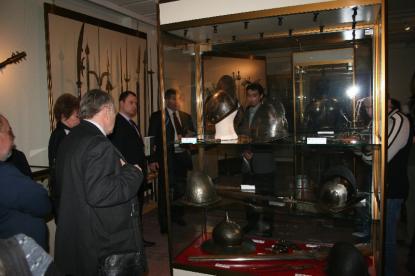
The primary aim for Frigyes Déri, the collector was not only to compile the fullest series of one type of weapon, but to collect the most varied collection of weapons. Due to the unique pieces the value of this weapon collection is high by international standards too.
The collection can be divided into three groups. The first one contains in the field weapons of Christian Europe and hunting weapons mainly from the 15-18th century pieces from Hungarian, German and Italian territories once under Habsburg rule.
The second biggest unit contains the classic weapons of the muslim world, which are from the Osman Empire and Persia, these are the most decorated martial instruments of the collection. The third group presents far East weapons, which is the smallest but most exotic group. The weapons were made in Japan and India in the 17-18th century.
The primary aim for Frigyes Déri, the collector was not only to compile the fullest series of one type of weapon, but to collect the most varied collection of weapons. Due to the unique pieces the value of this weapon collection is high by international standards too.
The collection can be divided into three groups. The first one contains in the field weapons of Christian Europe and hunting weapons mainly from the 15-18th century pieces from Hungarian, German and Italian territories once under Habsburg rule.
The second biggest unit contains the classic weapons of the muslim world, which are from the Osman Empire and Persia, these are the most decorated martial instruments of the collection. The third group presents far East weapons, which is the smallest but most exotic group. The weapons were made in Japan and India in the 17-18th century.
|
|