Event calendar
2026. May
27
28
29
30
1
2
3
4
5
6
7
8
9
10
11
12
13
14
15
16
17
18
19
20
21
22
23
24
25
26
27
28
29
30
31
2026.04.24. - 2026.09.20.
Budapest
2025.05.28. - 2025.09.28.
Budapest
2025.04.17. - 2025.05.17.
Budapest
2025.04.10. - 2025.05.11.
Szombathely
2025.04.07. - 2025.04.11.
Budapest
2025.03.28. - 2025.05.11.
Budapest
M80
2025.03.05. - 2025.09.15.
Budapest
2025.02.06. - 2025.05.11.
Budapest
2024.12.13. - 2025.06.30.
Budapest
2024.12.12. - 2025.06.01.
Budapest
2012.03.01. - 2012.03.31.
Vác
2012.02.01. - 2012.02.29.
Miskolc
2012.01.22. - 1970.01.01.
Budapest
2011.10.04. - 1970.01.01.
Nagykáta
2011.10.01. - 1970.01.01.
Nagykáta
2011.10.01. - 1970.01.01.
Nagykáta
2011.09.30. - 1970.01.01.
Nagykáta
2011.09.30. - 1970.01.01.
Nagykáta
2011.07.04. - 2011.07.08.
Budapest
Ludwig Museum - Museum of Contemporary Art - Budapest
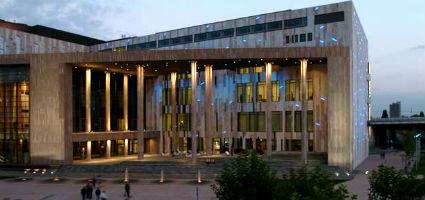
The museum building
Address: 1095, Budapest Művészetek Palotája, Komor Marcell u. 1.
Phone number: (1) 555-3444, (1) 555-3457
Opening hours: Permanent exhibition: Tue-Sun 10-18
Temporary exhibition: Tue-Sun 10-20
The Ludwig Museum is the sole arts museum collecting international and contemporary artworks The Hungarian Cultural government established the museum in 1989. The basis of the collection is 70 works of art by contemporary artists working after 1955. The collection was bestowed by the couple Ludwig and the Ludwig Foundation of Aachen to the Hungarian state. continue
Programmes
In parallel with kis.műhely (small.workshop) Scissors Square offers the possibility of drawing, playing with art toys to everybody including small children (up to the age of 5). It also provides parents, grandparents and young people interested in contemporary art with the possibility of reading art papers. continue
Animation screening for children by Moholy-Nagy University of Art and Design Budapest - in the 3rd floor exhibition space every weekend. continue
Temporary exhibitions
2026.04.24. - 2026.09.20.
The exhibition presents the collection of the Art Fond in Bratislava, in which the neo-avant-garde strategies of late modernism are still decisive today. The neo-avant-garde is not presented here as a closed historical phenomenon, but as a form of persistent resistance, critical thinking and civic responsibility that is constantly reviving in contemporary art practice. continue
Permanent exhibitions