Event calendar
2025. December
1
2
3
4
5
6
7
8
9
10
11
12
13
14
15
16
17
18
19
20
21
22
23
24
25
26
27
28
29
30
31
1
2
3
4
2025.05.28. - 2025.09.28.
Budapest
2025.04.17. - 2025.05.17.
Budapest
2025.04.10. - 2025.05.11.
Szombathely
2025.04.07. - 2025.04.11.
Budapest
2025.03.28. - 2025.05.11.
Budapest
M80
2025.03.05. - 2025.09.15.
Budapest
2025.02.06. - 2025.05.11.
Budapest
2024.12.13. - 2025.06.30.
Budapest
2024.12.12. - 2025.06.01.
Budapest
2024.10.15. - 2025.08.31.
Budapest
2012.03.01. - 2012.03.31.
Vác
2012.02.01. - 2012.02.29.
Miskolc
2012.01.22. - 1970.01.01.
Budapest
2011.10.04. - 1970.01.01.
Nagykáta
2011.10.01. - 1970.01.01.
Nagykáta
2011.10.01. - 1970.01.01.
Nagykáta
2011.09.30. - 1970.01.01.
Nagykáta
2011.09.30. - 1970.01.01.
Nagykáta
2011.07.04. - 2011.07.08.
Budapest
Albertfalva Region History Collection and School Museum - Budapest
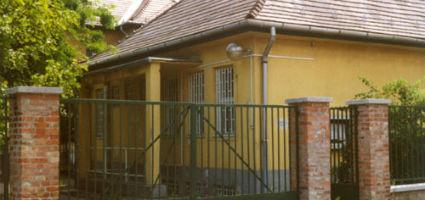
Museum entrance
Address: 1116, Budapest Pentele utca 8.
Phone number: (1) 208-6635
Opening hours: Tue, Thu 16-18
(Closed in school breaks)
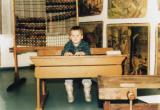
The name of the school had not come about up by accident, for down to 1848 it was well known that the majority of Albertfalva belonged to the group of Kossuth-supporters. This spirit penetrated the work of the school; this gave energy to both teachers and students to ever bring high quality into their work. continue
Permanent exhibitions
A taste of the exhibition
Our task was hardened by the fact that when the main street was broken up in order to give space for the new estate to be built, photos were not taken of the houses to be pulled down. It took nearly 20 years to make up a whole range of materials. continue
Roman excavations
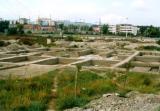
The central settlement of the Celtic Eraviscus tribe was situated in the Southern slope of the St Gellért-hill, Budapest. In the first half of the 1st century the Roman government moved some part of the Eraviscus people to the plains of Albertfalva. A significant part of the ancient settlement lay in Albertfalva. continue
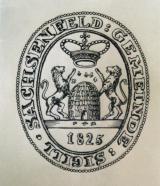
Sachsenfeld seal from 1825
The Ráckeve dominion was shifted into the ownership of Mária Krisztina (5th child of Mária Terézia) through a marriage she made in 1766 with Wettin Albert Kázmér Ágost (1738-1822) - prince of Szászteschen. After her death the dominion was inherited by her husband. continue
A taste of the exhibition
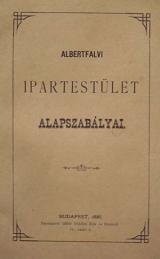
Following the Austro-Hungarian Compromise of 1867, the extensive economical, industrial and cultural development taking place proved that the formerly active coops did not function according to the requirements of the times. The Act 17 of 1884 accordingly required qualification to practice trade. It also organized trade authorities, ordering the formation of trade associations on the territory of every trade authority to which every tradesman was obliged to join. continue