2026. June 9. Tuesday
Museum Kiscell - Modern Urban History Collection - Budapest
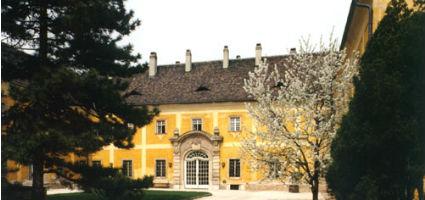 |
Address: 1037, Budapest Kiscelli utca 108.
Phone number: (1) 250-0304, (1) 250-0304
E-mail: kiscell@kiscellimuzeum.hu
Opening hours: 01.04-31.10.: Tue-Sun 10-18
01.11-31.03.: Tue-Sun 10-16 |
The exhibition has closed for visitors.
2010.09.04. - 2011.01.09.
Share it, if you like it:


Museum tickets, service costs:
|
Ticket for adults
|
900 HUF
|
|
|
Ticket for students
|
450 HUF
|
|
|
Group ticket for students
|
350 HUF
|
|
|
Ticket for pensioners
|
450 HUF
|
|
|
Ticket for families
|
1300 HUF
|
/ family
|
|
Photography
|
500 HUF
|
|
|
Video
|
1500 HUF
|
More and more people get on their bikes every year in Budapest noticing how environment friendly bicycles are. Reacting to the unbearable traffic, a number of civil organizations formed recently to lobby by bicycle road constructions. The situation also brought along the formation of a kind of subculture of cyclers.
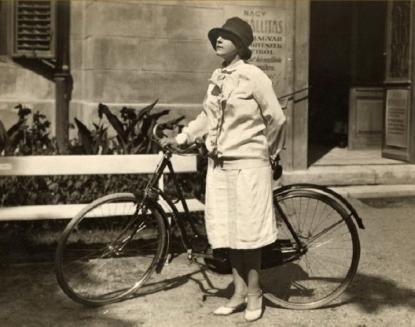
The aim of our exhibition is to present several aspects of the issue by graphics, photos, posters, various publications, notices, flyers, as well as modern and old bicycles. We believe that dealing with the issue would help us understand it. This way our exhibition is to join the discussion about traffic.
The material is divided into three units. The first one presents bicycles as a mean of spending free time in at the time it first came to Budapest. Period newspapers, photos and books demonstrate how the first 'velocipeds' were welcomed, how they were used by an increasing number of people of all walks of life, the masses. The exhibition pays special attention to the manufacturers, orders related to bicycles in traffic, as well as the bicycle as a mean of work.
The second unit sheds light on the relationship of bicycles and female emancipation in the end of the 19th century and the beginning of the 20th century. The starting point is an article from a newspaper: In 1892 an American female journalist Elizabeth Pennel rode from Berlin all the way to Budapest on her bicycle, demonstrating for the civilian society ruled by males that women are just as capable of excelling in sports as men. This section focuses on the mutual point in emancipation and bicycle riding via female fashion and the changes in the rights of females.
The section about actual issues and cycling as sport is located at the Kiscell Museum Crypt. The material includes the history of the oldest bicycle track in Europe, the Millenaries Velodrom was built in 1896, bicycle related fashion, the subculture of cyclists, and the main elements of mass movement for bicycle as means of transportation.
Besides the photos, posters and books, the material also includes nearly 100 bicycles, most of them from private collections. A number of museum pedagogy programs and events accompany the exhibition.
The aim of our exhibition is to present several aspects of the issue by graphics, photos, posters, various publications, notices, flyers, as well as modern and old bicycles. We believe that dealing with the issue would help us understand it. This way our exhibition is to join the discussion about traffic.
The material is divided into three units. The first one presents bicycles as a mean of spending free time in at the time it first came to Budapest. Period newspapers, photos and books demonstrate how the first 'velocipeds' were welcomed, how they were used by an increasing number of people of all walks of life, the masses. The exhibition pays special attention to the manufacturers, orders related to bicycles in traffic, as well as the bicycle as a mean of work.
The second unit sheds light on the relationship of bicycles and female emancipation in the end of the 19th century and the beginning of the 20th century. The starting point is an article from a newspaper: In 1892 an American female journalist Elizabeth Pennel rode from Berlin all the way to Budapest on her bicycle, demonstrating for the civilian society ruled by males that women are just as capable of excelling in sports as men. This section focuses on the mutual point in emancipation and bicycle riding via female fashion and the changes in the rights of females.
The section about actual issues and cycling as sport is located at the Kiscell Museum Crypt. The material includes the history of the oldest bicycle track in Europe, the Millenaries Velodrom was built in 1896, bicycle related fashion, the subculture of cyclists, and the main elements of mass movement for bicycle as means of transportation.
Besides the photos, posters and books, the material also includes nearly 100 bicycles, most of them from private collections. A number of museum pedagogy programs and events accompany the exhibition.
|
|