2026. June 9. Tuesday
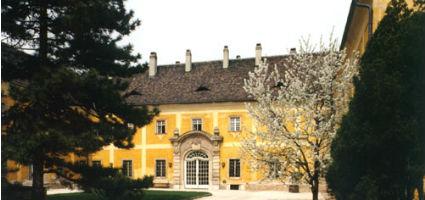
Museum Kiscell - Modern Urban History Collection - Budapest
 |
Address: 1037, Budapest Kiscelli utca 108.
Phone number: (1) 250-0304, (1) 250-0304
E-mail: kiscell@kiscellimuzeum.hu
Opening hours: 01.04-31.10.: Tue-Sun 10-18
01.11-31.03.: Tue-Sun 10-16 |
The exhibition has closed for visitors.
2009.04.10. - 2009.05.03.
Share it, if you like it:


Museum tickets, service costs:
|
Ticket for adults
|
900 HUF
|
|
|
Ticket for students
|
450 HUF
|
|
|
Group ticket for students
|
350 HUF
|
|
|
Ticket for pensioners
|
450 HUF
|
|
|
Ticket for families
|
1300 HUF
|
/ family
|
|
Photography
|
500 HUF
|
|
|
Video
|
1500 HUF
|
"I will also be a doctor, but a doctor of the poor" - said Dr. Levendel in a documentary made before his death about the vow made in his childhood. "Of the poor, the homeless, the alcoholics, the most wounded of all". At the end of the film the director-reporter asked: Who is László Levendel, how can we put it? The professor doctor's answer was: "A cod boy whose life was fulfilled more and… more"
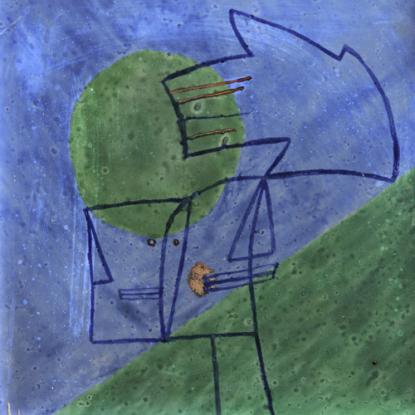
He survived forced labour, the concentration camp in Bor, and "strained march". At the end of 1944 he fled and walked to the already freed town of Szeged where he enrolled university. In 1948 he was awarded for his work with the title ‘the best university student in Hungary’ and was accepted as a doctor by the university. From 1952 to his death he worked at the Hungarian Korányi TBC and Pulmonology Institute where he made friends with Árpád Mezei, one of the European School theorists, among others. Through Mezei Dr., Levendel met fine artists made unviable and deprived of financial resources. Margit Anna, Endre Bálint, József Jakovits, Tihamér Gyarmathy, Lili Ország. Many of them were his patients for decades. But he did not think of them only as patients. He was fond of them and understood their art.
His wife, the doctor Mária Lakatos, worked with the daughter of the sculptor Elza Kalmár, Ágnes Köves who danced at the motion art studio lead by Alice Madzsar. She introduced the Leveldels to Ödön Palasovszky, Lajos Kassák, István Dési Huber and Gyula Derkovits who they later on also treated with their illness. One artist recommended Dr. Levendel to the other. In return he did the following described in the words of the art historian Katalin Dávid ‘he was a doctor who was convinced that every illness can only be healed if the whole man, body and spirit, are healed…
(...) Has scientific literature ever established that many of the artworks from the '50-'60-'70’s were born only because the doctor and friend operated in the background? His role is part of the art scene of the era…" It is not like when the patrons were part of art for centuries. Simply, because he did something very different and the circumstances were not the same either. What the artists want is not bread; even though there are examples of that. They want a hand strong enough to hold a paintbrush and chisel and something that seems impossible, they need audience and love, and the knowledge that their work satisfies the need of our culture for art.
(Katalin Dávid)
He survived forced labour, the concentration camp in Bor, and "strained march". At the end of 1944 he fled and walked to the already freed town of Szeged where he enrolled university. In 1948 he was awarded for his work with the title ‘the best university student in Hungary’ and was accepted as a doctor by the university. From 1952 to his death he worked at the Hungarian Korányi TBC and Pulmonology Institute where he made friends with Árpád Mezei, one of the European School theorists, among others. Through Mezei Dr., Levendel met fine artists made unviable and deprived of financial resources. Margit Anna, Endre Bálint, József Jakovits, Tihamér Gyarmathy, Lili Ország. Many of them were his patients for decades. But he did not think of them only as patients. He was fond of them and understood their art.
His wife, the doctor Mária Lakatos, worked with the daughter of the sculptor Elza Kalmár, Ágnes Köves who danced at the motion art studio lead by Alice Madzsar. She introduced the Leveldels to Ödön Palasovszky, Lajos Kassák, István Dési Huber and Gyula Derkovits who they later on also treated with their illness. One artist recommended Dr. Levendel to the other. In return he did the following described in the words of the art historian Katalin Dávid ‘he was a doctor who was convinced that every illness can only be healed if the whole man, body and spirit, are healed…
(...) Has scientific literature ever established that many of the artworks from the '50-'60-'70’s were born only because the doctor and friend operated in the background? His role is part of the art scene of the era…" It is not like when the patrons were part of art for centuries. Simply, because he did something very different and the circumstances were not the same either. What the artists want is not bread; even though there are examples of that. They want a hand strong enough to hold a paintbrush and chisel and something that seems impossible, they need audience and love, and the knowledge that their work satisfies the need of our culture for art.
(Katalin Dávid)
|
|