2026. June 10. Wednesday
Semmelweis Museum, Library and Archives of the History of Medicine - Budapest
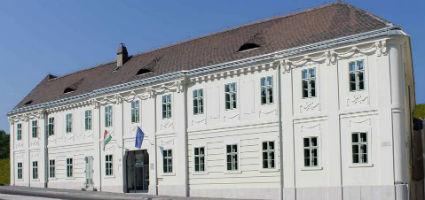 |
Address: 1013, Budapest Apród u.1-3.
Phone number: (1) 201-1577, (1) 375-3533
E-mail: semmelweis@museum.hu
Opening hours: Temporarily closed.
|
The exhibition has closed for visitors.
2006.11.23. - 2007.04.29.
Share it, if you like it:


Museum tickets, service costs:
|
Individual ticket for adults
|
700 HUF
|
/ capita
|
|
Individual ticket for students
|
350 HUF
|
/ capita
|
|
Individual ticket for pensioners
|
350 HUF
|
/ capita
|
|
Individual guide
(up to 10 people)
|
1000 HUF
|
/ group
|
|
Individual guide
(11-20 people)
|
2000 HUF
|
/ group
|
|
Photography
|
600 HUF
|
|
|
Video
|
1500 HUF
|
1956 is a mythical year. The myth of the denied and confuted War of Independence was preserved in the memoirs of families, conversations of friends or hidden meaning. However, it was forbidden to mention it publicly. It was hiding in the silent meeting of gazes and the disbelieving winkle of the putative winners.
The critical procession of the Revolution of 1956 could only begin when the system all trapped with lies was slowly forgotten, after 1989. Understandably, the attention turned toward the political events, the revolt and dissatisfaction then.
Of course, the story of 1956 has several other details. We may start off with different approach, but we will inevitable reach the same point: the dazzling spectacle of the brevity and audacity of the Hungarian people.
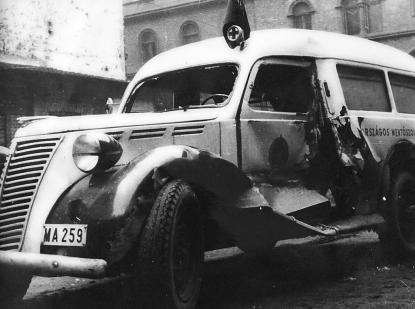
For the health system, 1956 meant 23.000 wounded. Due to the stress, a large number of people suffered from psychiatric, cardiologic and obstratic damages. Most of the patients were emergency cases who were taken care in 400 ambulance cars by 930 people.
Paradoxically, the centralizing monomaniac system of Rákosi led to the successful recovery of the National Ambulance.
The union of former ambulances, equipment and education along with professionalism led to an ambulance system able to resolve the problem of the large number of patients by the middle of the 50's.
The War of Independence was the fight of true men and liars while the stake was the community, the future of the nation for which it was worth to fight or could be betrayed with varied excuses. For the doctors, ambulance staff and nurses, the patients were patients. Their treating was a moral and professional victory.
In the meantime, they also sacrificed a lot. Beside the destroyed ambulance cars and patients, the fate of butchered doctors show the proud face of people who could stay calm in its fervor.
The exhibition remembers them.
The critical procession of the Revolution of 1956 could only begin when the system all trapped with lies was slowly forgotten, after 1989. Understandably, the attention turned toward the political events, the revolt and dissatisfaction then.
Of course, the story of 1956 has several other details. We may start off with different approach, but we will inevitable reach the same point: the dazzling spectacle of the brevity and audacity of the Hungarian people.
For the health system, 1956 meant 23.000 wounded. Due to the stress, a large number of people suffered from psychiatric, cardiologic and obstratic damages. Most of the patients were emergency cases who were taken care in 400 ambulance cars by 930 people.
Paradoxically, the centralizing monomaniac system of Rákosi led to the successful recovery of the National Ambulance.
The union of former ambulances, equipment and education along with professionalism led to an ambulance system able to resolve the problem of the large number of patients by the middle of the 50's.
The War of Independence was the fight of true men and liars while the stake was the community, the future of the nation for which it was worth to fight or could be betrayed with varied excuses. For the doctors, ambulance staff and nurses, the patients were patients. Their treating was a moral and professional victory.
In the meantime, they also sacrificed a lot. Beside the destroyed ambulance cars and patients, the fate of butchered doctors show the proud face of people who could stay calm in its fervor.
The exhibition remembers them.
|
|