2026. May 24. Sunday
Municipal Museum of Pásztó - Pásztó
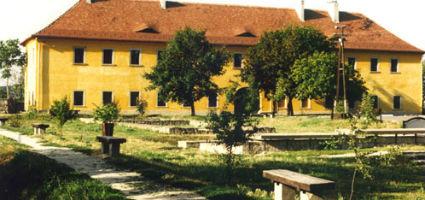 |
Address: 3060, Pásztó Múzeum tér 5.
Phone number: (32) 460-194
E-mail: pasztoimuzeum@gmail.com
Opening hours: Mon-Fri 8-16, Sat 9-15
|
The exhibition has closed for visitors.
2005.02.04. - 2005.04.15.
Share it, if you like it:


Museum tickets, service costs:
|
Ticket for adults
|
600 HUF
|
|
|
Ticket for students
|
300 HUF
|
|
|
Ticket for pensioners
(up to 65 years of age)
|
300 HUF
|
|
|
Group guide
(in Hungarian, English, German)
|
500 HUF
|
György Kohán was born on 22, February 95 years ago in Gyula. His teacher, the painter Dezső József, noticed his talent in bourgeois school. György Kohán began his studies in Budapest at the Collage of Fine Arts on the advice of his tutor where he was the student of Oszkár Glatz in 1928-29.
The master's approach to art was that of plain art of Nagybánya. As Kohán was not deeply involved with this approach, he left the institution. His journeys abroad and time spent at free schools were significant in the development of his approach. He spent ten months in Paris in 1930-1931, later he visited Rome in 1935. These studies and his training himself according to an independent program changed his visual approach. In Paris, he was in search of a unique ageless scale instead of becoming involved in the fashion of the time.
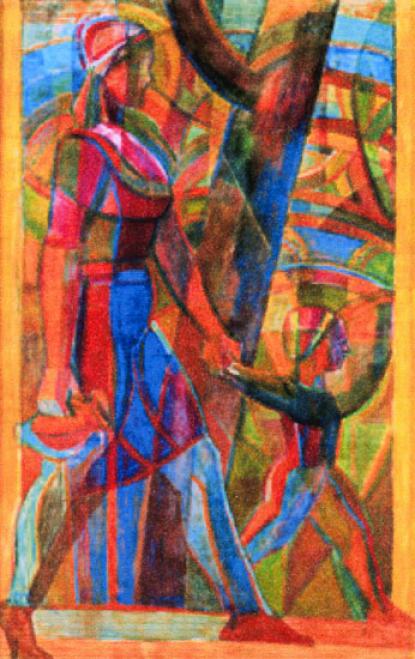
The heydays of cubism initiated by Cézanne and realized by Braque and Picasso lasted until the beginning of the 20's. Kohán did not adapt to cubism so fast, it only appeared in his works 10-15 years later, but with a stunning ripeness. He continued to make the cubist wax tempera pictures from the first half of the forties until the end of his career. The other type of paintings he did belonged to the 'Great Plane' pictures made with oil. These pictures were darker but made with a light approach.
Kohán was not simply a painter with extraordinary strength in his works but also a master of graphic arts. In this genre, man is the honored vernacular motif. While the boards were characterized by dramatic and sublime order, his graphics were free of manners, they were playful and comic in their forms.
He had to return from Paris as he was enrolled in the army. After his return he worked in Orosháza, Gyula and Hódmezővásárhely until his death in 1966. He received the Kossuth Prize a few months before his death. His artistic heritage made up of 600 paintings, 2600 graphics was given to the Erkel Ferenc Museum.
The Kohán Gallery of Gyula lent the material of our present exhibition.
The master's approach to art was that of plain art of Nagybánya. As Kohán was not deeply involved with this approach, he left the institution. His journeys abroad and time spent at free schools were significant in the development of his approach. He spent ten months in Paris in 1930-1931, later he visited Rome in 1935. These studies and his training himself according to an independent program changed his visual approach. In Paris, he was in search of a unique ageless scale instead of becoming involved in the fashion of the time.
The heydays of cubism initiated by Cézanne and realized by Braque and Picasso lasted until the beginning of the 20's. Kohán did not adapt to cubism so fast, it only appeared in his works 10-15 years later, but with a stunning ripeness. He continued to make the cubist wax tempera pictures from the first half of the forties until the end of his career. The other type of paintings he did belonged to the 'Great Plane' pictures made with oil. These pictures were darker but made with a light approach.
Kohán was not simply a painter with extraordinary strength in his works but also a master of graphic arts. In this genre, man is the honored vernacular motif. While the boards were characterized by dramatic and sublime order, his graphics were free of manners, they were playful and comic in their forms.
He had to return from Paris as he was enrolled in the army. After his return he worked in Orosháza, Gyula and Hódmezővásárhely until his death in 1966. He received the Kossuth Prize a few months before his death. His artistic heritage made up of 600 paintings, 2600 graphics was given to the Erkel Ferenc Museum.
The Kohán Gallery of Gyula lent the material of our present exhibition.
|
|