2026. June 9. Tuesday
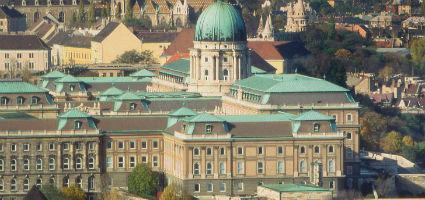
Budapest History Museum - Budapest
 |
Address: 1014, Budapest Szent György tér 2.
Phone number: (1) 487-8800, (1) 487-8801
E-mail: btm@mail.btm.hu
Opening hours: Tue-Sun 10-18
|
The exhibition has closed for visitors.
2013.05.03. - 2013.06.23.
Share it, if you like it:


Museum tickets, service costs:
|
Ticket for adults
|
2000 HUF
|
|
|
Ticket for students
|
1000 HUF
|
|
|
Group ticket for students
(over 10 people)
|
500 HUF
|
|
|
Ticket for pensioners
|
1000 HUF
|
|
|
Ticket for families
|
2200 HUF
|
/ family
|
|
Group guide
(up to 20 people)
|
7000 HUF
|
|
|
Group guide
(20-30 people)
|
9500 HUF
|
|
|
Group guide
|
14000 HUF
|
|
|
Group guide
|
18000 HUF
|
|
|
Audio guide
|
1200 HUF
|
|
|
Photography
|
1000 HUF
|
After the fall of the Iron Curtain in 1989/90, nearly a quarter of a million Jewish immigrants – so-called “quota refugees” – came to Germany from the former Soviet Union. This wave of immigration brought about lasting changes in the Jewish community. Of the approximately 110,000 members of Germany’s Jewish population, some 90,000 are of Russian-speaking origin. Michael Kerstgens is one of the few photographers to have documented the immigration of Russian-speaking Jews intensively over a long period. In his work, he focuses on the social and religious challenges facing Jewish immigrants to Germany as well as on the situation of long-established German Jews.
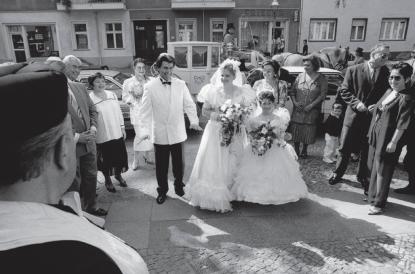
The photographs relate farewells and new beginnings, those arriving and those settled, and the search for belonging and religious tradition.
The photographs relate farewells and new beginnings, those arriving and those settled, and the search for belonging and religious tradition.
|
|