2026. June 9. Tuesday
National Széchényi Library - Budapest
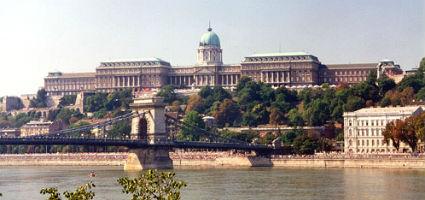 |
Address: 1014, Budapest Budavári Palota, F épület
Phone number: (1) 224-3742
E-mail: inform@oszk.hu
Opening hours: Tue-Sat 10-18
|
The exhibition has closed for visitors.
2013.03.26. - 2013.05.31.
Share it, if you like it:


Museum tickets, service costs:
|
Group ticket
(over 10 people)
|
300 HUF
|
/ capita
|
|
Ticket for adults
|
1000 HUF
|
|
|
Ticket for students
|
500 HUF
|
|
|
Ticket for pensioners
|
500 HUF
|
The exhibition presents the heritage of Géza Vilmos Zagon who has been acknowledged as a composer for a long time but less known as pianist, (1889-1918). We put particular emphasis on his short life which is well documented in terms of cultural and historical aspects of life he spent in Paris: those two years that the promising talent spent in the Mecca of young writers and artists at the time at the beginning of his career.
Two documents can be seen of those that achieved significant success one hundred years ago at their première in Paris. The D-Flat Sonata for piano will be playing during the opening ceremony, and will also be playing during the opening hours among other items on display e.g. his manuscript with corrections by Debussy's. In addition to the original letter of Debussy, letters by Bartók and letters written by other figures French and Hungarian musical life to Zágon are also on display.
The scores, letters, photographs, posters and printed ephemera offer a wide range of items of interest for those interested in music in the early 20th century. These items recount Zágon's activity as a mediator between period European and Hungarian music, and in particular create awareness in the music of Bartók and Kodály. The thematically related documents and pictorial illustrations at the same time shed light on the pre-war cultural life in Paris, and also represented by Zagon, -the fertile interaction that formed between various branches of art and the avant-garde music rooted in different national cultures.