2026. June 9. Tuesday
Museum of Ethnography - Budapest
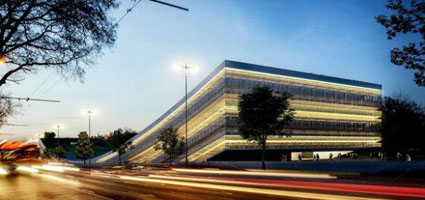 |
Address: 1146, Budapest Dózsa György út - Ötvenhatosok tere
Phone number: (1) 473-2400
E-mail: info@neprajz.hu
Opening hours: Tue-Sun 10-18
|
The exhibition has closed for visitors.
2013.03.05. - 2013.09.01.
Share it, if you like it:


Museum tickets, service costs:
|
Individual ticket for adults
|
3000 HUF
|
|
|
Individual ticket for adults
(1 hour before closing)
|
1600 HUF
|
|
|
Group ticket for adults
(min. 10 people)
|
2600 HUF
|
/ capita
|
|
Individual ticket for students
|
1500 HUF
|
|
|
Individual ticket for students
(1 hour before closing)
|
800 HUF
|
|
|
Group ticket for students
(min. 10 people)
|
1300 HUF
|
/ capita
|
|
Individual ticket for pensioners
|
1500 HUF
|
|
|
Individual ticket for pensioners
(1 hour before closing)
|
800 HUF
|
|
|
Group ticket for pensioners
(min. 10 people)
|
1300 HUF
|
/ capita
|
|
Ticket for families
(2 adults + max. 3 children (up to 18 years old))
|
6300 HUF
|
/ family
|
|
Individual combined ticket for adults
(Zoom permanent exhibition + Ceramics Space + MÉTA)
|
1700 HUF
|
|
|
Individual combined ticket for adults
(We Have Arrived temporary exhibition + Ceramics Space + MÉTA)
|
2000 HUF
|
|
|
Individual combined ticket for students
(Zoom permanent exhibition + Ceramics Space + MÉTA)
|
850 HUF
|
|
|
Individual combined ticket for students
|
1000 HUF
|
|
|
Individual combined ticket for pensioners
(Zoom permanent exhibition + Ceramics Space + MÉTA)
|
850 HUF
|
|
|
Individual combined ticket for pensioners
(We Have Arrived temporary exhibition + Ceramics Space + MÉTA)
|
1000 HUF
|
|
|
Group walk ticket
(building walk, max. 15 people)
|
1500 HUF
|
/ capita
|
|
Group walk ticket for students
(Méta gallop, 10-20 people)
|
1200 HUF
|
/ capita
|
|
Group walk ticket
(building walk, in English, max. 15 people)
|
1800 HUF
|
/ capita
|
|
Group walk ticket for students
(Méta gallop, 10-20 people, in English)
|
1400 HUF
|
/ capita
|
|
Group guide
(10-20 people)
|
1000 HUF
|
/ capita
|
|
Group guide
(thematic, whit the curator of the exhibition, 5-20 people)
|
1300 HUF
|
/ capita
|
|
Group guide for students
(min. 10 people)
|
800 HUF
|
/ capita
|
|
Group guide
(10-20 people, in English)
|
1300 HUF
|
/ capita
|
|
Group guide
(thematic, whit the curator of the exhibition, in English, 5-20 people)
|
1690 HUF
|
/ capita
|
|
Group guide for students
(in English, 10-20 people)
|
1000 HUF
|
/ capita
|
|
Audio guide
|
1000 HUF
|
|
|
Photography
(for camera, camera-stand and telephoto lens)
|
700 HUF
|
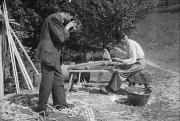
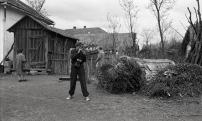
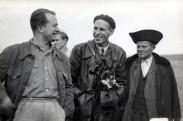
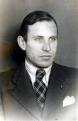
A special exhibition opens at the Ethnographic Museum to commemorate the birthday of Keszi Laszlo Kovacs. The exhibition "Every Cube is Valuable" through the Ethnographer's Camera has photography and film at its centre. The currently opening-first Chamber exhibition follows the life and work of the extraordinary talented and prolific, famous ethnographic film artist, Laszlo Keszi Kovacs through his films, documents, photos, personal items and technical equipment.
László Keszi Kovács was born in Polgár in 1908. Originally he wanted to be a painter. He learned painting, how to see colours, and also the role of light and shadows form the masters Béla Iványi-Grünwald, Oscar Glatz. He came into contact with ethnography through Pál Teleki at his seminars, with the film at the Museum of Ethnography in 1932 through Dr. Sándor Gönyey when he was filming traditional dances. He made his first film in 1937.
"Making ethnographic films is an expensive task and there is only a few professionals who is able to" see "the varied work of people, their traditions, in short, the folk life. And the visionary in vain talks about colour, form and structure to the blind even movement, workflows, and for example, the aesthetics of traditional costume. The money is in the hand of those, who believe that the word and letter is good for everything. Therefore, this is how "incapable ethnographic performance and writing" exist in this country" (Laszlo Keszi Kovacs about himself, 1983.)
However, Laszlo Keszi Kovacs remained diligent advocate of ethnographic filmmaking.
Related videos are:
László Keszi Kovács Would Be 105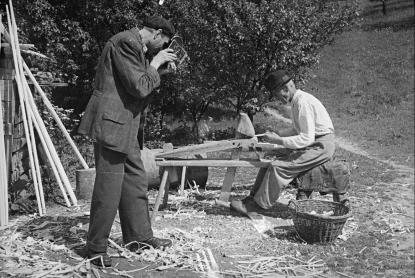
The curator of the exhibition is: Tari János
Director of the exhibition is: Mrs. Nagy Krisztina Sebestény
Personal objects were provided by Imola Keszi Kovács
|
|