2026. June 9. Tuesday
Collection of Veterinary History - Budapest
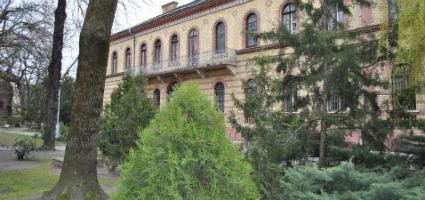 |
Address: 1071, Budapest Bethlen Gábor utca 20-24. (megközelítés a portán keresztül)
Phone number: (1) 478-4226
E-mail: library@univet.hu
Opening hours: Mon-Thu 9-16
Researchers: Wed 13-16 You can also view a prior check-in at other times! |
The exhibition has closed for visitors.
2013.03.01. - 2013.10.30.
Share it, if you like it:


All of us have seen toddlers picking up snail houses and staring at them with round eyes. All of us have been diving in order to bring up the stone covered by mussels which had just cut his feet. All of us have smaller or larger snail houses at home collected on the shore of warm seas or bought from pushing local vendors. Sometimes we just press them against our ear to listen to the "murmur of the sea".
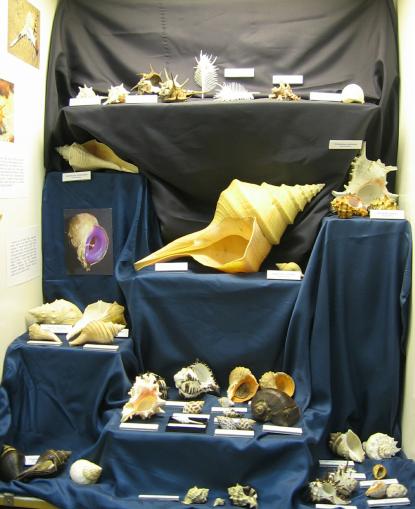
However, there are much less people who know what lives in these shells behind the fantastic forms beside the murmur of exotic waves. Why are they so diverse? How do the "inhabitants" look like, and above all how do they live? How do they move, feed, and breed? Are they vulnerable or are they dangerous for other animals?
Our exhibition, which is not less beautiful than the richest collections of jewelry, offers a systematic presentation of molluscs which inhabit - often invisibly - our Earth from the deep oceans to the tree-stratum of tropical jungles, and fulfill their less known but not less important role in the ecosystem just like all the other creatures.
Those who would only like to enjoy the beauty of the collection may come to have a look at the unbelievable variety of colours, forms, textures. Those whose interest is captured by the exhibition may read the guide, a booklet presenting the main characteristics of each systematic group such as the interesting etimology of its scientific name, its habitat, or the sometimes bizarre secrets of its life, feeding and reproduction.
This is an exhibition wholeheartedly offered for the young and the old, for professionals as well as the general public.
The material belongs to László Németh, a collector of molluscs. The new temporary exhibition is compiled and designed by Gábor Majoros. Alexandra Juhász, student of veterinary science offered her help in material gathering.
However, there are much less people who know what lives in these shells behind the fantastic forms beside the murmur of exotic waves. Why are they so diverse? How do the "inhabitants" look like, and above all how do they live? How do they move, feed, and breed? Are they vulnerable or are they dangerous for other animals?
Our exhibition, which is not less beautiful than the richest collections of jewelry, offers a systematic presentation of molluscs which inhabit - often invisibly - our Earth from the deep oceans to the tree-stratum of tropical jungles, and fulfill their less known but not less important role in the ecosystem just like all the other creatures.
Those who would only like to enjoy the beauty of the collection may come to have a look at the unbelievable variety of colours, forms, textures. Those whose interest is captured by the exhibition may read the guide, a booklet presenting the main characteristics of each systematic group such as the interesting etimology of its scientific name, its habitat, or the sometimes bizarre secrets of its life, feeding and reproduction.
This is an exhibition wholeheartedly offered for the young and the old, for professionals as well as the general public.
The material belongs to László Németh, a collector of molluscs. The new temporary exhibition is compiled and designed by Gábor Majoros. Alexandra Juhász, student of veterinary science offered her help in material gathering.
|
|